
San Francisco Mold Remediation: Homeowner's Guide

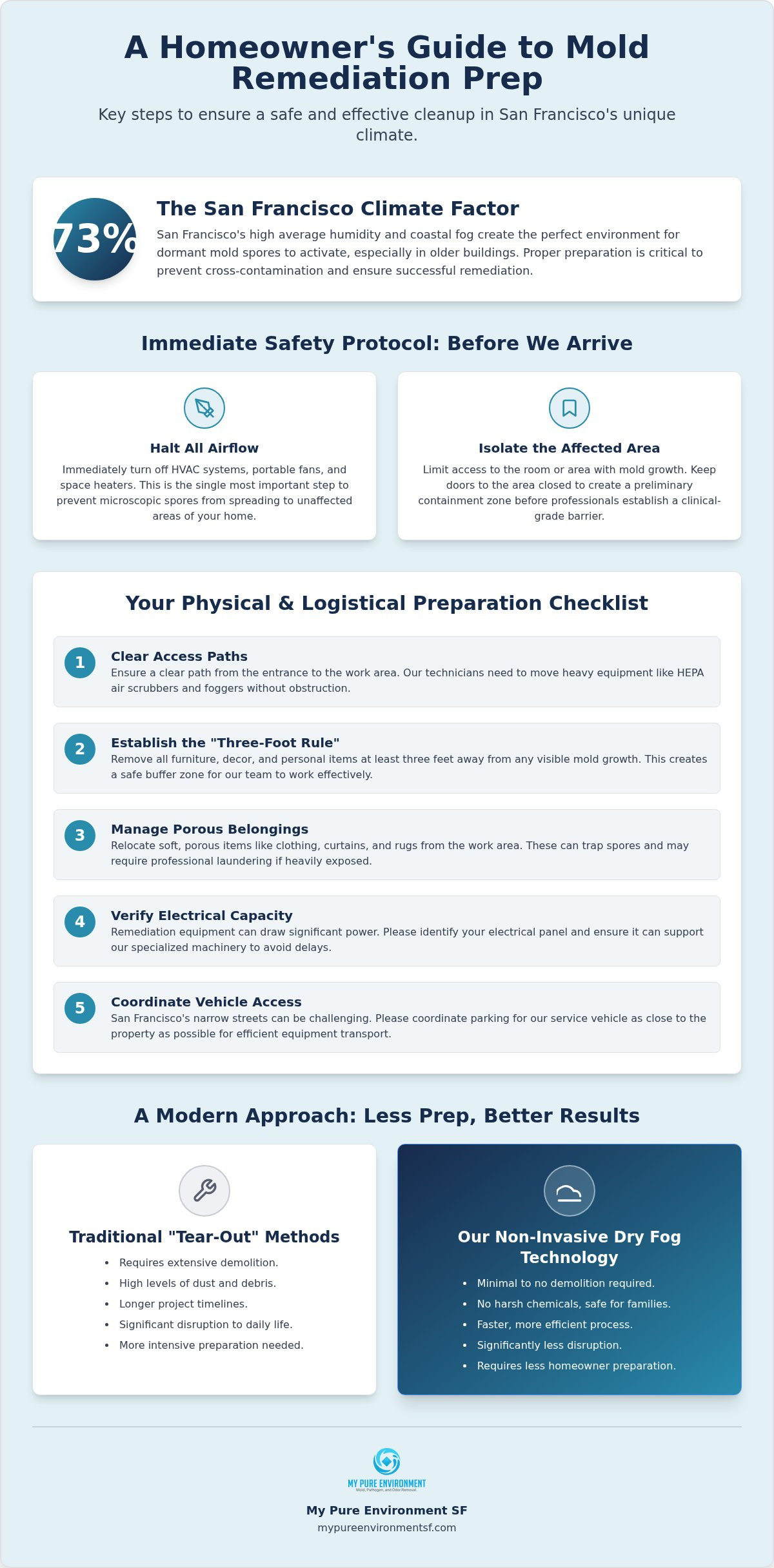
With San Francisco’s average humidity levels reaching 73 percent, mold isn't just a minor nuisance; it's a persistent environmental challenge for residents in the city's historic housing stock. If you've discovered growth in your property, your primary concern is likely how to prepare for mold remediation san francisco without risking cross-contamination or upending your family’s daily life. It’s natural to feel overwhelmed by the clinical requirements of a professional cleanup and the logistics of managing children or pets during the process.
We understand that protecting your household's health is your absolute priority. You shouldn't have to guess whether to discard cherished belongings or how to properly seal off sensitive areas. This guide promises to provide a clear, science-based roadmap to safeguard your home and ensure a smooth, non-disruptive remediation experience. We will explore essential protocols for inventory management, effective containment strategies, and the specific precautions required for our unique coastal climate. By following these structured steps, you can achieve a mold-free environment with the peace of mind that comes from a meticulous, professional approach.
Key Takeaways
- Understand how San Francisco's 73 percent average humidity and coastal fog can activate dormant spores, making clinical containment a critical priority during the remediation process.
- Learn exactly how to prepare for mold remediation san francisco by following a structured checklist to clear access paths and manage personal belongings safely before technicians arrive.
- Protect your family’s respiratory health by identifying how microscopic particles travel through older buildings and recognizing the environmental triggers unique to the Bay Area.
- Navigate city-specific logistical challenges, including verifying your electrical panel’s capacity for specialized equipment and coordinating parking for service vehicles on narrow streets.
- Discover the advantages of non-invasive Dry Fog technology, which requires significantly less preparation and demolition than traditional, high-disruption "tear-out" methods.
Why Preparation is Vital for Mold Remediation in San Francisco
Preparation is the silent partner in effective mold removal. In a city like San Francisco, where the environment is uniquely suited for fungal growth, jumping into a project without a plan often leads to recurring issues. Understanding how to prepare for mold remediation san francisco ensures that the specialized equipment used by professionals can work at maximum efficiency without being hindered by logistical obstacles. It isn't just about moving furniture; it's about establishing a controlled environment where the science of remediation can take place safely.
The Impact of the SF Coastal Climate
San Francisco’s climate is defined by its 73 percent average humidity and heavy coastal fog. These factors create a constant supply of moisture that Indoor mold requires to thrive. Neighborhoods like the Sunset District experience higher moisture levels than the Mission, but every home in the city is susceptible to secondary spore blooms if the indoor environment isn't stabilized. Proper preparation helps manage these humidity levels before our crew arrives, preventing dormant spores from activating during the cleaning process. This is particularly important for the city's older buildings, which often lack modern vapor barriers and insulation.
Isolating the Affected Area
One of the most significant risks during any project is cross-contamination. Mold spores are microscopic and lightweight; they travel easily on air currents. You should stop using HVAC systems, portable fans, or space heaters in the affected area immediately. This prevents the mechanical distribution of spores to unaffected rooms. Professional teams utilize "Containment Zones" to seal off the workspace, and your early cooperation in limiting airflow is vital. You can learn more about this in our guide to Professional Mold Remediation in San Francisco: A Science-Based Approach.
It's helpful to distinguish between preparing for an inspection and preparing for full remediation. An inspection is a diagnostic phase that requires minimal movement of items, whereas remediation is a restorative phase that demands clear access to the building's infrastructure. While timelines vary based on the extent of the growth, most residential projects in the Bay Area are completed within a few days. Setting realistic expectations starts with recognizing that thorough preparation is what allows for a smooth, non-disruptive experience. If you're wondering how to prepare for mold remediation san francisco, remember that your efforts in the days leading up to the appointment directly influence the speed and success of the restoration.
Physical Preparation: A Step-by-Step Checklist for Homeowners
Preparing your property for a professional crew is about more than just making space. It's a strategic effort to isolate contamination and protect your assets. When you are learning how to prepare for mold remediation san francisco, your first priority should be ensuring clear access to the primary site. Technicians often need to bring heavy HEPA scrubbers or specialized fogging equipment into tight areas like crawl spaces, bathrooms, or attics. If these paths are blocked by boxes or furniture, it delays the clinical process and increases the risk of accidentally disturbing settled spores.
Clearing the Remediation Work Zone
Remove all furniture and clutter within the immediate vicinity of the mold growth to prevent these items from becoming spore traps. Soft contents like curtains, clothing, and area rugs are particularly porous and should be moved or laundered according to professional recommendations. To create a safe and effective workspace, clear all objects at least three feet away from the visible mold in every direction. This "three-foot rule" provides the necessary buffer for technicians to set up containment barriers without obstruction. For additional safety protocols on handling household items, you can consult the EPA Mold Cleanup Guide to understand national standards for residential hygiene.
Protecting Non-Affected Areas
Spore drift is a significant concern during the agitation phase of any removal project. You should seal off closets and drawers in adjacent rooms using painter’s tape and light plastic sheeting to create a secondary barrier against microscopic particles. While it's tempting to start cleaning before the pros arrive, don't attempt to scrub or bleach the mold yourself. Agitating the surface without professional-grade containment and air filtration actually spreads the infestation further into your home's structure. If you're unsure about the extent of the growth in other rooms, scheduling a professional mold inspection can help determine which areas require the most protection.
Kitchens and bathrooms require specific protocols for food and medicine safety. Move all open food containers and medications into sealed plastic bins or relocate them to an unaffected part of the house. Even if the remediation is localized, these items are highly sensitive to air quality changes. Electronics also need special attention because dust-sensitive devices like high-end computers or gaming consoles can be damaged by fine particulates. Cover these items with plastic or move them to a "clean room" before work begins. By following this systematic approach, you ensure the remediation process is as efficient and safe as possible.
The Science of Spores: Understanding Mold Spores Health Effects
Mold spores are the microscopic reproductive units of fungi, acting much like seeds that travel through the air. In San Francisco’s dense neighborhoods, these particles move easily between rooms through drafty windows and floorboards typical of older Edwardian and Victorian architecture. When these colonies are disturbed during cleaning or construction, they release a high concentration of spores into the indoor environment. Understanding the biological behavior of these particles is essential when learning how to prepare for mold remediation san francisco. By properly sealing the area and reducing the "spore load" before technicians arrive, you prevent these triggers from settling into your furniture and HVAC systems.
Exposure to high spore counts often manifests as respiratory irritation, frequently misidentified by locals as a persistent "SF cough" or seasonal allergies. For many, this includes sneezing, runny noses, and red eyes. However, certain species produce mycotoxins, which are toxic secondary metabolites that can lead to more severe health complications over long periods. Adhering to CDC Mold Safety Guidelines is a fundamental part of our approach to protecting your household's long-term health. A technical, clinical approach to removal is required because simply killing the mold isn't enough; the allergenic and toxic properties of the spores remain even after the organism is dead.
Who is Most at Risk During Remediation?
While mold affects everyone differently, infants, the elderly, and immunocompromised family members are particularly sensitive to air quality shifts. During the remediation process, these individuals should remain in a separate, "clean" part of the home or vacate the property entirely. It's also vital to respect the "re-entry" window provided by your technicians. Rushing back into a treated space before the air has been fully scrubbed can lead to acute respiratory distress. For a deeper look at managing your home's environment, consult our Mold and Indoor Air Quality in San Francisco: The Complete 2026 Guide.
Protecting Pets from Spore Exposure
Pets are often the first to show signs of environmental distress due to their smaller lung capacity and proximity to floor-level surfaces where spores settle. Symptoms of mold toxicity in dogs and cats include lethargy, excessive scratching, and labored breathing. Because animals don't understand the dangers of containment barriers, they must be removed from the property during the remediation window. Many San Francisco pet owners utilize local boarding facilities or arrange for a pet-sitter in a different neighborhood to ensure their companions stay safe. This is a critical step in how to prepare for mold remediation san francisco, as it allows technicians to work efficiently without the risk of a pet accidentally breaching a containment zone.
Logistical Preparation: Electricity, Access, and Neighbors
Preparing for the technical side of mold removal is only half the battle; the logistical reality of San Francisco living presents its own set of challenges. When you're considering how to prepare for mold remediation san francisco, you must account for the city's unique infrastructure and high-density environment. A successful project depends on a clear understanding of your home's capacity to support industrial-grade equipment and the ability of our team to navigate your specific neighborhood logistics. Addressing these details early prevents delays and ensures the clinical restoration of your indoor air quality stays on schedule.
Electrical and Utility Requirements
Professional mold remediation relies heavily on high-powered air filtration systems and HEPA scrubbers that must run continuously to keep the workspace under negative pressure. Many homes in San Francisco date back to the mid-20th century, with a median construction year of 1946, meaning the electrical panels may not be equipped for modern, high-amperage loads. If you live in a classic Victorian or Edwardian with original wiring, it's vital to identify which circuits are dedicated to avoid tripped breakers during the process. Water and electrical services must remain fully active throughout the project to support the critical cleaning and air filtration protocols necessary for a successful outcome.
San Francisco Parking and Crew Logistics
The city’s narrow streets and strict parking enforcement can complicate the arrival of service vans and the transport of equipment. If you live in high-density neighborhoods like Nob Hill, North Beach, or the Mission, coordinating a parking space or checking for local permit requirements can prevent significant delays on the day of the project. For residents in managed apartment buildings or condos, notifying the property manager about building access, service elevator use, and parking for technicians is a critical step in how to prepare for mold remediation san francisco. Managing these entry points ensures that our specialists can move equipment in and out without breaching containment zones or disturbing other tenants.
Communication with your neighbors or HOA is also a strategic part of the logistical plan. While you aren't always legally required to disclose a private remediation, the sound of air scrubbers can be noticeable in shared-wall environments. Providing a brief heads-up can prevent unnecessary concern and maintain positive community relations. Finally, establish a secure method for team access, such as a lockbox or digital code, so work can proceed efficiently even if you aren't on-site. If you're ready to restore your home’s safety and air quality, contact us today for expert mold remediation.
Preparing for Non-Invasive Remediation with My Pure Environment SF
Traditional remediation often involves extensive demolition, where walls are torn down and entire rooms are gutted to reach hidden growth. This "tear-out" method creates significant dust and can inadvertently spread spores into unaffected areas. When you choose a specialized partner like My Pure Environment SF, learning how to prepare for mold remediation san francisco becomes a much simpler, less invasive process. Our focus is strictly on the science of indoor air quality, which means we prioritize neutralizing spores without the mess and structural disruption of general construction.
By avoiding demolition, we maintain the integrity of your home’s air while ensuring that microscopic particles are denatured where they sit. We don't perform general construction or rebuilding services because our expertise lies in environmental purification, not carpentry. This specialization ensures that our clinical focus remains entirely on your health and the systemic purity of your property. When our team arrives for the final walkthrough, we will confirm that all containment zones are secure and explain exactly how the treatment will proceed, giving you total transparency before the work begins.
Dry Fog vs. Traditional Tear-Out Preparation
The primary benefit of our Dry Fog technology is that it often eliminates the need to move every piece of furniture or empty every closet. Unlike traditional methods that require you to vacate for days or weeks, our non-invasive approach typically allows for faster re-entry, often within just a few hours. This method ensures your air meets a "purity" standard that is often cleaner than when the project started. To understand the metrics behind this process, you can review our Indoor Air Quality Testing San Francisco: The Complete 2026 Property Owner’s Guide.
Your Post-Remediation Plan
Success in mold removal is measured by zero regrowth and restored health. Once the treatment is complete, we recommend setting up post-remediation verification (PRV) testing. This independent assessment provides empirical proof that the spore counts have returned to safe, natural levels. To keep your home protected in the San Francisco climate, you should maintain indoor humidity below 50 percent and ensure that bathroom and kitchen ventilation systems are functioning at peak efficiency. These small habits prevent the moisture accumulation that leads to secondary blooms. If you're ready to secure your home’s environment, schedule your professional San Francisco mold inspection today to get started with a science-based solution.
Restoring Your Home’s Health and Safety
Successfully managing a mold issue in the Bay Area requires a blend of technical expertise and homeowner collaboration. You've learned that our unique coastal climate makes clinical containment a high priority and that clearing a three-foot buffer around affected areas is a vital first step. Understanding how to prepare for mold remediation san francisco ensures your project moves forward without the unnecessary stress of cross-contamination or logistical delays. By addressing power requirements and securing your pets, you create a controlled environment where professional restoration can thrive.
My Pure Environment SF acts as your protective guide throughout this clinical process. As San Francisco indoor air quality experts and IICRC certified professionals, we utilize specialized non-invasive Dry Fog technology to neutralize spores without the disruption of traditional demolition. This science-based approach prioritizes the systemic health of your living space and the long-term well-being of your family. You don't have to navigate these environmental hazards alone. Get a Science-Based Mold Remediation Quote for Your SF Property and take the final step toward a pure, mold-free home today.
Frequently Asked Questions
Do I need to leave my house during mold remediation in San Francisco?
Yes, you should plan to vacate the property for several hours during the actual treatment window. While our non-invasive Dry Fog technology is significantly faster than traditional demolition, safety protocols require the home to be empty of people and pets during the application. This ensures no one is exposed to the concentrated neutralizing agents. Most San Francisco residents find this period manageable, typically returning home the same day once the air has been cleared.
How long does the typical mold remediation preparation take?
Homeowners should typically allocate one to two days to complete the physical tasks involved in how to prepare for mold remediation san francisco. This timeline allows you to properly clear access paths to the attic or crawl space and secure sensitive electronics. If you have a high volume of personal belongings or "soft contents" in the affected area, starting the sorting process early prevents a rushed and stressful experience on the day of service.
Can I leave my clothes in the closet during the remediation process?
When utilizing non-invasive Dry Fog technology, you can often leave your clothing in the closet as the vapor penetrates porous fabrics to neutralize hidden spores. However, if traditional demolition is required, all garments must be removed and laundered to prevent cross-contamination. Our technicians will provide specific instructions based on the severity of the infestation. It's always best to protect high-value or delicate items by sealing them in plastic bins before work begins.
Should I clean the mold myself before the professional crew arrives?
You should never attempt to scrub or bleach visible mold before the professional crew arrives. Agitating the surface without industrial-grade containment and HEPA filtration releases millions of microscopic spores into your indoor air, potentially spreading the contamination to unaffected rooms. This DIY approach often makes the professional remediation process more complex and time-consuming. Instead, leave the growth undisturbed and focus your energy on clearing the workspace and managing logistics for the team.
What happens if the crew finds mold behind the walls during prep?
If hidden growth is identified during the preparation phase, our team will immediately update the remediation plan to address the new findings. Because we specialize in non-invasive techniques, we can often treat mold behind walls or within structural voids without resorting to demolition. We focus strictly on air quality science rather than general construction. This ensures that the underlying fungal issue is resolved while maintaining the structural integrity of your San Francisco home.
How do mold spores health effects differ for children versus adults?
Children are generally more susceptible to the adverse effects of mold because their respiratory systems and immune defenses are still developing. They also have a higher breathing rate relative to their body size, meaning they inhale more spores per minute than adults. Exposure in early childhood is frequently linked to the development of pediatric asthma and chronic respiratory triggers. Adults may experience similar symptoms, but children often face more significant long-term health challenges from poor air quality.
Is mold remediation in San Francisco more expensive than in other cities?
Remediation costs in San Francisco often reflect the city's higher labor rates, disposal fees, and the complexity of working in older, historic buildings. While we do not provide specific price quotes in this guide, residents should expect costs to align with the regional economic climate. Factors such as the age of the housing stock and the need for specialized parking permits on narrow streets also contribute to the overall project logistics compared to less dense urban areas.
What should I do with my houseplants during the mold removal process?
You should move all houseplants to an unaffected room or remove them from the property entirely before the remediation begins. Mold spores can easily settle on leaves and within the moist soil of your plants, creating a potential reservoir for future growth. Additionally, the specialized agents used during the treatment process may be sensitive for certain plant species. Relocating them ensures they remain healthy while allowing our team to achieve a completely pure environment.
