
Indoor Air Quality Testing San Francisco: The Complete 2026 Property Owner’s Guide

What if the air inside your home is actually five times more polluted than the air outside, even on a clear day? For many property owners in the Bay Area, the sanctuary of a historic Victorian or a modern condo can feel compromised when unexplained respiratory issues or allergies begin to surface. It's unsettling to suspect that hidden mold might be affecting your family, which is why professional indoor air quality testing san francisco has become an essential tool for maintaining building health. You deserve to know exactly what you're breathing without the stress of guesswork or alarmist sales tactics.
This guide empowers you to use scientific testing as a clinical diagnostic tool to protect both your health and your property value. We'll bridge the gap between your physical symptoms and data driven solutions by explaining the latest 2026 ventilation standards and laboratory backed detection methods. You will learn how to identify specific environmental hazards, interpret complex reports, and follow a structured path toward resolution. By the end of this article, you will have a clear, actionable strategy to achieve lasting peace of mind and a truly healthy living space.
Key Takeaways
- Understand the systematic multi-step process, including moisture mapping and specialized sampling, that defines comprehensive indoor air quality testing san francisco.
- Recognize critical triggers for a professional assessment, such as persistent musty odors or visible growth in high-risk areas like bathrooms and attics.
- Learn to distinguish between airborne spore counts and surface sampling to ensure your testing strategy captures both hidden and visible environmental hazards.
- Gain the ability to interpret complex lab reports by comparing indoor samples to outdoor controls to determine the systemic health of your building.
- Transition from data to action by using laboratory findings to create a targeted remediation plan that prioritizes non-invasive restoration and long-term purity.
The Professional IAQ Testing Process in San Francisco
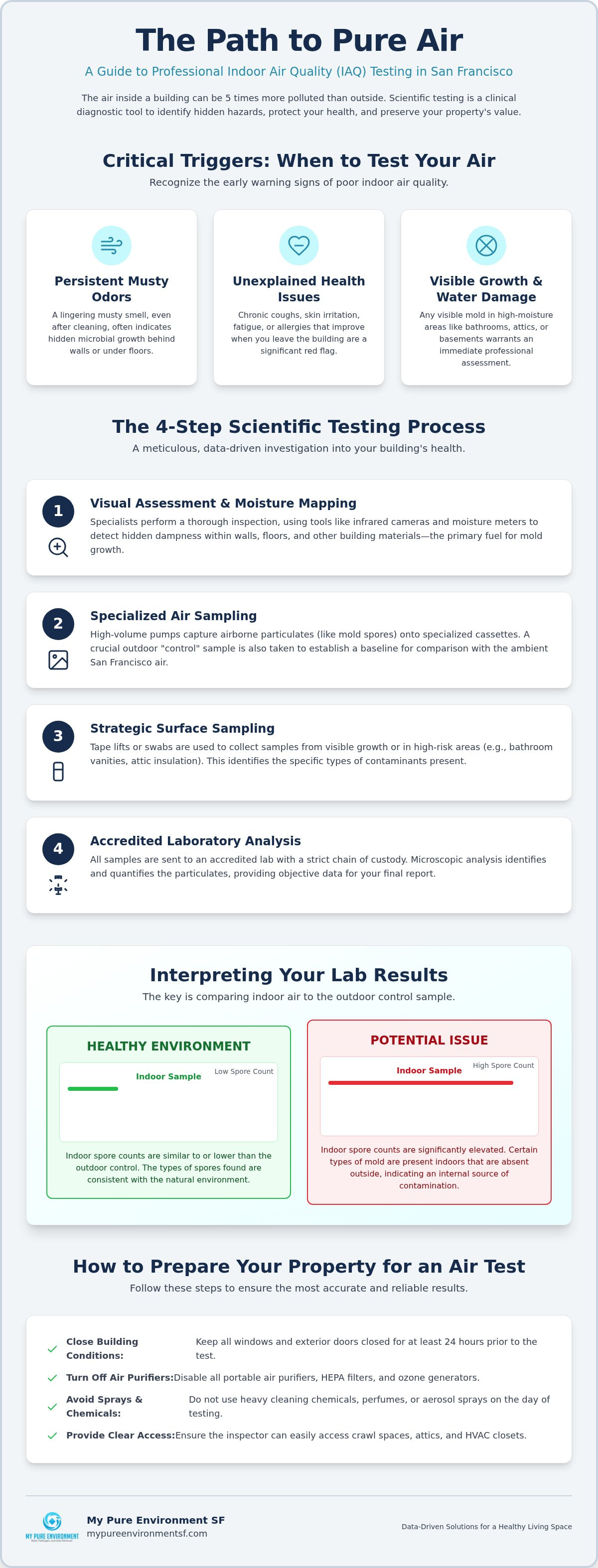
Professional indoor air quality testing san francisco is a meticulous, four step procedure designed to identify hidden environmental stressors. It isn't just a quick walk through; it's a clinical investigation into your building's health. By treating your property as a systemic environment, specialists can pinpoint exactly where contaminants originate and how they circulate through your living space. This data driven approach ensures that any subsequent remediation is targeted and effective rather than speculative.
The process begins with a comprehensive visual assessment and moisture mapping. Specialists use diagnostic tools to find hidden dampness within wall cavities or under flooring. After identifying potential problem areas, we move to the deployment of specialized air sampling equipment. These high volume pumps capture airborne particulates onto specialized cassettes for microscopic analysis. We also perform strategic surface sampling using tape lifts or swabs in high risk areas like bathroom vanities or attic insulation. Finally, every sample follows a strict chain of custody before being sent to an accredited laboratory. This ensures that the data used to evaluate your Indoor air quality (IAQ) is scientifically accurate and professionally handled.
What to Expect During the On-Site Inspection
A standard residential inspection usually takes between 90 minutes and three hours, while commercial projects vary based on square footage. Our specialists utilize a suite of advanced diagnostic tools to see what the naked eye cannot. Infrared cameras detect thermal anomalies that often indicate hidden leaks, while moisture meters quantify the water content in building materials. A critical component of the visit is collecting an outdoor control sample. We use this baseline data to compare your indoor environment against the ambient air in San Francisco. This comparison is the only way to determine if your indoor levels are elevated or if they reflect the natural local environment.
Preparing Your SF Property for an Air Test
Accurate data depends on maintaining closed building conditions. To ensure the most reliable results for your indoor air quality testing san francisco, you should follow a few simple preparation steps:
- Keep all windows and exterior doors closed for at least 24 hours prior to the technician's arrival.
- Turn off all portable air purifiers, HEPA filters, and ozone generators.
- Avoid using heavy cleaning chemicals, perfumes, or aerosol sprays on the day of testing.
- Ensure the inspector has clear access to crawl spaces, attics, and HVAC closets.
By stabilizing the environment, you prevent temporary fluctuations from masking long term issues. This preparation allows the laboratory to analyze a representative snapshot of the air you breathe every day, providing the peace of mind that comes with factual certainty.
When to Schedule an Air Quality Assessment
Identifying the right time for indoor air quality testing san francisco requires a balance of sensory observation and clinical logic. Many property owners wait for a catastrophic event like a burst pipe, but the most significant issues often develop slowly over months or years. If you notice a persistent musty odor that lingers even after a deep clean, it's a primary indicator of microbial activity. These smells are often volatile organic compounds produced by mold as it grows, signaling that a hidden colony may be thriving behind your walls or under floorboards.
Visible growth in high moisture areas like bathrooms or attics is an obvious trigger, but physical symptoms are frequently the first sign of a problem. If residents or employees report chronic coughs, skin irritation, or fatigue that improves when they leave the building, an assessment is necessary. Following the EPA guidelines on indoor air quality helps differentiate between minor irritants and systemic hazards. Beyond health concerns, professional testing is a vital protective measure during real estate transactions or as a final verification after a remediation project to ensure the space is truly restored.
San Francisco Microclimates and Indoor Health
San Francisco's unique geography creates specific challenges for property owners. The "Fog City" humidity regularly pushes indoor moisture levels beyond the 60% threshold where mold thrives. This is particularly problematic in historic Victorian and Edwardian homes, where original lath and plaster walls can trap moisture without modern drainage systems. In high density apartments, poor cross ventilation often leads to stagnant air and localized humidity spikes. Understanding these local factors is key to successful indoor air quality improvement and long term building health.
Health Triggers and Indoor Pollutants
Commercial spaces often face "Sick Building Syndrome," where occupants experience acute health effects linked to time spent in a specific building. While mold is a common culprit, testing for Volatile Organic Compounds (VOCs) is equally important in modern offices with new carpeting or synthetic finishes. VOCs are chemical gases that can cause headaches and dizziness, whereas mold spores primarily trigger respiratory issues. Distinguishing between these pollutants requires specialized equipment and laboratory analysis. If you suspect your environment is contributing to chronic conditions, a clinical assessment provides the data needed to make informed health decisions without the stress of guesswork.
Types of Indoor Air Quality Tests: Choosing the Right Assessment
Selecting the right diagnostic tool is essential for an accurate understanding of your environment. While some situations require a broad overview, others demand microscopic precision to identify specific toxins. The most common method in indoor air quality testing san francisco is airborne spore sampling. This process uses calibrated air pumps to pull a specific volume of air through a collection cassette, allowing laboratories to calculate the concentration of spores per cubic meter. It's the gold standard for identifying hidden colonies that aren't yet visible to the naked eye.
Surface sampling, including tape lifts and swabs, serves a different purpose. These tests are used when a physical substance is present and needs to be identified by genus or species. This is critical for distinguishing between common cosmetic mold and more concerning varieties like Stachybotrys. For chemical concerns, we utilize VOC testing to detect off-gassing from building materials, paints, or furniture. If you need a long term historical perspective of a building's fungal load, the Environmental Relative Moldiness Index (ERMI) uses DNA analysis of dust samples to provide a comprehensive health score.
Mold Spore Air Testing vs. Surface Swabs
Air testing is your primary tool for detecting issues behind drywall or within HVAC systems. It captures what's currently circulating in your breathing zone. In contrast, surface swabs confirm the exact nature of visible growth. Many property owners attempt to use "DIY" home test kits, but these often provide misleading results. Without a professional's ability to interpret data against an outdoor control sample, these kits frequently yield false positives or fail to identify the systemic source of the problem. For a deeper look at these methodologies, consult our San Francisco Mold Testing Guide for Property Owners.
Specialized Testing for SF Businesses and Industries
Commercial environments require a different strategic approach. In professional offices, testing focuses on employee wellness and cognitive productivity, ensuring that CO2 levels and pollutants don't lead to fatigue or respiratory complaints. We also provide specialized mold and cannabis services for local cultivators. In the cannabis industry, air purity is a regulatory mandate and a crop protection necessity. Whether you're managing a high-rise office or a boutique grow facility, professional indoor air quality testing san francisco ensures your operations remain compliant and your occupants stay healthy. This clinical approach prioritizes data over guesswork, providing a clear path to a restored environment.
How to Interpret Your IAQ Laboratory Results
Receiving a laboratory report after indoor air quality testing san francisco can feel overwhelming. These documents are data dense clinical assessments that require a methodical approach to interpret correctly. The most important comparison isn't between different rooms, but between your indoor samples and the outdoor control. In a healthy environment, indoor spore counts should be lower than or equal to the ambient air outside. If indoor levels for a specific species significantly exceed the outdoor baseline, it suggests an active growth source within the building.
Specialists look specifically for "marker" species like Stachybotrys or Chaetomium. These heavy, sticky spores are rarely found in outdoor air. Finding even a single spore of these varieties indoors is a red flag for chronic water damage. We also distinguish between "elevated" levels, which indicate a higher than normal concentration, and "toxic" levels, which refer to specific species known for producing mycotoxins. Both scenarios require attention, but the remediation strategy will differ based on the severity and the specific species identified in the lab data.
Understanding the Lab Report Terminology
Your report will likely display a "Raw Count" and a "Spores per Cubic Meter" value. The raw count is the actual number of spores the lab technician identified on the slide, while the spores per cubic meter is a calculated estimate of the total concentration in your air. We also pay close attention to the presence of "hyphal fragments." These are the root structures of mold; their presence in an air sample is a strong indicator of active, nearby growth rather than spores that simply drifted in from an open window.
Evaluating Risk Factors and Action Plans
A "clear" report with low spore counts doesn't always mean your property is free of issues. If our moisture mapping from the initial assessment identified high humidity or damp building materials, you still need a moisture management plan to prevent future colonization. Deciding between localized cleaning and professional mold testing and inspection depends on the species found and the extent of the moisture intrusion. For a deeper dive into these environmental standards, read our Mold and Indoor Air Quality in San Francisco: The Complete 2026 Guide. Understanding these results is the first step toward restoring your space to a state of clinical purity.
Next Steps: From Testing to Pure Air
Once the lab results confirm an issue, the focus shifts from detection to restoration. A targeted remediation plan is developed using the specific data points from your professional indoor air quality testing san francisco. This isn't a one-size-fits-all approach; it's a precise strategy designed to address the unique microbial load of your property. By utilizing non-invasive technology, such as Dry Fog, we can treat systemic issues without the need for destructive demolition. This method ensures that microscopic spores are neutralized in the air and on surfaces, restoring your environment to a state of clinical purity.
Long term prevention is the final piece of the building health puzzle. In San Francisco, where 2026 ventilation standards now require certification for positive pressure in many renovation projects, ensuring your HVAC system is optimized is crucial. Success is only confirmed through post-remediation verification testing. This follow-up assessment uses the same rigorous sampling methods as the initial test to prove that the spore counts have returned to normal, healthy levels. It provides the final layer of transparency needed for true peace of mind.
The My Pure Environment SF Approach
We prioritize a health-centric remediation philosophy that avoids the debris and dust of general construction. Our team focuses on identifying and removing hazards in high-risk areas like bathrooms and attics, where San Francisco's humidity often concentrates. We provide scientific transparency at every stage, ensuring you understand the clinical accuracy behind our recommendations. This specialized focus allows us to act as a protective guide, moving you toward a safer living or working space without the stress of high-pressure sales tactics.
Maintaining Healthy Air in San Francisco
Managing indoor health in the Bay Area is an ongoing commitment. To maintain the results achieved through indoor air quality testing san francisco, property owners should utilize high-capacity dehumidifiers to keep moisture levels below 50%. Regular air flow is essential, especially in older buildings that lack modern mechanical ventilation. For high-risk properties or commercial spaces, annual check-ups act as a preventive screen against emerging environmental issues. Taking proactive steps today ensures your property value and your family's health remain protected for years to come.
Schedule your professional indoor air quality test today
Securing Your Property’s Future with Scientific Precision
Maintaining a healthy indoor environment in the Bay Area requires more than just a surface level visual check. By utilizing professional indoor air quality testing san francisco, you replace uncertainty with laboratory backed reporting. This clinical approach ensures that every decision you make for your home or office is rooted in scientific fact rather than speculation. You've learned how specialized San Francisco climate expertise helps identify hazards unique to our microclimates and how non-invasive remediation options can restore purity without the disruption of traditional demolition.
Protecting your respiratory health and your property value is a proactive journey. Armed with a clear understanding of your lab results and a targeted action plan, you can resolve underlying moisture issues and eliminate hidden contaminants for good. Taking this step provides the peace of mind that comes from knowing your space is truly safe. Breathe easier: book your San Francisco air quality assessment today. We're here to act as your protective guide, ensuring your environment supports your well-being every single day.
Frequently Asked Questions
How long does a professional indoor air quality test take in San Francisco?
A standard residential assessment typically requires 90 minutes to three hours to complete. This timeframe allows our specialists to perform a thorough visual inspection and set up the necessary air sampling equipment. Larger commercial properties or complex historic Victorians may require additional time to ensure every zone is properly evaluated. We prioritize a methodical pace to ensure that the data collected during your indoor air quality testing san francisco is both accurate and comprehensive.
Can I stay in my home while air quality testing is being performed?
You can certainly remain in the building while the assessment is being conducted. The equipment we use is relatively quiet and the process is entirely non-invasive. However, it's essential that the environment remains stabilized during the visit. This means you should avoid cooking, cleaning with chemicals, or opening exterior doors and windows while the air pumps are running. Maintaining these closed building conditions ensures the laboratory receives a representative sample of your typical air.
Does a musty smell always mean there is a mold problem?
A persistent musty odor is a primary indicator of microbial volatile organic compounds (MVOCs). These gases are produced by mold during its active growth cycle. While the smell doesn't always mean you have a massive infestation, it does confirm that mold is present and metabolizing somewhere in the structure. Even if growth isn't visible on your drywall, the odor suggests hidden activity behind cabinets or under flooring that requires professional investigation to resolve.
What is the difference between an air test and a mold inspection?
A mold inspection is a visual and physical search for moisture issues, while an air test is a scientific measurement of airborne particulates. The inspection identifies the why and where by using tools like infrared cameras and moisture meters. The air test provides the what by identifying specific species and concentrations through laboratory analysis. Combining these two elements is the only way to achieve a complete clinical diagnosis of your building's systemic health.
How much does indoor air quality testing typically cost in the Bay Area?
The total investment for an assessment depends on the square footage of the property and the number of lab samples required to reach a definitive conclusion. Factors such as the specific pollutants being analyzed and the speed of laboratory turnaround times also influence the final cost. While we don't provide flat rates here, most property owners view this service as a vital protective measure for their health and a way to maintain long term property value.
Will insurance cover the cost of air quality testing?
Coverage for environmental testing varies significantly between different insurance providers and specific policy riders. In many cases, testing is covered if it's part of a claim related to a sudden, accidental water event like a burst pipe. However, issues caused by long term humidity or lack of maintenance are often excluded. We recommend reviewing your policy's environmental hazards or mold sections and speaking with your agent to confirm your specific coverage details.
How soon after a leak should I have my air tested?
You should schedule an assessment within 24 to 48 hours after a moisture event has been addressed. Mold can begin to colonize damp building materials in as little as two days, especially in the high humidity common to San Francisco. Testing shortly after a leak confirms whether your initial drying efforts were successful. It also provides a baseline to ensure that no hidden growth has started in wall cavities or under flooring where moisture often lingers.
What specific pollutants are included in a standard IAQ test?
A standard assessment typically focuses on fungal spores, but it can be expanded to include a variety of other environmental stressors. We often analyze for Volatile Organic Compounds (VOCs), fine particulate matter (PM2.5), and carbon dioxide levels to provide a holistic view of your environment. Including these factors in your indoor air quality testing san francisco ensures that we identify chemical off-gassing or ventilation deficiencies that could be contributing to chronic respiratory irritation.
