
Dry Fog Mold Remediation: The Science-Based How-To Guide

What if you could eliminate every mold spore in your home without swinging a single sledgehammer? For many homeowners, the discovery of a musty smell in the bathroom or attic leads to immediate anxiety about expensive demolition and weeks of construction dust. You shouldn't have to choose between your home's structural integrity and your family's respiratory health. While traditional methods focus only on what you can see, dry fog mold remediation addresses the microscopic reality of indoor air quality.
It is frustrating to deal with the mess of a standard renovation when you just want a safe environment for your loved ones. We agree that the most effective solution should be as non-invasive as possible. In this guide, you'll discover how professional dry fog technology neutralizes mold spores without the need for demolition or toxic chemicals. We'll explore the science behind sub-micron particles, compare this method to older techniques, and show you how to achieve a truly mold-free home through a clinical, data-driven approach that prioritizes your peace of mind.
Key Takeaways
- Understand the mechanics of professional dry fog mold remediation, which utilizes a pressurized, micron-sized vapor to neutralize spores without wetting surfaces or damaging sensitive electronics.
- Learn the science of micron technology, including how Brownian motion allows microscopic particles to penetrate hidden crevices and porous materials like drywall.
- Compare the efficiency and cost-effectiveness of non-invasive fogging against traditional, demolition-heavy methods to determine the most surgical approach for your home.
- Follow a professional step-by-step process that begins with moisture identification and thorough preparation to ensure a comprehensive, systemic treatment.
- Discover how specialized expertise in high-humidity microclimates ensures a family-safe and pet-safe remediation process that restores your indoor air quality.
What is Dry Fog Mold Remediation?
Professional dry fog mold remediation is a sophisticated approach to environmental restoration that moves beyond the limitations of manual scrubbing. It involves dispersing a cold, pressurized vapor of sterilant into an affected space. Unlike traditional methods that rely on physical abrasion or heavy liquids, this technology addresses mold at the microscopic level by filling the entire volume of a room with a specialized fog. This ensures that the treatment reaches every corner, crack, and hidden surface that manual cleaning simply cannot access.
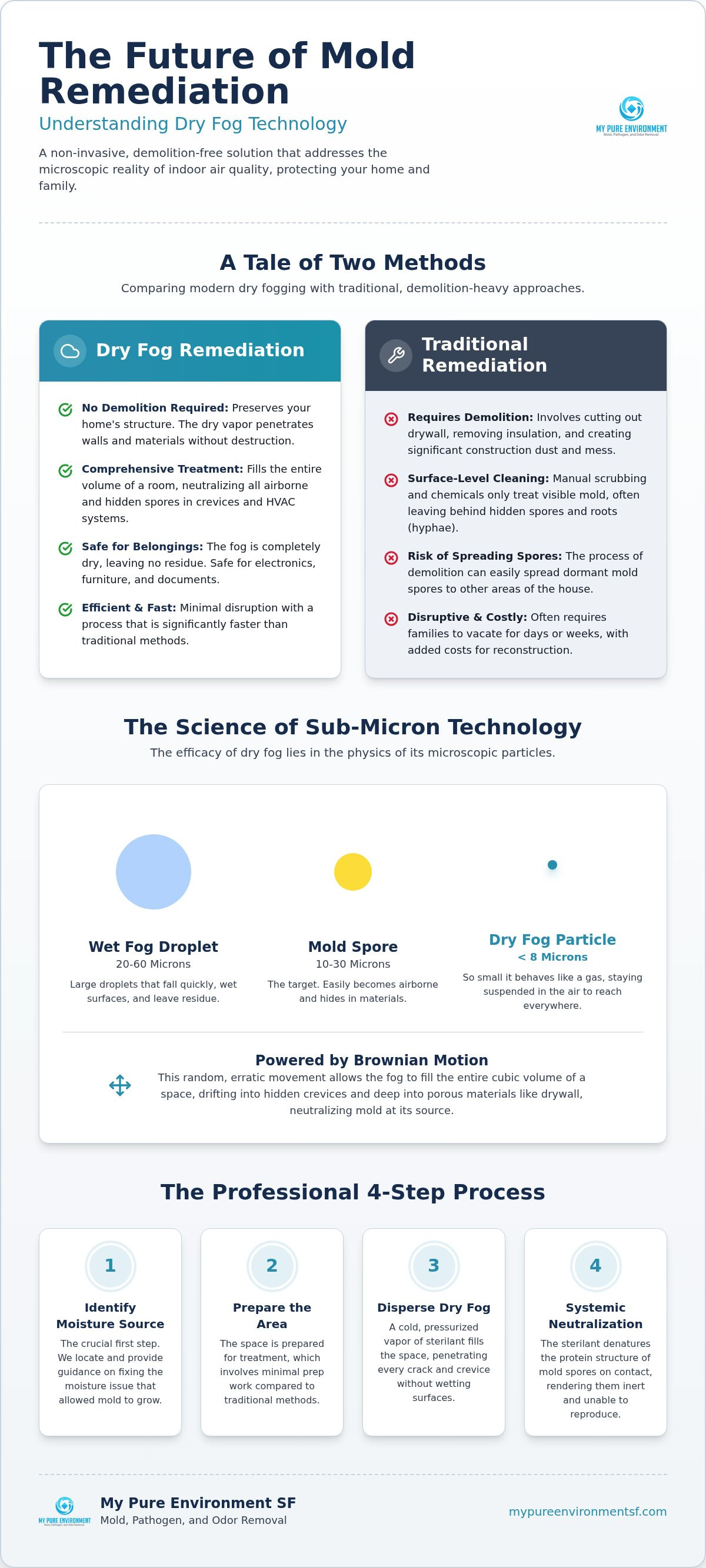
The term "dry" is not a marketing label; it describes the physical behavior of the vapor. Because the particles are engineered to be smaller than 8 microns, they don't have enough mass to break surface tension and wet a surface. This means you can fill a room with this fog and your electronics, documents, and delicate upholstery will remain completely dry. It's a clinical, surgical method designed to protect your property while aggressively neutralizing fungal threats. Understanding the science of indoor mold growth reveals that spores are ubiquitous and highly mobile. A systemic solution is required to neutralize these airborne threats alongside visible surface colonies simultaneously.
The Difference Between Wet and Dry Fogging
Many homeowners confuse professional dry fogging with "wet" fogging or standard misting. Wet fogging creates large droplets that eventually settle and pool, which can lead to secondary moisture issues or sticky residues. In contrast, dry fogging uses particles so small they behave like a gas. These sub-micron particles remain suspended in the air longer, ensuring total saturation of the environment. This droplet size is the deciding factor in the success of the remediation; it allows the sterilant to bounce off surfaces rather than soaking them, ensuring a thorough kill without the mess.
When to Choose Dry Fogging Over Traditional Methods
Dry fogging is the preferred method for mold removal without demolition, especially in complex areas like San Francisco attics or finished bathrooms. It's ideal for systemic mold issues where spores have entered the home's air supply and settled in hard-to-reach insulation or behind vanities. When evaluating your options, it's helpful to understand the mold remediation vs mold removal distinction. While "removal" focuses on the visible growth, "remediation" focuses on returning the entire indoor environment to a healthy state. Dry fogging excels at this by neutralizing the invisible airborne load that traditional demolition often ignores or, worse, spreads throughout the house.
The Science of Micron Technology: How Dry Fog Penetrates Mold
The efficacy of dry fog mold remediation lies in the physics of particle movement. When particles are pressurized to a size smaller than 8 microns, they stop behaving like heavy liquid droplets and begin to behave like a gas. This allows them to utilize Brownian Motion, which is the random, erratic movement of particles resulting from their collision with the fast-moving molecules in the gas. Because of this movement, the fog doesn't just fall to the floor; it fills the entire cubic volume of a space, drifting into hidden crevices, behind baseboards, and deep into wall cavities where traditional cleaning tools cannot reach.
Beyond reach, the technology focuses on molecular neutralization. The sterilant used in this process is designed to denature the protein structure of mold spores on contact. By breaking down these proteins, the fog renders the spores inert and unable to reproduce. While EPA guidelines on mold cleanup emphasize the necessity of addressing the moisture source, dry fogging provides a systemic secondary layer of protection. It travels through HVAC systems, neutralizing spores that have settled in ductwork, which prevents the home's heating and cooling system from redistributing contaminants throughout the property.
Penetrating Porous and Semi-Porous Surfaces
Mold isn't just a surface issue; it's a structural one. Mold roots, known as hyphae, grow deep into porous materials like drywall and wood. Traditional wiping or spraying often only treats the surface, leaving the root system intact to regrow as soon as humidity rises. Because dry fog particles are so small, they have extremely low surface tension. This allows them to follow the same path as the mold roots, penetrating deep into the material to neutralize the fungus at its source. This same principle applies to soft goods like upholstery and curtains, which often have to be discarded in traditional remediation but can be saved through systemic fogging.
Air Quality Restoration
One of the most significant benefits of this technology is the "scrubbing" effect it has on the air column. As the fog moves through the room, it attaches to airborne spores, pulling them out of suspension and neutralizing them. This process significantly reduces the volatile organic compounds (VOCs) and musty odors that often cause health-related anxiety for residents. The micron-sized vapor achieves 100% surface contact across every square inch of the room without ever breaking surface tension or leaving behind a trace of moisture. If you are concerned about the air quality in your living space, a professional indoor air quality improvement assessment can help determine the extent of the invisible spore load.
Dry Fogging vs. Traditional Remediation: Addressing the Efficacy Debate
The debate between traditional remediation and modern technology often centers on the concept of "source removal." Critics of fogging frequently cite industry standards that prioritize the physical removal of all fungal matter. However, this traditional perspective often overlooks the reality of cross-contamination. When a contractor begins tearing out mold-infested drywall, they inevitably aerosolize millions of spores. Unless containment is absolute, these spores travel through the air, settling in other rooms. Dry fog mold remediation offers a surgical alternative by neutralizing these spores in place, preventing the secondary damage caused by invasive construction.
While CDC recommendations for mold remediation emphasize the importance of cleaning and drying, they also highlight the need for systemic safety. Traditional demolition is messy, loud, and creates significant amounts of dust that can irritate sensitive respiratory systems. In many cases, a hybrid approach is the most effective: replacing structurally compromised materials while using dry fog to treat the rest of the home's air supply and surfaces. This ensures that even the spores hidden in the HVAC or behind unaffected walls are addressed without unnecessarily destroying healthy building materials.
Debunking the "Masking" Myth
A common misconception is that fogging simply masks odors with fragrances. Professional-grade dry fog mold remediation is a sophisticated chemical process that changes the molecular structure of the mold. By denaturing the proteins within the spore, the fog turns active fungal colonies into inert, non-allergenic organic matter. It's not a cover-up; it's a systemic neutralization. To ensure transparency, we rely on post-remediation air quality testing. These tests confirm that the spore counts have returned to safe, background levels, providing factual proof that the environment is restored rather than just perfumed.
Cost and Time Comparison for SF Homeowners
For residents in the Bay Area, time is often as valuable as the repair itself. A traditional remediation project involving demolition can take days or even weeks, especially when you factor in the reconstruction of bathrooms or attics. In contrast, a comprehensive treatment typically takes between 4 and 8 hours. This efficiency allows families to avoid the cost and stress of hotel stays or long-term displacement. When evaluating mold remediation san francisco options, homeowners should consider the total cost of ownership, which includes the price of reconstruction and the emotional toll of a disrupted home.
The Step-by-Step Professional Dry Fogging Process
Professional dry fog mold remediation is not a simple "spray and walk away" procedure. It's a meticulous, science-based sequence designed to ensure every cubic inch of your property is treated. The process begins long before the fogging machine is turned on, starting with a comprehensive assessment of the environment's health. By following a structured set of mold remediation process steps, technicians ensure that the treatment is not just a temporary fix but a lasting solution for your home.
Phase 1: Inspection and Containment
The most critical step in any remediation project is identifying the moisture source. Mold cannot thrive without water, so finding leaks or high-humidity zones is paramount. Our specialists use advanced diagnostic tools like infrared cameras and moisture meters to detect hidden growth behind walls or under flooring. While the dry fog itself is non-invasive, we may establish negative air pressure in specific scenarios to prevent the migration of dust or debris during the initial assessment. This clinical focus on detection ensures that the root cause is addressed before the systemic treatment begins.
Phase 2: The Two-Step Fogging System
Our approach utilizes a patented two-part system to restore your home's purity. The first stage, the "Instapure" phase, involves deploying a micron-sized vapor that fills the structure to eliminate live mold and airborne spores on contact. Because these particles are smaller than 8 microns, they penetrate deep into porous materials and HVAC systems that traditional cleaning cannot reach. The second stage is the "Everpure" phase. This secondary antimicrobial barrier creates a molecular bond with surfaces, providing a long-lasting shield that prevents new mold spores from taking root even if moisture levels fluctuate. This two-step process ensures both immediate neutralization and future protection.
Once the fogging phase is complete, a specific dwell time is required. This allows the particles to settle and complete their molecular work on the fungal protein structures. After the dwell time, we facilitate a thorough air exchange to refresh the indoor environment. The project concludes with final verification testing to confirm that spore counts have reached acceptable background levels. If you are ready to restore your home's air quality, contact us for an expert mold remediation consultation today.
Why My Pure Environment SF is the Leader in Dry Fog Technology
San Francisco residents face environmental challenges that differ significantly from other regions. The persistent coastal fog and high humidity levels in neighborhoods like the Sunset or Richmond districts create a constant battle against moisture. Professional dry fog mold remediation provides a specialized answer to these local microclimates. Our team understands that a one-size-fits-all approach doesn't work when you're dealing with the unique structural and climatic demands of Bay Area properties.
Tailored Solutions for San Francisco Architecture
Preserving the integrity of historic Victorian and Edwardian homes is a top priority for our clients. Traditional remediation often involves tearing out lath and plaster, which can be devastating to original architectural details. Our non-invasive technology allows us to treat these properties without the need for destructive construction. We also specialize in small, poorly ventilated apartments where bathroom mold often goes unchecked. By focusing on attic mold remediation san francisco and bathroom services, we address the specific areas where local homes are most vulnerable. Our expertise even extends to the specialized needs of the local cannabis industry, where maintaining a sterile greenhouse environment is essential for crop health.
Purity is at the core of our mission. We recognize that many of our clients deal with chronic respiratory issues, allergies, or asthma. Our process is designed to be entirely non-toxic, pet-safe, and family-safe, ensuring that your home's air quality is restored without introducing harsh chemical residues. By neutralizing the airborne spore load, we provide immediate relief for those sensitive to environmental triggers. This systemic improvement in indoor air quality is a cornerstone of our clinical approach to home health.
Your Partner in a Healthy Home
We believe in transparency and data-driven results. Every project is backed by clinical-grade testing to ensure the environment has reached a state of systemic health. You don't have to guess if the mold is gone; we provide the factual verification you need for true peace of mind. Our commitment to excellence includes a one-year, mold-free guarantee for all treated areas, giving you confidence in the longevity of our work. You deserve a home that supports your health rather than compromising it. We act as a protective guide, helping you maintain a safe living space through modern innovation and meticulous care.
Ready for a mold-free home? Schedule your professional mold inspection today.
Restoring Your Home's Purity with Scientific Precision
Managing a mold discovery doesn't have to mean enduring the stress of a major construction project. By choosing dry fog mold remediation, you're opting for a clinical, systemic solution that addresses both visible growth and invisible airborne spores. This advanced technology leverages micron-sized particles to reach the hidden crevices of your home, ensuring a level of cleanliness that traditional methods simply cannot match. You've learned how sub-micron vapor penetrates porous surfaces and how this non-invasive approach protects your property's structural integrity while saving you significant time and cost.
Our team of certified mold inspection professionals is dedicated to improving your indoor air quality using non-toxic, EPA-approved materials. We serve the entire Bay Area, providing peace of mind to families who prioritize health and safety. You don't have to live with the anxiety of mold-related health symptoms or the fear of expensive demolition. Take the first step toward a healthier living environment today. Get a Free Quote for Dry Fog Remediation in San Francisco and reclaim the safety of your home with a partner you can trust.
Frequently Asked Questions
Is dry fog mold remediation safe for my pets and plants?
Yes, the process is safe for pets and plants because the sterilant breaks down into oxygen and water vapor after the treatment is complete. We use non-toxic, EPA-approved materials that don't leave harmful chemical residues behind. While we recommend removing pets and sensitive plants during the actual fogging for safety protocols, they can return to the space as soon as the air exchange is finished.
Do I have to move out of my house during the dry fogging process?
You don't need to move out, but you must vacate the property during the treatment and dwell time. This temporary evacuation usually lasts between four and eight hours. Since there's no demolition or construction dust, you won't have to deal with long-term displacement or hotel stays. Most homeowners are back in their living spaces and resuming their normal routines on the very same day.
How long does the dry fogging treatment take to complete?
A standard dry fog mold remediation treatment typically takes between four and eight hours. This timeline includes the initial preparation, the deployment of the micron vapor, the required dwell time for molecular neutralization, and the final air exchange. While larger properties or complex layouts might require additional time, the process is significantly faster than traditional demolition methods that often span several days or weeks.
Will dry fogging damage my electronics or fine art?
Dry fogging won't damage your electronics, fine art, or delicate upholstery. The particles are engineered to be smaller than 8 microns, which is smaller than a single grain of pollen. Because they're so small, they bounce off surfaces rather than wetting them. This allows the vapor to fill the room and treat your belongings without breaking surface tension or leaving any trace of moisture behind.
Does dry fogging work on black mold (Stachybotrys)?
Yes, this technology is highly effective against *Stachybotrys chartarum*, commonly known as black mold. The micron vapor denatures the protein structure of the spores and the mold colony itself. By breaking down these proteins at a molecular level, the fog renders the black mold inert and non-allergenic. It addresses both the visible growth and the invisible airborne spores that often cause the most significant health concerns.
Can dry fogging prevent mold from coming back in the future?
The process includes a specific antimicrobial shield phase designed to prevent future growth. This secondary vapor creates a molecular bond with all surfaces in the home, forming a barrier that new mold spores cannot settle on. While you must still address the original moisture source to ensure long-term success, this shield provides a systemic layer of protection that traditional cleaning or wiping methods simply don't offer.
How soon can I return to my home after the treatment?
You can return to your home as soon as the technician completes the final air exchange and confirms the environment is clear. This usually occurs within an hour of the dwell time finishing. Most families are back in their living spaces by the evening. Since the process is non-toxic and leaves no residue, there's no need for deep cleaning or wiping down surfaces before you settle back in.
Is professional dry fogging covered by homeowners insurance?
Coverage for dry fog mold remediation depends on your specific policy and the underlying cause of the mold growth. Many insurance providers cover remediation if the mold resulted from a sudden and accidental water discharge, such as a burst pipe. We recommend contacting your insurance agent to verify your specific coverage details. We can provide the necessary documentation and air quality testing results to assist with your claim process.
