
Signs of Mold Behind Walls: A Homeowner’s Diagnostic Checklist
Did you know that an estimated 21% of asthma cases in the United States are directly linked to dampness and mold in the home? For many property owners, the most significant risk isn't the visible growth in a bathroom, but the subtle signs of mold behind walls that quietly compromise your indoor air quality. It's common to feel a sense of unease when you notice a persistent, earthy scent that won't disappear, or when family members experience respiratory symptoms that seem to vanish once they leave the house.
We understand the anxiety that comes with a potential environmental hazard, especially when you're worried about the costs of invasive demolition. You're likely looking for a way to confirm your suspicions without turning your home into a construction site. This diagnostic checklist is designed to help you identify the sensory and biological signals of hidden mold so you can make informed decisions about your safety.
In this guide, you'll learn how to distinguish "old house" smells from toxic growth and discover how modern, non-invasive testing can pinpoint issues behind your drywall. We'll provide a clear path toward restoration, helping you determine exactly when it's time to bring in a clinical specialist to protect your living space.
Key Takeaways
- Understand how the "stack effect" in multi-story San Francisco homes can pull moisture upward, creating ideal conditions for hidden fungal growth within wall cavities.
- Learn to differentiate between a simple "old building" scent and the specific sensory signs of mold behind walls that indicate an active biological colony.
- Identify the physical symptoms of Sick Building Syndrome and how air pressure changes can transport invisible mycotoxins from behind your drywall into your breathing zone.
- Discover non-invasive diagnostic techniques, such as thermal imaging and professional moisture meters, that pinpoint dampness without the need for immediate demolition.
- Gain clarity on why partnering with an unbiased mold specialist who focuses strictly on environmental health, rather than general construction, ensures a transparent path to remediation.
Hidden Mold: Why It Grows Behind Your Drywall
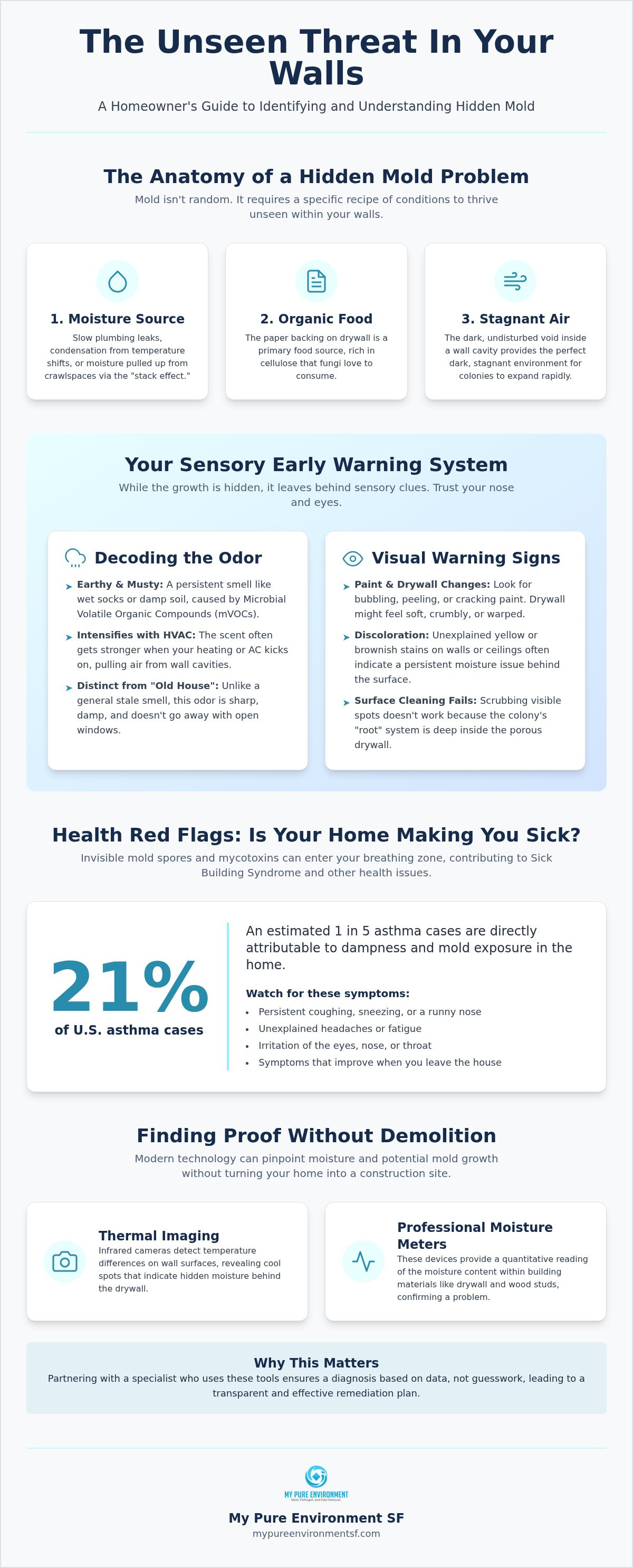
Hidden mold is more than just a cosmetic blemish on a surface. It represents active biological growth occurring within the wall cavity, specifically the dark, narrow space between your interior drywall and the exterior siding or structural framing. For a comprehensive overview of indoor mold, it is helpful to understand that these colonies thrive when they are undisturbed and shielded from the light. In San Francisco, our multi-story architecture often triggers a "stack effect." This physical phenomenon occurs when warm air rises through the building, creating a vacuum that pulls moisture and cool air upward from crawlspaces or lower levels into the wall voids of the floors above. This constant movement of damp air provides a steady supply of water to otherwise dry areas.
Mold requires three specific elements to establish a systemic colony: a moisture source, organic food, and stagnant air. Your home's drywall is a primary target because it is typically backed by paper, a cellulose-rich material that serves as an ideal food source for fungi. When moisture becomes trapped in a wall cavity with zero airflow, hidden colonies can expand rapidly. This is fundamentally different from surface mildew. While mildew is often a localized, cosmetic issue caused by temporary humidity, hidden mold is a systemic problem that compromises the materials it lives on.
The Perfect Storm for Wall Mold
Major floods are easy to spot, but slow, pinhole leaks in plumbing are often more dangerous. These tiny drips can saturate wooden studs and the back of your drywall for months without ever creating a visible puddle. San Francisco's unique microclimates and persistent fog also play a significant role. Rapid temperature shifts cause condensation to form inside wall cavities, particularly on the backside of exterior-facing walls. These "blind spots" are frequently located behind kitchen cabinets or heavy bathroom vanities, where air cannot circulate to dry out the moisture.
Why Surface Cleaning Fails Hidden Colonies
Scrubbing visible spots with household cleaners rarely solves the underlying issue. Drywall is a highly porous material that acts like a wick, pulling moisture and mold roots deep into its gypsum core. If you only treat the surface, the "root" of the colony remains healthy and active inside the wall. These hidden organisms are a major source of indoor air pollutants. Since wall cavities are not airtight, spores and metabolic byproducts often bypass the drywall. They enter your breathing zone through electrical outlets, gaps in the baseboards, or recessed lighting fixtures. Recognizing the early signs of mold behind walls is the only way to stop this cycle before it impacts your home's health.
The Sensory Checklist: Smelling and Seeing the Invisible
Detecting hidden mold requires a methodical assessment of your environment. While the growth itself remains out of sight, it leaves behind sensory breadcrumbs. These physical and olfactory indicators are often the first signs of mold behind walls that a homeowner will encounter. Recognizing these subtle shifts early can prevent a localized moisture issue from becoming a systemic health concern.
Decoding the "Moldy" Odor
The most common early indicator is a persistent, pungent scent often described as earthy or similar to wet socks. This odor is caused by Microbial Volatile Organic Compounds (mVOCs), which are gases released by mold as it grows and consumes organic material. It's helpful to distinguish this from the general "old house" smell, which is usually just stale air or dust. Active fungal growth has a sharp, damp quality that doesn't dissipate with open windows. You might notice the scent intensifies when your heating or cooling system cycles on. This happens because air pressure changes within the home pull hidden gases from the wall cavities into the living space. While many types of fungi produce these mVOCs, some dangerous varieties like Stachybotrys may not produce a strong odor until the colony is quite large. Ignoring these scents can lead to significant health problems caused by mold exposure.
Surface Abnormalities to Watch For
Visual changes on your drywall or trim are often the "smoking gun" for a hidden moisture problem. Look for paint that is bubbling, cracking, or peeling. Unlike surface peeling caused by high bathroom humidity, mold-related peeling usually originates from moisture pushing through the drywall from the inside. You may also observe yellowish or brownish staining, often called water marks, which slowly expand over time. If you notice the drywall looks warped or bowed, it's a sign that the structural studs are saturated and the gypsum core is failing. These structural shifts are often most visible when looking down the length of a wall under bright light.
Baseboards and crown molding serve as excellent early warning indicators. Because wood and MDF absorb moisture easily, these trim pieces often swell, discolor, or pull away from the wall before the drywall shows major damage. If you suspect an issue in a high-moisture area, Professional Bathroom Mold Removal in San Francisco can help address the root cause before the damage spreads. Finally, use your sense of touch. Press firmly against any suspected areas. If the wall feels soft, spongy, or gives slightly under pressure, the material has likely been compromised by moisture and fungal rot. If you're concerned about these physical changes, a professional mold testing and inspection can provide the scientific confirmation you need to move forward with confidence.
Health Indicators: When Your Body Signals a Hidden Issue
When a home's environment is compromised, the human body often acts as the most sensitive diagnostic tool available. This phenomenon is frequently categorized as Sick Building Syndrome, a condition where occupants experience acute health effects that appear directly linked to time spent in a specific building. Even if growth isn't visible on the drywall, hidden colonies release microscopic spores and toxic metabolic byproducts called mycotoxins. Because residential structures aren't vacuum-sealed, fluctuations in air pressure pull these contaminants through electrical outlets, baseboard gaps, and recessed lighting. Recognizing these biological signs of mold behind walls is essential for maintaining systemic health.
Chronic Respiratory and Allergy Symptoms
One of the most reliable ways to confirm an environmental trigger is the "vacation effect." If your persistent cough, sinus congestion, or watery eyes improve significantly after you spend 48 hours away from the home, the building itself is likely the source of distress. According to a synthesis of national studies, approximately 21% of current asthma cases in the U.S. are attributable to dampness and mold in the home. These respiratory issues often manifest as unexplained asthma flare-ups or a "heavy" feeling in the lungs that doesn't respond to typical allergy medications. For more context on how these organisms interact with the human body, the CDC information on mold provides a comprehensive look at common reactions. It's also important to observe the most vulnerable occupants; infants and pets often show signs of respiratory distress first because they spend more time near the floor where spore concentrations can be higher.
Neurological and Cognitive Signals
Beyond respiratory issues, hidden mold can impact cognitive function through the inhalation of mycotoxins. Many property owners report a persistent "brain fog," characterized by difficulty concentrating, memory lapses, and a general lack of mental clarity. These neurological symptoms often correlate with unexplained fatigue and chronic headaches that intensify in specific rooms. Unlike a standard tension headache, these episodes are frequently accompanied by a metallic taste in the mouth or light sensitivity. When health becomes the primary indicator of an issue, pursuing professional San Francisco Mold Testing is a critical step. Scientific air sampling can detect elevated spore counts that remain invisible to the naked eye, providing the data needed to protect your family's long-term well-being.
Detection Checklist: Finding Mold Without Demolition
Confirming your suspicions doesn't require immediate demolition. In fact, cutting into a wall without proper containment can inadvertently release millions of spores into your living environment. A methodical, scientific approach allows property owners to identify the presence of fungal growth while keeping the structural integrity of the home intact. By utilizing advanced diagnostic tools, we can pinpoint the exact location of moisture and biological activity before any physical removal begins.
Infrared Thermography and Moisture Mapping
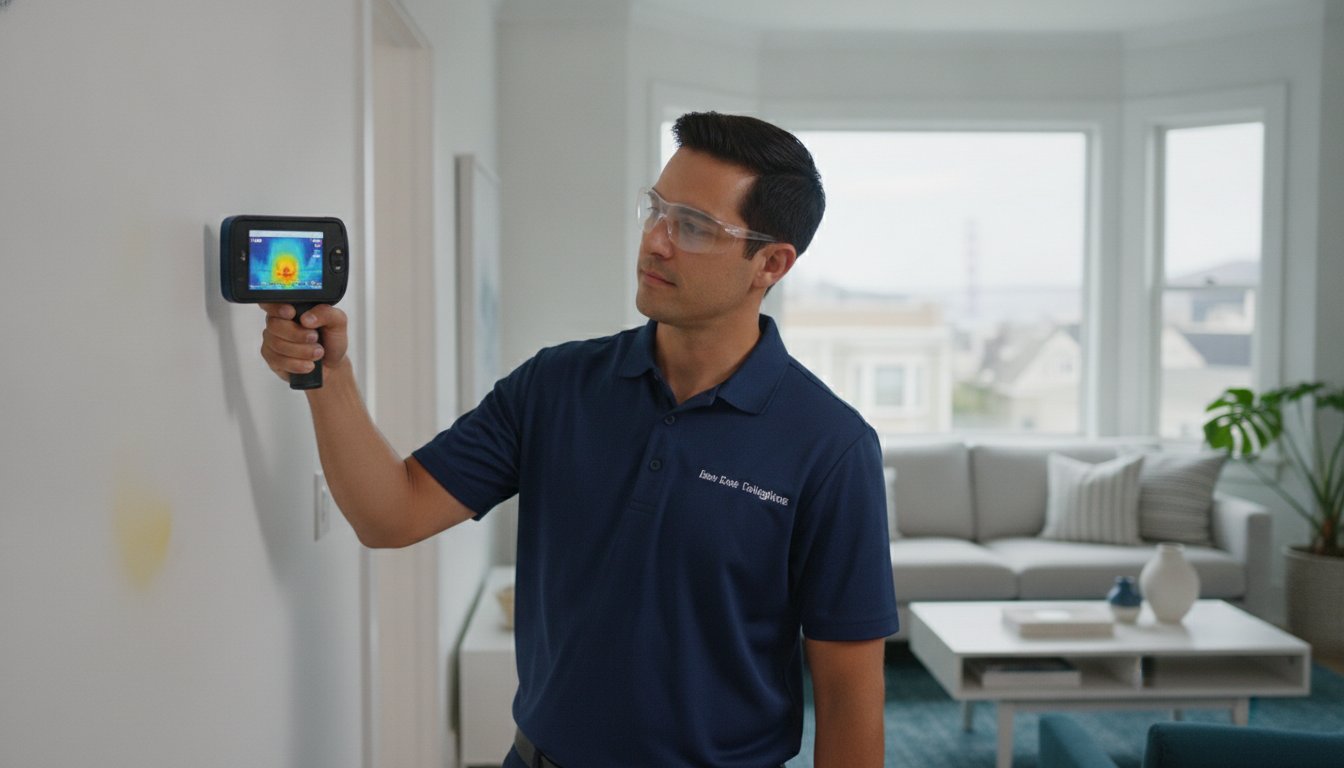
Professional moisture meters are the first line of defense. These devices detect hidden dampness within wooden studs and drywall by measuring electrical resistance or capacitance. This data helps create a moisture map of the affected area. Thermal imaging cameras further enhance this process by visualizing temperature anomalies that the human eye cannot see. Infrared thermography is a non-invasive tool for building diagnostics that identifies evaporative cooling. Because damp areas are typically cooler than dry materials, they appear as dark "blooms" on the camera screen. This technology is particularly effective in San Francisco's older homes, where traditional visual inspections might miss moisture trapped deep within thick, lath-and-plaster walls. If you've observed physical signs of mold behind walls, these tools provide the empirical evidence needed to justify the next steps.
Air Spore and Wall Cavity Sampling
While moisture mapping identifies where mold *could* grow, air quality sampling confirms if it *is* growing. There is a significant difference between surface "lift" samples and indoor air quality (IAQ) samples. Surface samples only tell us what is on the paint, but air samples detect elevated spore counts floating in your breathing zone. To get a definitive answer about what's happening behind the drywall, we often use inner-wall air sampling. This involves drilling a tiny, inconspicuous hole and inserting a specialized tube to pull air directly from the wall cavity.
Once samples are collected, they must undergo professional lab analysis. This is the only way to confirm the specific species of mold and the concentration of mycotoxins present. Finally, a borescope inspection allows for a direct visual check. A fiber-optic camera is threaded through a small opening, providing a clear view of the studs and the backside of the drywall. This clinical approach ensures that remediation is only performed where it is truly necessary. If you are concerned about hidden growth in your property, we recommend scheduling a professional mold testing and inspection to receive a comprehensive, unbiased assessment of your home's health.
Next Steps: Professional Mold Inspection in San Francisco
Confirming the presence of a colony is only the beginning. Once you've identified the sensory or physical signs of mold behind walls, the next stage is a clinical assessment to determine the extent of the contamination. In a city like San Francisco, where the architectural landscape is dominated by complex Victorian and Edwardian structures, the path to a healthy environment requires more than just a hammer and a pry bar. It demands a specialized understanding of how moisture moves through older building materials and how air pressure affects the distribution of spores.
The Value of Specialized Testing
There is a significant conflict of interest when a company handles both mold remediation and general construction. A general contractor may be inclined to suggest extensive demolition because their business model relies on rebuilding and renovation. In contrast, a specialized mold inspector focuses strictly on environmental safety and air quality. This clinical approach prioritizes the removal of biological hazards while preserving as much of the original structure as possible. By separating the diagnostic phase from the construction phase, property owners receive an unbiased report that focuses on the root cause of the issue. Maintaining high standards for Indoor Air Quality in San Francisco is especially critical in 2026, as modern energy-efficiency upgrades can sometimes trap moisture in wall cavities that were originally designed to "breathe."
Choosing a San Francisco Specialist
When selecting a partner for remediation, local experience is a necessity. San Francisco building codes are unique, and mold is classified as a "public health nuisance" under the San Francisco Health Code, Article 11, §581. This allows for enforcement based on professional air testing even when growth isn't visible. A specialist understands these local regulations and the structural nuances of San Francisco properties, from cramped crawlspaces to the intricate wall voids of multi-story flats. They use a remediation plan that focuses on containment and systemic health rather than just cosmetic fixes.
Remediation should always follow a logical progression: scientific testing, physical containment to prevent cross-contamination, and the clinical removal of the mold source. This ensures that the air you breathe is pure and that the colony won't simply return in a few months. If you've noticed suspicious odors or structural softening, don't wait for the problem to expand. Contact My Pure Environment SF for a non-invasive inspection today. Our team provides the expert guidance needed to restore your home's health without the stress of unnecessary construction.
Restoring Your Home’s Environmental Health
Identifying the subtle signs of mold behind walls is the first step toward reclaiming a safe, healthy living space. By paying attention to persistent odors, physical wall abnormalities, and your family’s respiratory patterns, you can address moisture issues before they necessitate invasive structural repairs. Remember that hidden growth is a systemic air quality concern that requires a clinical, scientific response rather than a surface-level fix. It's about protecting both your home's structural integrity and your family's long-term wellness.
At My Pure Environment SF, we act as your protective guide through environmental crises. Our specialized mold and air quality experts serve all San Francisco neighborhoods, providing the unbiased testing and scientific remediation necessary for long-term safety. We don't perform general construction; our diagnostic reports remain transparent and focused strictly on your environmental health. This specialized focus ensures you receive accurate data without the pressure of unnecessary remodeling projects or biased repair estimates.
Schedule Your Non-Invasive Mold Inspection in San Francisco today to gain the clarity and peace of mind you deserve. Taking proactive steps now ensures your home remains a sanctuary of purity and wellness for years to come.
Frequently Asked Questions
Can mold grow inside a wall without a leak?
Yes, mold can establish itself without an active plumbing leak if there is high humidity or persistent condensation. In San Francisco, fog and rapid temperature shifts often cause moisture to collect on the cold side of exterior walls. This condensation provides enough water for colonies to establish on the paper backing of drywall. Poor ventilation and the "stack effect" in multi-story homes further contribute to these damp conditions even without a single pipe failure.
Is the smell of mold behind a wall dangerous?
The odor itself consists of Microbial Volatile Organic Compounds (mVOCs), which are gases that indicate an active biological colony. While the smell serves as a warning sign, the real danger lies in the invisible spores and mycotoxins that accompany it. Prolonged exposure to these airborne contaminants is linked to respiratory issues and Sick Building Syndrome. If you notice a persistent "wet sock" scent, it's a clinical indicator that your indoor air quality is compromised.
How much does it cost to check for mold behind walls in San Francisco?
As of 2026, the average cost for a professional mold inspection in San Francisco typically ranges between $385 and $484. Some specialized environmental firms offer preliminary screening starting from $279, while comprehensive assessments for larger properties can reach over $1,000. These evaluations are essential for identifying the specific signs of mold behind walls using non-invasive technology like infrared thermography. Professional testing provides the empirical data needed to justify a remediation plan without unnecessary demolition.
What does mold behind drywall look like on the outside?
On the exterior surface of the drywall, you may see yellowish or brownish water marks, bubbling paint, or cracking wallpaper. In advanced cases, the wall might appear warped or bowed due to moisture saturation in the structural studs. You won't always see black or green spots immediately. Often, the only visible evidence is a subtle texture change or a "spongy" feel when the material is pressed firmly during a physical assessment of the room.
Can I use a DIY mold test kit to find mold behind walls?
DIY kits are generally considered visual screening tools rather than a substitute for professional inspection. These kits often produce "false positives" because mold spores exist naturally in almost every environment. They cannot tell you if there is a hidden colony inside a wall cavity or measure the concentration of mycotoxins in your air. Accurate diagnosis requires scientific sampling and lab analysis to confirm the toxicity levels and the specific species present behind your drywall.
Will mold behind walls eventually go away on its own?
No, mold is a living organism that will continue to thrive as long as it has a moisture source and organic food. Even if a moisture source stops, the colony may go dormant rather than dying. Dormant mold still contains allergens and toxins that can be released into the air if the wall is disturbed. Professional remediation is the only reliable way to remove the biological source and ensure the environment is truly safe.
How long does it take for mold to grow inside a wall after a leak?
Mold can begin to colonize and grow within 24 to 48 hours after a moisture event. If a plumbing leak or condensation saturates the drywall's paper backing, spores that are naturally present in the air will settle and begin to multiply. Because wall cavities are dark and lack airflow, these colonies can expand rapidly before any physical signs of mold behind walls become visible on the interior side of the drywall or trim.
Does insurance cover mold removal if it is behind the walls?
Coverage depends entirely on your specific policy and the underlying cause of the moisture. Most homeowners' insurance policies cover remediation if the mold resulted from a "sudden and accidental" event, such as a burst pipe. However, many policies exclude mold caused by long-term neglect, high humidity, or gradual seepage. It is important to review your policy's "fungi, wet or dry rot" endorsement to understand your specific coverage limits and any required documentation for a claim.
