
Professional Attic Mold Remediation in San Francisco: The 2026 Guide
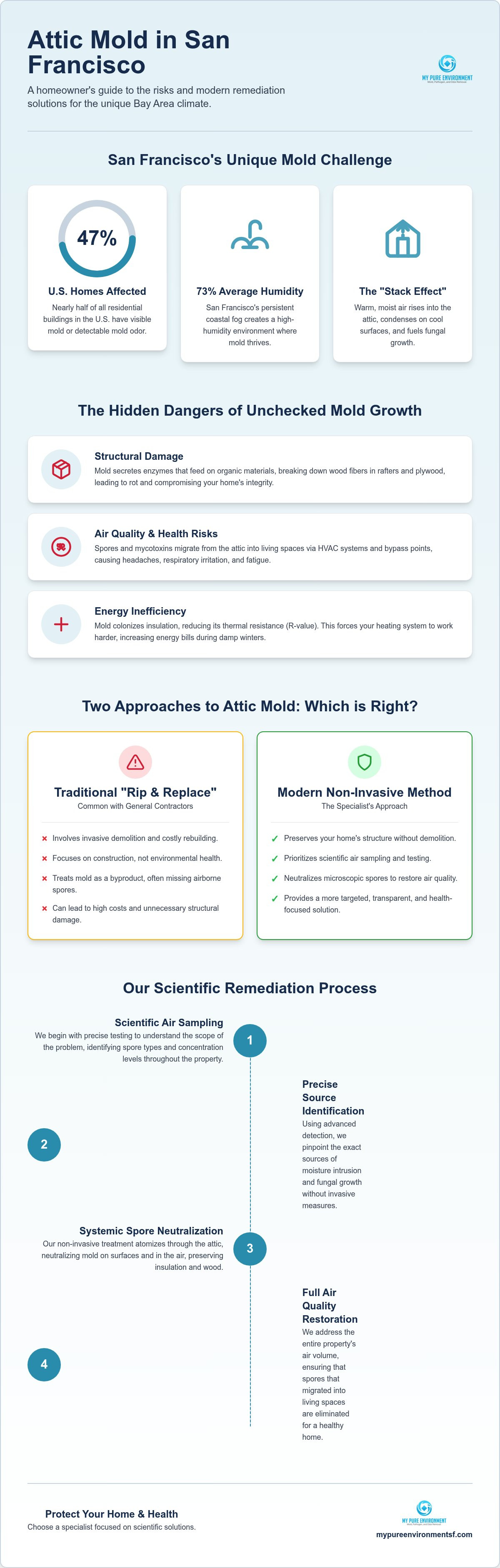
Did you know that nearly 47% of residential buildings in the U.S. contain visible mold or a detectable mold odor? In a city like San Francisco, where the average humidity sits at a persistent 73%, that figure is a daily reality for many property owners. Living with the constant marine layer means your home is under continuous pressure from moisture. When that dampness settles into your insulation and rafters, securing professional attic mold remediation san francisco becomes a priority to protect both your property value and your family's respiratory health.
You likely want a healthy, mold-free home but fear the high costs and structural damage associated with traditional demolition-based removal. It's natural to feel overwhelmed by the thought of airborne spores or the prospect of a major construction project. We're here to show you that there's a better way. This 2026 guide explores a specialized, non-invasive approach to identifying and eliminating attic mold specifically tailored to the unique San Francisco climate. You'll discover how modern detection technology and advanced remediation methods can restore your indoor air quality and preserve your home's structure without the need for invasive tearing or rebuilding.
Key Takeaways
- Understand how San Francisco's persistent fog and coastal humidity create unique moisture vulnerabilities within attic structures.
- Identify the risks of cross-contamination as airborne spores migrate from the attic into your living spaces through the HVAC system.
- Discover the benefits of non-invasive attic mold remediation san francisco, which eliminates spores without the high costs of traditional demolition.
- Learn the essential phases of a professional remediation plan, beginning with scientific air sampling and precise source identification.
- Recognize why hiring a dedicated mold specialist provides a more transparent, health-focused outcome than using a general construction contractor.
Understanding Attic Mold in the San Francisco Microclimate
Professional attic remediation is defined as the scientific neutralization of fungal growth and microscopic spores to restore a healthy indoor environment. While many homeowners view mold as a cosmetic issue or a simple cleaning task, true remediation is a specialized process. In the Bay Area, this requires a deep understanding of local environmental factors that influence building health. Surface mold might appear as minor spotting on a few rafters, but a systemic attic infestation involves millions of spores embedded in insulation and structural wood. Addressing this requires more than a surface-level wipe; it demands a systemic approach to air quality.
The Role of San Francisco Fog and Humidity
San Francisco's persistent marine layer and coastal fog create a high-humidity environment that is uniquely conducive to fungal growth. With average humidity levels often exceeding 70%, attics become prime locations for condensation. This occurs through the "stack effect," where warm air rises from the living quarters and meets the cool, fog-chilled roof deck. In historic Victorian and Edwardian homes, original ventilation designs are frequently inadequate for modern living standards, leading to trapped moisture. A foundational step in Understanding Indoor Mold involves recognizing that fungal spores are omnipresent; the goal of remediation is to return the indoor environment to a state of health. When the relative humidity in these confined spaces stays above 50%, the risk of a systemic colony increases significantly.
Why General Restoration Companies Often Miss the Mark
Many large restoration franchises approach mold as a byproduct of water damage or flooding. They apply a "rip and replace" construction mindset that often involves invasive demolition and high costs. At My Pure Environment SF, we distinguish ourselves by focusing strictly on environmental health and mold science, not general construction. We don't offer rebuilding or water damage restoration because our goal is to preserve your home's structure through non-invasive methods. Effective attic mold remediation san francisco must begin with specialized air sampling and testing. This ensures we aren't just treating what's visible, but addressing the systemic air quality of the entire property. By prioritizing detection and scientific neutralization over demolition, we provide a cleaner, more targeted solution for the San Francisco microclimate.
The Risks of Neglecting Attic Mold Growth
Ignoring fungal growth in your attic does more than just create an unpleasant odor; it actively degrades the structural components of your home. Mold feeds on organic materials like the plywood sheathing and Douglas fir rafters common in Bay Area construction. As these colonies expand, they secrete enzymes that break down wood fibers, eventually leading to rot and compromised load-bearing capacity. Additionally, mold often colonizes attic insulation. Once moisture and spores infiltrate fiberglass or cellulose batts, the material loses its thermal resistance. This reduction in R-value forces your heating system to work harder, leading to noticeable energy inefficiency during San Francisco's damp winters.
Stagnant attic air can also harbor mycotoxins, which are toxic chemical compounds produced by specific fungal species. These toxins remain potent even if the mold is dormant. Without proper attic mold remediation san francisco, these microscopic particles remain a persistent threat to the entire household. If you suspect your attic air is compromised, a professional mold inspection can provide the clarity needed to protect your environment.
Indoor Air Quality and Spore Migration
Your attic isn't an isolated bubble. Through a process known as the stack effect, air naturally moves from the lower levels of a home upward and out through the roof. However, pressure changes can also pull contaminated air downward through "bypass" points such as recessed lighting, plumbing stacks, and attic hatches. This allows spores and mycotoxins to circulate into your primary living spaces. For a deeper look at how these dynamics affect your health, refer to our guide on Mold and Indoor Air Quality in San Francisco. Residents often report symptoms like persistent headaches, respiratory irritation, or unexplained fatigue when these bypasses aren't sealed. Following the EPA Mold Cleanup Guidelines is essential to ensure that spores are physically removed rather than just covered up.
Property Value and Real Estate Implications
In the competitive San Francisco real estate market, a history of unaddressed mold can be a significant liability. Under local health codes, visible mold is often classified as a substandard condition that must be disclosed during a sale. Potential buyers are increasingly wary of "hidden" issues in older homes, and an attic inspection revealing structural decay can derail a transaction entirely. Professional clearance testing is the only way to prove a home is safe for occupancy. Securing professional attic mold remediation san francisco before listing a property prevents the exponential costs associated with structural repairs and ensures your property remains a healthy, high-value asset.
Non-Invasive Remediation vs. Traditional Demolition
Traditional methods often rely on a "rip and replace" philosophy. This involves physically removing drywall, insulation, and even structural timber if it's deemed infested. In a city filled with historic Victorians and Edwardians, this approach is both destructive and often unnecessary. Modern attic mold remediation san francisco has evolved beyond the sledgehammer. By utilizing non-invasive techniques, we can neutralize spores without compromising the architectural integrity of your home. This shift results in significantly less waste, lower overall costs, and a turnaround time that is often measured in hours rather than weeks. Preserving the original old-growth wood framing in San Francisco's older housing stock isn't just about aesthetics; it's about maintaining the structural resilience these buildings have shown for over a century.
The Limitations of Traditional Attic Cleanup
Many property owners initially try DIY methods like bleaching or scrubbing. However, mold isn't just on the surface. Fungal hyphae, the root-like structures of the colony, penetrate deep into porous wood framing and fiberglass insulation. Bleach is primarily water; it often feeds the mold roots while only changing the surface color. Traditional demolition also carries a high risk of cross-contamination. When you tear out moldy materials, you release millions of spores into the air, which can then settle in other parts of the house. This creates a cycle of contamination that requires even more extensive cleaning later. The mess and disruption of a traditional "gut job" often outweigh the benefits when modern alternatives are available.
The Advantage of Specialist Mold Technology
Our specialized Dry Fog technology represents a paradigm shift in environmental health. Instead of tearing down walls, we use micron-sized particles that fill the entire attic volume. These particles are small enough to penetrate every crevice and even the fibers of your insulation, neutralizing mold on a molecular level. This ensures that the health risks of mold exposure are addressed comprehensively without the trauma of construction. For a deeper look at the chemistry behind this process, you can read about our Professional Mold Remediation in San Francisco. This science-based approach allows us to save materials that traditional companies would simply throw away, ensuring your home remains structurally sound and chemically pure.
The 5-Step Attic Mold Remediation Process
A successful project follows a methodical, scientific sequence. Unlike general contractors who jump straight to demolition, our approach to attic mold remediation san francisco prioritizes detection and systemic health. We focus on a clinical path to restoration that ensures your home's air is pure without unnecessary structural interference. This process moves through five distinct phases designed to eliminate the root cause while protecting your living environment.
Professional Attic Inspection and Testing
A visible inspection is only the first layer of a thorough assessment. While spotting on rafters is a clear indicator, laboratory air testing provides the data needed to understand the concentration of spores and the specific fungal species present. This scientific data is critical because different molds require different environmental adjustments. To understand how to interpret these results, see our San Francisco Mold Testing Guide. Once the scope is defined, we move into the active phases of the project.
- Step 2: Source Identification: We determine if the moisture stems from a specific leak or a systemic ventilation failure common in the Bay Area.
- Step 3: Containment and Air Filtration: We use physical barriers and HEPA filtration to ensure that the rest of your home remains protected while the attic is being treated.
- Step 4: Specialized Remediation: Instead of tearing out walls, we utilize Dry Fog technology to reach every hidden crevice and porous surface in the attic.
Source Correction and Prevention
Neutralizing the existing mold is only half the battle. If the underlying moisture issue remains, the colony will eventually return. In San Francisco, attic ventilation is often compromised by blocked soffit vents or a lack of proper baffles that allow air to flow from the eaves to the ridge. We identify these specific failures and suggest preventative measures like improved ventilation or dehumidification to keep your relative humidity below the 50% threshold. This proactive step ensures that the attic mold remediation san francisco provides a permanent solution rather than a temporary fix.
The final step is Post-Remediation Verification. We don't consider a job complete until third-party clearance testing confirms the air quality has returned to healthy levels. This ensures transparency and gives you the peace of mind that your home is truly safe. If you're ready to start this scientific journey to a healthier home, schedule an attic inspection today.
Choosing an Attic Mold Specialist in San Francisco
Selecting the right partner for attic mold remediation san francisco is a decision that impacts your home's long-term health and your family's well-being. While a general handyman might offer to scrub visible growth, they often lack the specialized equipment and scientific training required to address microscopic spores. True remediation is not a simple cleaning task; it is a clinical process that requires a deep understanding of mycology and building science. Hiring a specialist ensures that the root cause is identified and the air quality is restored to a state of purity.
One critical factor to consider is the company's business model. Many large restoration firms profit twice: once for the cleanup and again for the reconstruction phase. This creates a natural incentive for them to recommend invasive demolition even when it isn't strictly necessary. By choosing a specialist who does not offer general construction or rebuilding, you ensure the recommendations are based solely on environmental health needs. This transparency is vital for property owners who want to preserve their home's structure while eliminating environmental hazards.
Local expertise is equally important. San Francisco's unique climate, characterized by persistent fog and high humidity, demands a specific approach to moisture control. A specialist with local experience understands how these regional factors interact with historic building materials. Before signing a contract, use this checklist to vet your provider:
- Does the company focus exclusively on mold and air quality?
- Do they use non-invasive protocols that avoid unnecessary demolition?
- Is there a clear commitment to third-party post-remediation clearance testing?
- Do they provide a detailed report identifying the moisture source?
The Specialist Difference at My Pure Environment SF
At My Pure Environment SF, we dedicate ourselves entirely to the science of mold remediation and indoor air quality. We don't provide water damage restoration or general construction because we believe that environmental health deserves a singular focus. Our commitment to non-invasive, science-backed protocols allows us to neutralize spores without the trauma of a construction project. We view ourselves as your partner in long-term home health, providing the technical authority and empathetic care needed to navigate environmental concerns with confidence.
Next Steps for SF Homeowners
If you have noticed a musty odor or visible spotting in your rafters, immediate action is the best way to prevent structural decay. Mold colonies can expand quickly in the Bay Area's damp environment, so delaying an assessment only increases the complexity of the project. Scheduling a professional assessment is a straightforward process that provides the data you need to make an informed decision. Protect your home and your health by choosing a specialist who prioritizes restoration over demolition. Schedule your attic mold inspection with My Pure Environment SF today.
Restoring Your Home’s Environmental Health
Addressing attic fungal growth in the Bay Area doesn't have to involve a disruptive or high-cost construction project. By understanding the unique moisture dynamics of the local microclimate and utilizing modern, non-invasive technology, you can eliminate spores while keeping your home's original structure intact. This methodical approach ensures your indoor air quality is restored to a state of purity, protecting both your property value and your family's respiratory health for the long term.
Choosing a partner with specialized mold-only expertise is the most effective way to ensure a thorough and transparent resolution. Our San Francisco local specialists focus exclusively on environmental health, providing a clinical path to restoration that general contractors often overlook. If you're ready to secure your home's future, Get a Professional Attic Mold Assessment in San Francisco today. Professional attic mold remediation san francisco is the definitive step toward a cleaner, safer living space. You deserve the peace of mind that comes with a scientifically verified, mold-free environment.
Frequently Asked Questions
How much does attic mold remediation cost in San Francisco?
The investment for professional services varies based on the square footage of your attic and the severity of the fungal growth. Factors such as the type of mold present and the accessibility of the space also influence the final cost. While industry averages provide a baseline, a professional inspection is the only way to get an accurate assessment. Choosing a non-invasive approach often reduces total expenses by eliminating the need for costly demolition and reconstruction.
Can I stay in my home during attic mold remediation?
Yes, property owners can typically remain in their residence while the work is performed. We utilize physical containment barriers and high-efficiency particulate air (HEPA) filtration to isolate the attic from your primary living quarters. These safety measures prevent cross-contamination and ensure your indoor air quality remains protected. Because our specialized methods don't rely on harsh biocides or invasive tearing, your daily routine remains largely undisturbed throughout the restoration process.
How long does the attic mold removal process take?
Most projects are completed within one to two days. Traditional "rip and replace" construction methods can take weeks, but our specialized technology works much faster by neutralizing spores on a molecular level. The timeline includes the initial containment setup, the treatment phase, and the final air purification. We move at a methodical pace that prioritizes thoroughness and scientific accuracy, followed by a post-remediation verification to ensure your environment has returned to a state of purity.
Is attic mold covered by my San Francisco homeowners insurance?
Coverage for attic mold remediation san francisco depends on your specific policy and the root cause of the moisture. Many insurers in the Bay Area cover mold if it results from a "covered peril," such as a sudden roof leak or a burst pipe. However, mold caused by long-term humidity or lack of maintenance is frequently excluded. You should review your policy's fungus and rot endorsements. We provide detailed laboratory reports to assist with your claims process.
What are the most common signs of mold in an SF attic?
Common indicators include a persistent musty odor, dark spotting on roof sheathing, and damp or discolored insulation. In San Francisco's 73% average humidity, you might also see rusted nails or warped wood, which suggest excessive condensation. If residents experience unexplained respiratory irritation or headaches, the attic is a primary area to investigate. Because heat rises, spores often migrate downward into living spaces through recessed lighting or attic hatches, making these subtle signs critical for early detection.
Do I need to replace my attic insulation if it has mold?
Replacement is not always necessary. While traditional companies often insist on full removal, our specialized Dry Fog technology can often neutralize spores within the fibers of fiberglass or cellulose insulation. If the material is physically degraded, matted by water, or has lost its thermal R-value, replacement is recommended for energy efficiency. However, if the insulation is structurally sound, our non-invasive attic mold remediation san francisco can restore hygiene without the high costs of disposal and re-installation.
What is the difference between mold removal and remediation?
Mold removal is the physical act of cleaning visible growth, whereas remediation is a systemic, scientific process. Remediation involves identifying the moisture source, containing the affected area, and neutralizing microscopic spores to return the entire environment to a healthy state. While anyone can wipe away a stain, professional remediation ensures that the biological load is reduced to safe levels and the air quality is restored. It's a comprehensive approach that prioritizes long-term health over temporary cosmetic fixes.
How do I prevent mold from returning to my attic after remediation?
Prevention focuses on moisture management and consistent airflow. Ensuring your attic has proper ventilation, such as clear soffit vents and ridge vents, is essential in the damp San Francisco climate. You should also consider these steps:
- Seal air leaks between your living space and the attic.
- Ensure all bathroom exhaust fans vent directly outside, not into the eaves.
- Maintain relative humidity below 50% through improved baffles or dehumidification.
