
Black Mold Remediation Cost in San Francisco: 2026 Price Guide

The lowest quote you receive for mold removal might actually be the most expensive one you ever pay. While it sounds counterintuitive, the real black mold remediation cost in San Francisco often hides in the demolition and reconstruction fees that traditional contractors require. You shouldn't have to choose between a healthy living environment and your financial stability. We understand the unique sticker shock that comes with Bay Area service rates, especially when you're worried about hidden costs buried behind your drywall.
This 2026 price guide clarifies what you should expect to pay for professional services in the current market. You will learn how to distinguish between invasive scrubbing methods and modern, non-invasive alternatives that keep your walls intact. We provide a clear breakdown of local price ranges and explain how to ensure the mold won't return once the technicians leave. By the end of this article, you'll have the confidence to choose a remediation path that prioritizes scientific accuracy and long-term air quality without the burden of unnecessary construction.
Key Takeaways
- Understand how San Francisco's unique labor market and specialized service rates define the black mold remediation cost san francisco property owners should expect this year.
- Compare the total value of non-invasive dry fogging against traditional demolition to see how avoiding reconstruction saves thousands in hidden expenses.
- Learn to identify red flags in remediation quotes, ensuring your provider prioritizes scientific testing and a clear path to restoration.
- Discover how specialized attic and bathroom techniques address the specific environmental challenges found in historic Bay Area architecture.
- Gain clarity on how professional air quality improvements protect both your family's respiratory health and your property's long-term market value.
What is the Average Black Mold Remediation Cost in San Francisco?
National averages for mold removal rarely reflect the economic reality of the Bay Area. When calculating the black mold remediation cost san francisco residents face, you must account for the region's unique landscape. Local labor rates for certified environmental technicians are significantly higher here than in other parts of the country, driven by the high cost of living and rigorous safety standards required for urban density. While a standard mold inspection across the city typically ranges from $300 to $600, the remediation itself varies based on the environment's complexity and the specific protocols required for total spore neutralization.
The price of restoration is often dictated by the area of the home affected. Bathrooms and attics are the most frequent sites for contamination due to moisture trap issues. A bathroom project might focus on localized humidity control, while attic remediation often requires specialized equipment to navigate tight joists and ensure systemic spores don't migrate into the living spaces below. Professional remediation is a clinical process designed to neutralize environmental hazards and restore the home's systemic health through scientific protocols rather than mere aesthetic cleaning.
SF Cost Estimates by Square Footage
Standard per-square-foot pricing models often fail in San Francisco because of the city's intricate property layouts. Historic Victorians and subdivided apartments frequently feature complex nooks or unconventional crawlspaces that require specialized delivery systems for remediation agents. While a single room project might appear contained, the presence of systemic spores in the ventilation can expand the scope. For large scale commercial properties or cannabis facilities, the focus shifts toward meeting strict regulatory health standards and high level compliance, which requires a more methodical, data driven approach to air quality.
The Hidden Costs of Traditional Remediation
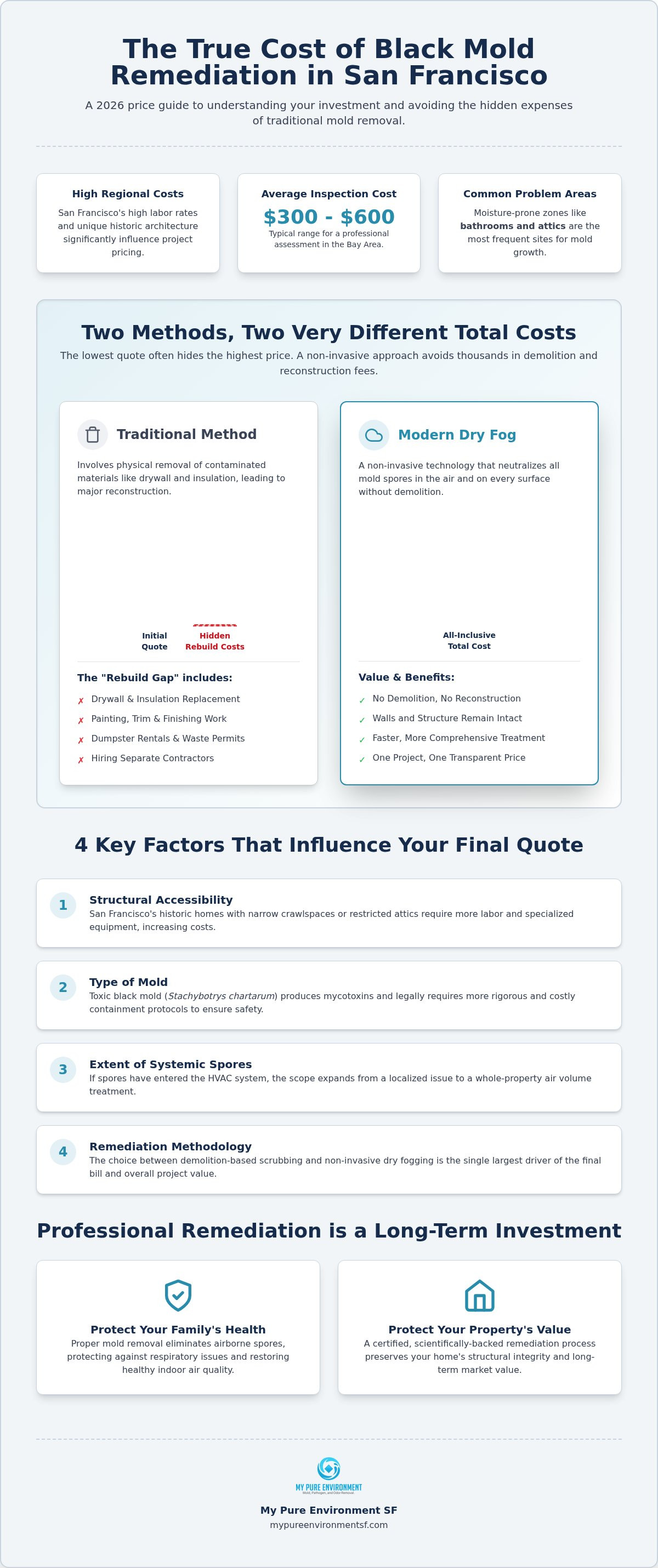
Traditional methods often involve significant demolition, which introduces expenses that aren't always visible in the initial bid. Property owners must factor in the price of dumpster rentals and the specific hazardous waste permits required by the city for disposing of contaminated building materials. This creates what many call the "Rebuild Gap." In this scenario, the remediation quote only covers the removal of the mold, leaving the owner with the massive secondary cost of hiring contractors to replace drywall, insulation, and trim. By choosing modern, non-invasive technology like dry fogging, you can often bypass these hidden construction fees and permit requirements entirely, as the structure remains intact during the process.
4 Key Factors That Influence Your SF Mold Cleanup Estimate
The final black mold remediation cost san francisco property owners receive depends on more than just the square footage of visible growth. In a city where real estate is both historic and densely packed, several variables can shift an estimate from a standard cleaning to a complex environmental project. Understanding these factors helps you evaluate quotes with the eye of a specialist rather than just looking at the bottom line.
- Structural Accessibility: San Francisco Victorians and Edwardians often feature narrow crawlspaces and steep, restricted attic entries. If a technician can't easily reach the source of the moisture, the labor hours required to establish safe access will increase the project's scope.
- The Type of Mold: While many molds are common, Stachybotrys chartarum (toxic black mold) requires more rigorous containment protocols. Because it produces mycotoxins, technicians must implement stricter negative pressure environments to prevent cross-contamination during the process.
- Extent of Systemic Spores: Surface mold on a bathroom wall is a localized issue. However, if spores have entered the HVAC system or migrated behind the lath and plaster typical of SF homes, the remediation must address the entire air volume of the property.
- Remediation Methodology: Your choice between traditional physical scrubbing and modern dry fogging dictates the final bill. Traditional methods often require extensive demolition, whereas non-invasive technology focuses on neutralizing spores without tearing into the building's fabric.
You can gain a deeper understanding of how these variables apply to your specific property by reviewing our specialized mold remediation protocols.
San Francisco Building Constraints
Historic building codes in the Bay Area often influence how we approach a project. In neighborhoods like the Sunset or Richmond, persistent coastal fog creates a high-humidity microclimate that can lead to recurring issues if the root cause isn't addressed. Multi-unit dwelling logistics also play a role, as shared walls and common ventilation systems in San Francisco apartment buildings require careful coordination to ensure spores don't migrate to neighboring units during the clinical neutralization process.
HVAC and Air Quality Requirements
When mold spores enter the HVAC system, the scope of work naturally expands to include the entire ventilation network. This often necessitates the use of HEPA air scrubbing and the creation of negative pressure environments to scrub the air of microscopic particulates. A professional estimate should always include post-remediation air quality testing. This data driven approach provides scientific proof that the environment has returned to a healthy baseline, ensuring your investment in remediation has successfully restored the property's systemic health.
Traditional Demolition vs. Dry Fog: Cost and Value Comparison
Choosing between traditional removal and modern dry fogging is the most critical decision affecting the black mold remediation cost san francisco residents will pay. Traditional methods prioritize the physical removal of materials. This often involves cutting out drywall, pulling up floorboards, and stripping insulation. While the initial remediation bid might seem competitive, it frequently excludes the massive expense of rebuilding. Dry fogging, by contrast, focuses on neutralizing spores at the source using a micron-sized mist that penetrates porous surfaces without requiring a single hammer swing.
The timeline impact also shifts the value proposition for Bay Area property owners. Traditional demolition can turn a home into an active construction zone for weeks. If the contamination is severe, families may need to relocate to temporary housing, adding thousands to the project's real-world cost. Dry fogging typically allows residents to return to their homes within hours. This efficiency provides a systemic treatment that addresses the air you breathe, not just the surfaces you see, ensuring that microscopic spores hidden in the ventilation are also neutralized.
The "No-Demolition" Advantage
Dry fogging is a non-invasive solution for SF homeowners that eliminates the need for expensive general contractors and painters. By saturating the indoor environment with a specialized vapor, the treatment reaches mold colonies hidden behind walls and inside ventilation ducts without cutting into the structure. This preservation of the building's integrity is particularly valuable for historic San Francisco properties where original lath and plaster or custom trim are nearly impossible to replace. You save money by avoiding the "rebuild gap" entirely, as the structure remains intact throughout the process.
Total Cost of Ownership (TCO) Analysis
A true analysis of the black mold remediation cost san francisco property owners face must account for the secondary expenses of reconstruction. When you factor in the replacement of insulation, hazardous waste disposal fees, and professional painting, the "cheaper" demolition quote often doubles or triples in price. Choosing a methodical approach ensures you aren't surprised by these hidden construction fees later.
| Expense Category | Traditional Demolition | Non-Invasive Dry Fogging |
|---|---|---|
| Base Remediation Fee | Moderate | Competitive |
| Hazardous Waste Disposal | High (Permits + Dumpster) | Zero |
| Reconstruction & Painting | Significant Expense | Zero |
| Disruption & Hotel Stays | Weeks of Displacement | Hours of Vacancy |
This comparison highlights why a professional mold remediation in San Francisco: a science-based approach prioritizes systemic health over structural destruction. By focusing on the total cost of restoration rather than just the removal fee, you can protect both your home's historic value and your family's financial well-being.
How to Identify a Fair Quote and Avoid "San Francisco Surprises"
Receiving a professional bid can be a moment of significant stress, especially when you're trying to reconcile the black mold remediation cost san francisco providers present with your personal budget. A fair quote isn't necessarily the lowest one; it's the one that provides a comprehensive, data driven path to a healthy environment. You should look for a line item breakdown that details exactly how the technicians plan to isolate the affected area and protect your home's air quality during the process.
A professional remediation bid must include specific containment plans. In the dense neighborhoods of San Francisco, cross contamination is a constant risk. If a quote lacks mentions of negative air pressure or HEPA air scrubbing, the provider might be skipping essential steps that lead to a recurrence. You should also verify that the company carries environmental pollution insurance and holds IICRC certification. These credentials ensure the team follows industry standard protocols for handling toxic substances. If you're ready to move forward with a provider who prioritizes scientific verification, you can request a detailed remediation estimate today.
Evaluating the Scope of Work
When you review a bid, check if the scope covers systemic air filtration or just surface cleaning. Surface treatments alone are often ineffective against black mold, as they don't address the microscopic spores suspended in the air. A reputable quote will also specify the protocols for Stachybotrys and outline any warranties or guarantees offered. This transparency ensures that the black mold remediation cost san francisco residents pay results in a permanent solution rather than a temporary fix.
San Francisco Regulatory Compliance
Landlords in the city face specific pressures from the SF Rent Board. If a tenant reports a mold issue, professional documentation is your best defense against potential legal disputes. Similarly, if you're preparing for a real estate transaction, a clear clearance report from a certified professional is vital for fulfilling disclosure requirements. These documents provide scientific proof that the property is safe for habitation. For more details on these requirements, consult our San Francisco Mold Testing Guide for Property Owners.
Third party laboratory testing is the only way to verify that a project was successful. You should never rely solely on a visual inspection. A reputable provider will insist on post remediation air sampling analyzed by an independent lab to prove the spore counts have returned to safe, baseline levels. This independent oversight prevents a conflict of interest and gives you the peace of mind that your indoor air quality has been fully restored.
Why Professional Remediation is a Long-Term Investment
Viewing the black mold remediation cost san francisco property owners pay as a one-time repair fee misses the broader financial picture. In the Bay Area's high-stakes real estate market, a documented history of professional mold neutralization is a protective measure for your equity. When you eventually list a property, clear documentation from a specialized provider serves as a powerful asset during the disclosure process. Conversely, unresolved environmental issues can lead to stalled sales or significant price reductions that far exceed the initial cost of professional care. For landlords and business owners, this documentation also serves as a vital tool for reducing liability and demonstrating a commitment to occupant safety.
Attempting a DIY solution often leads to a false sense of security. Household cleaners typically only address surface discoloration, leaving the underlying root structure and airborne spores active. This usually results in the mold returning more aggressively, eventually requiring a more expensive professional intervention to correct the damage caused by the delay. Professional technicians use clinical grade equipment to ensure the source of the moisture is identified and the spores are fully neutralized. This prevents the cycle of regrowth that plagues many home remedy attempts.
Health and Indoor Air Quality
The systemic benefits of improving air quality extend to every occupant of the building. Protecting sensitive populations, including children, pets, and the elderly, requires a methodical approach that goes beyond visual cleanliness. Microscopic particulates can linger in the air long after a surface appears clean, potentially leading to persistent respiratory concerns. For a deeper look at these environmental factors and how they impact your space, read our Mold and Indoor Air Quality in San Francisco: The Complete 2026 Guide.
Preserving Building Assets
Professional remediation also safeguards the structural integrity of your building by preventing wood rot and the degradation of historic San Francisco building materials. Left unchecked, mold can compromise the very lath and plaster that gives Bay Area homes their character. This specialized care is equally critical for commercial assets, such as cannabis grow rooms, where maintaining a high level of compliance and a sterile environment is essential for the longevity of the operation. When you prioritize scientific restoration, you are investing in the long-term viability of your property. If you suspect an issue, get a specialized quote for your SF property today to begin the process of restoration.
Restore Your Property's Systemic Health
Understanding the black mold remediation cost san francisco residents encounter is the first step toward making an informed decision for your property. You now recognize that the true value of remediation lies in avoiding the "rebuild gap" through non-invasive technology. By choosing a method that prioritizes air quality over demolition, you protect your home's historic architecture and your family's respiratory health. This science-based clinical approach provides the verification you need to move forward with total confidence.
Our team of San Francisco indoor air quality experts is here to guide you through a transparent restoration process. We focus on purity and scientific accuracy to ensure your space remains a healthy environment for years to come. If you're ready to experience the benefits of specialized non-invasive dry fog technology, Request a Non-Invasive Mold Remediation Estimate for Your SF Property. You deserve the peace of mind that comes with a professionally restored home.
Frequently Asked Questions
Is black mold remediation covered by home insurance in San Francisco?
Insurance coverage typically depends on the underlying cause of the moisture. In San Francisco, standard policies often cover mold if it results from a "covered peril," such as a sudden pipe burst or accidental overflow. However, mold arising from gradual seepage or high humidity common in coastal neighborhoods is often excluded. You should review your policy's specific "mold rider" or "fungi limitation" section to determine your eligibility for reimbursement.
Why is mold remediation in San Francisco more expensive than in other cities?
The black mold remediation cost san francisco property owners pay is driven by the region's high labor rates and strict environmental regulations. Local technicians require higher wages to match the Bay Area's cost of living. Additionally, San Francisco mandates specific hazardous waste disposal protocols for contaminated materials. The complexity of historic architecture, such as lath and plaster in Victorians, also necessitates specialized handling that increases project hours compared to newer builds.
Does a higher price quote always mean a better remediation job?
A higher quote does not automatically guarantee superior results. Often, high bids reflect the costs of invasive demolition and the subsequent need for general contractors to rebuild the space. A more cost effective, modern approach like dry fogging focuses on systemic neutralization rather than structural destruction. You should evaluate quotes based on the provider's scientific protocols, containment plans, and inclusion of independent laboratory testing rather than the price tag alone.
Can I use bleach to kill black mold and save on remediation costs?
Bleach is generally ineffective for treating mold on porous surfaces like drywall or wood. While it may remove surface discoloration, the chemical structure of bleach prevents it from reaching the mold's root system. This often leads to the mold returning once the surface dries. Furthermore, bleach is mostly water, which can actually provide the moisture needed for spores to continue growing deep within your building's structural components.
How much does a professional mold inspection cost in SF before remediation?
A professional mold inspection in the San Francisco area typically ranges from $300 to $600. This fee covers a visual assessment, moisture mapping, and initial air sampling to determine the extent of the contamination. Investing in a thorough inspection ensures the remediation plan is based on data rather than guesswork. This scientific baseline is essential for verifying that the environment has been successfully restored once the clinical treatment is complete.
How long does the black mold remediation process typically take?
The duration of the project depends heavily on the chosen methodology. Traditional remediation involving demolition can take several days or even weeks to complete, especially if reconstruction is required. In contrast, non-invasive dry fogging technology usually allows for a complete systemic treatment within a single day. Most residential properties can be treated in four to six hours, allowing for a rapid return to a healthy, spore free living environment.
Will I need to move out of my SF home during the remediation process?
If you choose traditional demolition, you may need to relocate for several days to avoid dust, debris, and noise. However, with non-invasive dry fogging, you only need to vacate the property for the duration of the treatment, which is typically a few hours. Once the fog has settled and the air has been exchanged, it's safe to return immediately. This significantly reduces the secondary costs associated with hotel stays or temporary housing.
What happens if I ignore black mold in my San Francisco rental property?
Ignoring mold in a rental property can lead to severe legal and financial consequences. Under San Francisco health codes, landlords are required to maintain a habitable environment. Failing to address mold can result in rent withholding, tenant lawsuits, or citations from the Department of Building Inspection. Beyond legal liability, the black mold remediation cost san francisco landlords eventually pay will increase as the spores cause structural rot and degrade the property's market value.
