

A hidden leak can leave clear clues before water becomes visible. Signs of a hidden water leak and mold in SF include bubbling or peeling paint, stains, musty odors, damp or dark carpet, and warped or soft flooring. According to the U.S. Environmental Protection Agency, mold can begin growing within 24 to 48 hours after water reaches a hidden surface such as drywall, insulation, or subfloor framing.
An unexplained rise in your water bill or a meter that keeps moving when fixtures are off can point to a leak. These signs can be unsettling when you can’t see where moisture is coming from, but checking a few areas methodically can help you narrow down what may be happening.
This guide explains what to look for around walls, floors, ceilings, and plumbing, how to check your bill and water meter, and how to spot possible mold and indoor air quality concerns. You’ll also learn when visible clues suggest moisture may be hidden behind a surface, so you can take a practical next step.
Key Takeaways
- Compare water bills over time and consider whether a change in usage explains an unexpected increase.
- Turn off water-using fixtures and appliances, note the meter reading, then check whether it changes while no water is being used.
- Look beyond visible stains: soft flooring, recurring dampness, or damage near plumbing can point to moisture concealed inside a building.
- Pay attention to persistent musty odors and consider how hidden moisture may affect mold growth and indoor air quality.
- When signs suggest mold, testing, inspection, and remediation can help clarify the issue and address the affected area.
1. What Are the Signs of a Hidden Water Leak?
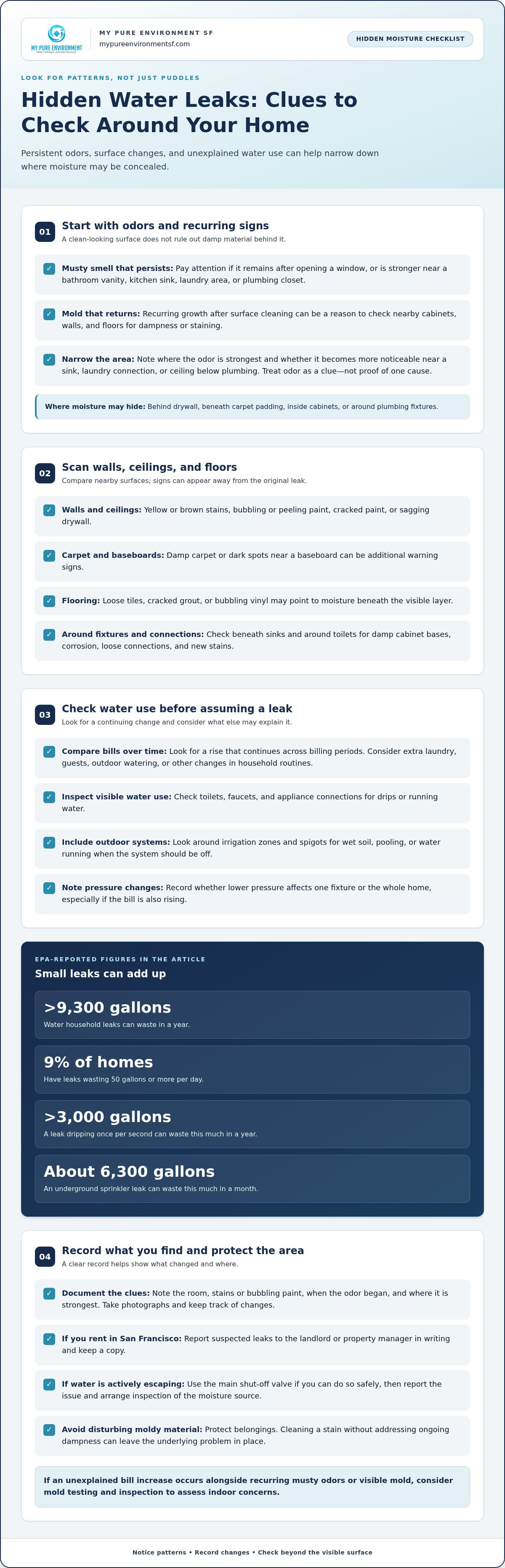
A musty smell that persists after you open a window deserves attention. Hidden moisture can collect behind drywall, beneath carpet padding, inside cabinets, or around plumbing fixtures. Mold and mildew can release volatile organic compounds that create a characteristic musty odor. The smell may be strongest near a bathroom vanity, kitchen sink, laundry area, or closet with plumbing lines. A clean-looking surface doesn’t rule out damp material behind it.
Look for other warning signs near the odor. Yellow or brown stains on a ceiling or wall can indicate water intrusion; bubbling, peeling, or cracked paint may mean moisture has separated the finish from its surface. Sagging drywall, damp carpet, and dark spots near a baseboard offer additional clues. Flooring matters too: loose tiles, cracked grout, or bubbling vinyl may point to moisture beneath the visible layer. These signs can appear away from the original leak, so compare nearby walls, floors, and ceilings.
Recurring mold is another reason to look for a continuing moisture source. For example, if dark growth returns around a bathroom fixture after surface cleaning, inspect the cabinet interior, adjacent wall, and floor for dampness or staining. A musty smell in one room but not another can help narrow the area to investigate. Note where the odor is strongest and whether it becomes more noticeable near a sink, laundry connection, or ceiling below plumbing. Treat the odor as a clue, not proof of one particular cause.
In a San Francisco rental, report suspected leaks to the landlord or property manager in writing. Describe the room, visible stains or bubbling paint, and when you noticed the musty smell; keep a copy and take photographs. This creates a clear record of the condition and your notice without assuming a specific response deadline.
After finding a suspected leak or mold, document the affected area, protect belongings, and avoid disturbing moldy material. If water is actively escaping, use the main shut-off valve if you can do so safely, then report the issue and arrange inspection of the moisture source. Cleaning a stain without addressing ongoing dampness can leave the underlying problem in place.
In an older San Francisco home, regularly inspect plumbing fixtures and connections, especially beneath sinks and around toilets. Check for damp cabinet bases, corrosion, loose connections, and new stains; keep track of changes rather than relying on memory. These checks can help catch moisture early, before damage spreads into flooring, wall cavities, or other concealed materials.
2. Unexpected increases in water bills
A higher water bill can be an early warning sign, especially when household routines haven’t changed. Compare recent statements with earlier bills and look for a rise that continues across billing periods. Note changes such as extra laundry, guests, or increased outdoor watering before assuming a leak. If the household’s water use stayed similar, unexplained consumption deserves closer investigation.
The U.S. Environmental Protection Agency reports household leaks can waste more than 9,300 gallons of water every year, and nine percent of homes have leaks wasting 50 gallons or more per day. A small, persistent drip can contribute: according to the U.S. Environmental Protection Agency, a leak dripping once per second can waste more than 3,000 gallons of water in a year. These figures show why a minor fixture problem can matter even when water loss isn’t obvious.
Outdoor water use can also raise a bill without leaving indoor clues. The U.S. Environmental Protection Agency says an underground sprinkler leak can waste about 6,300 gallons of water a month. Inspect irrigation zones, outdoor spigots, and visible connections for wet soil, pooling, or water running when the system should be off. A leak underground may remain out of sight while increasing recorded use.
Start with a simple review before taking further steps. Compare the current bill with earlier statements, then write down changes in occupants, watering schedules, appliance use, or time spent at home. Check toilets, faucets, and appliance connections for visible drips or running water. If these checks don’t explain the increase, note when the bill changed and which fixtures or outdoor systems may need inspection.
Water pressure can offer another useful clue, although changes have several possible causes. If pressure drops while the bill rises, record when you notice both changes and whether they affect one fixture or the whole home. A single weak faucet suggests a different area to inspect than low pressure throughout the house. Together, these observations can narrow the search to fixtures, supply lines, or outdoor plumbing.
Keep a brief record of each bill, meter reading, and inspection. For example, note a sprinkler schedule change beside the bill date, then check whether the next reading reflects it. If water use remains higher without an explanation, share your observations with a plumbing professional who can locate and repair a leak. Don’t dismiss a continuing increase simply because no wet patch is visible.
If an unexplained bill increase occurs alongside recurring musty odors or visible mold, consider mold testing and inspection to assess indoor concerns.
3. Checking a water meter for leaks
A water meter can help reveal hidden leaks without opening walls. First, turn off faucets and stop water-using appliances, including dishwashers and washing machines. Make sure nobody uses water during the test. Check that toilets aren’t refilling and irrigation isn’t running. Then locate the meter and record its reading, including the position of any small leak indicator. A photo makes the starting point easier to compare.
Leave water off for one to two hours, then read the meter again. If the reading has changed, water may be moving somewhere in the plumbing system. Repeat the test if someone used water or an appliance ran during the waiting period. An uninterrupted test helps distinguish a possible leak from normal use. Record both readings and the time, especially if a higher water bill prompted the check.
Check fixtures before concluding that a concealed pipe is leaking. Look beneath sinks for damp cabinet floors, inspect visible supply connections, and check faucets for drips. Examine the area around a water heater and laundry hookups for moisture or pooling. A toilet can leak silently from its tank into the bowl. Add food coloring to the tank, wait ten minutes without flushing, and check whether color appears in the bowl. If it does, the toilet may be losing water internally.
Listen for water when all fixtures and appliances are off. A steady sound near a wall, floor, or water heater can help narrow the area to investigate. Notice whether the sound continues after the meter test begins. Dampness, a warm floor spot, or a change in water pressure can add context, but none identifies the exact pipe location by itself. Write down where each clue appears and whether it changes when fixtures are used.
Without opening walls, combine the meter reading with visible clues and a moisture meter. Check accessible floors and walls near plumbing for damp readings, stains, or changes in surface condition. Compare readings across nearby areas instead of relying on one spot. Hidden leaks behind walls, beneath concrete slabs, or underground may require professional equipment to detect. This approach can help identify a likely area before any invasive investigation begins.
If the meter moves during the no-use test, repeat the check after confirming every fixture and appliance is off. A second changed reading strengthens the case for a leak somewhere in the system. Share your notes, meter photos, and observations of dripping or dampness with a plumbing professional. Those details can guide leak detection and repairs, especially when the source is concealed and visible damage hasn’t yet appeared.
4. Leaks behind walls, under floors, or beneath foundations
Hidden leaks can travel through building materials before appearing on a surface. Water may move along framing and become visible as far as ten feet from its source. A ceiling stain below an upstairs bathroom, for example, may not mark the exact leak location. Inspect nearby plumbing routes, adjacent rooms, and the floor above when tracing damage.
Watch for changes in flooring and drywall. A floor that feels soft, uneven, warped, or spongy can indicate moisture underneath. Damp carpet may conceal water in its padding, while loose tile or bubbling vinyl can signal moisture in the subfloor. On walls and ceilings, new stains, damaged drywall, peeling paint, or sagging areas call for closer inspection.
Common signs of hidden mold behind walls or under floors include a persistent musty smell, recurring growth near plumbing, and damp or discolored surfaces. Mold may remain concealed inside cabinets, beneath flooring, or behind drywall, so visible growth can be only one clue. The U.S. Environmental Protection Agency says mold can begin growing within 24 to 48 hours after water reaches hidden surfaces such as drywall, insulation, or subfloor framing.
Some clues point toward plumbing beneath a floor or foundation. A warm floor spot can suggest a hot-water line leak, while unexplained low water pressure may indicate a plumbing issue. Cracks in flooring or a sudden change in how doors and windows close can also accompany water-related foundation movement. Note where each change appears, then compare it with nearby pipes, fixtures, and damp areas.
To narrow the likely source, map the damage before moving items or disturbing materials. Record each stain, soft floor, damp patch, or odor, and note which rooms sit above or beside it. Check ceilings beneath bathrooms and upstairs plumbing, plus kitchen and bathroom walls near supply lines. A moisture meter can help identify dampness in walls or floors without immediately opening them.
Moisture can damage more than the visible finish. Water trapped behind drywall may affect insulation; persistent dampness beneath flooring can damage subfloor materials. A slab leak left unrepaired can contribute to foundation damage, while water around a foundation may contribute to cracks or settling. Poor drainage, gutter problems, and underground plumbing leaks are possible sources to consider outside.
Hidden leaks behind walls, under concrete slabs, or underground often require professional equipment to locate. If a floor feels warm or spongy, a ceiling sags, or a stain keeps returning, document the affected areas and arrange a plumbing assessment. Identifying the moisture source matters because drying or replacing a surface alone won’t stop water from reaching the same area again.
5. Water damage, mold growth, and indoor air quality
Water damage affects more than the surface that first becomes visible. A leaking pipe can wet drywall, insulation, carpet padding, or wood framing inside a wall or floor. As materials stay damp, mold may develop, while odors and airborne particles affect indoor air quality. In San Francisco homes, signs of a hidden water leak and mold can overlap, so consider both the moisture source and its effects indoors.
Indoor humidity and water intrusion leave different clues. Excessive humidity can cause condensation on window interiors, while a leak may create localized damage near plumbing. Note which rooms show condensation and which have isolated damage. This comparison can help distinguish a broad humidity issue from moisture entering near a fixture.
Mold exposure can cause respiratory issues, especially for people with asthma or allergies. Note whether concerns occur in a room with a musty odor or visible growth. Symptoms alone don’t identify mold as the cause, but recurring respiratory concerns alongside damp materials deserve attention. Avoid disturbing suspected growth, since handling affected surfaces can spread particles.
Hidden water can also damage insulation and building systems. A warped floor beside a bathroom or a ceiling stain below an upstairs toilet calls for attention to both the visible surface and the concealed area. A plumber can investigate the plumbing source; a separate assessment can address mold and indoor air concerns.
Photograph visible damage and note persistent odors, condensation, and nearby plumbing. These details can help clarify whether signs of a hidden water leak and mold in San Francisco point to moisture, mold, or both. Avoid disturbing affected materials while arranging an appropriate assessment.
My Pure Environment SF offers Indoor Air Quality Improvement for concerns involving indoor conditions. If you’re concerned about lingering indoor air issues after water damage, explore indoor air quality improvement.
My Pure Environment SF: Mold Remediation
My Pure Environment SF provides mold remediation when mold is present or suspected after water intrusion. If the cause or extent of growth is unclear, Mold Testing & Inspection can assess the affected indoor environment. For persistent indoor air concerns, Indoor Air Quality Improvement may be relevant; Bathroom Mold Removal addresses mold in that specific area.
These services focus on mold and indoor environmental concerns. A plumbing professional should address an active leak, since resolving the water source is essential to preventing continued moisture exposure. Share what you’ve observed, such as recurring growth, musty odors, or visible affected areas, when discussing the concern.
To learn more about mold remediation and related services, visit My Pure Environment SF.
Take the Next Step Toward a Healthier Home
Recognizing the signs of a hidden water leak and mold in SF can help you decide what needs attention, but lasting progress depends on addressing the indoor concern clearly. Keep notes about what you’ve noticed and which areas continue to affect your comfort. That record can guide a focused conversation about appropriate next steps.
My Pure Environment SF offers Mold Remediation, Mold Testing & Inspection, and Indoor Air Quality Improvement for concerns involving mold and indoor conditions. These services can help assess suspected growth, address mold, and respond to air quality concerns. If an active leak is present, have its plumbing source addressed to protect the space from continued moisture.
Contact My Pure Environment SF to discuss your mold or indoor air quality concerns. A clear next step can make caring for your home feel more manageable.
Frequently Asked Questions
What Are the Signs of a Hidden Water Leak?
Look for patterns across nearby surfaces, not just one isolated mark. For example, a ceiling stain beneath an upstairs bathroom, paired with a damp wall nearby, can help narrow where moisture may be traveling. Record when each change appeared and photograph it from the same angle later. Comparing these observations can show whether damage is spreading and help a plumbing professional investigate the likely source.
How fast can mold start after a hidden leak begins?
Mold can begin growing within 24 to 48 hours after water reaches a hidden surface such as drywall, insulation, or subfloor framing, according to the U.S. Environmental Protection Agency. The relevant starting point is when materials become wet, which may be later than the leak’s actual beginning. If you discover damp building materials, document the affected area and arrange assessment rather than waiting for visible growth.
Need Professional Leak Detection?
Professional leak detection is useful when a meter changes during a no-use test but accessible fixtures show no source. A plumber can inspect the plumbing system, locate a leak, and recommend repairs. Concealed pipes behind walls, beneath slabs, or underground may require specialized equipment. Share meter readings, photographs, and notes about where you hear water; these observations can help focus the investigation.
Why would my water bill jump if I do not see any water?
A bill can rise because water is escaping somewhere you can’t see, such as inside a toilet tank, beneath a floor, or along an underground irrigation line. A toilet flapper that doesn’t seal may send water quietly into the bowl without leaving a puddle. Compare the bill with household routines, then check toilets and outdoor watering systems before assuming the increase reflects ordinary use.
What are the signs of a hidden water leak in a home?
Useful clues include a persistent damp odor, a localized stain, a spongy floor, or paint that separates from the wall. Check whether clues cluster around a bathroom, laundry connection, or kitchen plumbing. One mark alone may not identify the source, but several changes in the same area create a more useful record. Photograph them and note whether they change over time.
How can you tell whether a musty smell is caused by mold or a plumbing leak?
A musty smell alone can’t distinguish mold from its moisture source. Check nearby surfaces and plumbing for dampness, staining, or recurring growth; a persistent odor inside a sink cabinet, for example, makes that area worth inspecting closely. Mold assessment can help establish whether mold is present, while a plumber investigates leaking pipes. Keep the two questions separate: identifying mold and locating a leak require different assessments.
When should you hire a plumber or mold inspector for suspected hidden leaks?
Contact a plumber when a meter reading changes without water use, pressure drops, or you hear running water near a wall or floor. Arrange mold assessment when growth returns, odors persist, or moisture damage involves concealed materials. If both sets of clues appear, each professional addresses a different part of the problem: the plumber investigates the water source, while mold inspection evaluates suspected indoor growth.
What health risks can hidden mold cause, and when should occupants leave?
Mold can cause respiratory issues, particularly for people with asthma or allergies. If an occupant notices breathing symptoms that worsen in an affected room, move away from that area and seek medical advice. Severe or rapidly worsening breathing difficulty calls for urgent medical attention. Avoid disturbing suspected mold while arranging an assessment, since scraping or pulling at affected materials may spread particles into the room.
