
Preventing Mold in San Francisco Cannabis Grow Rooms
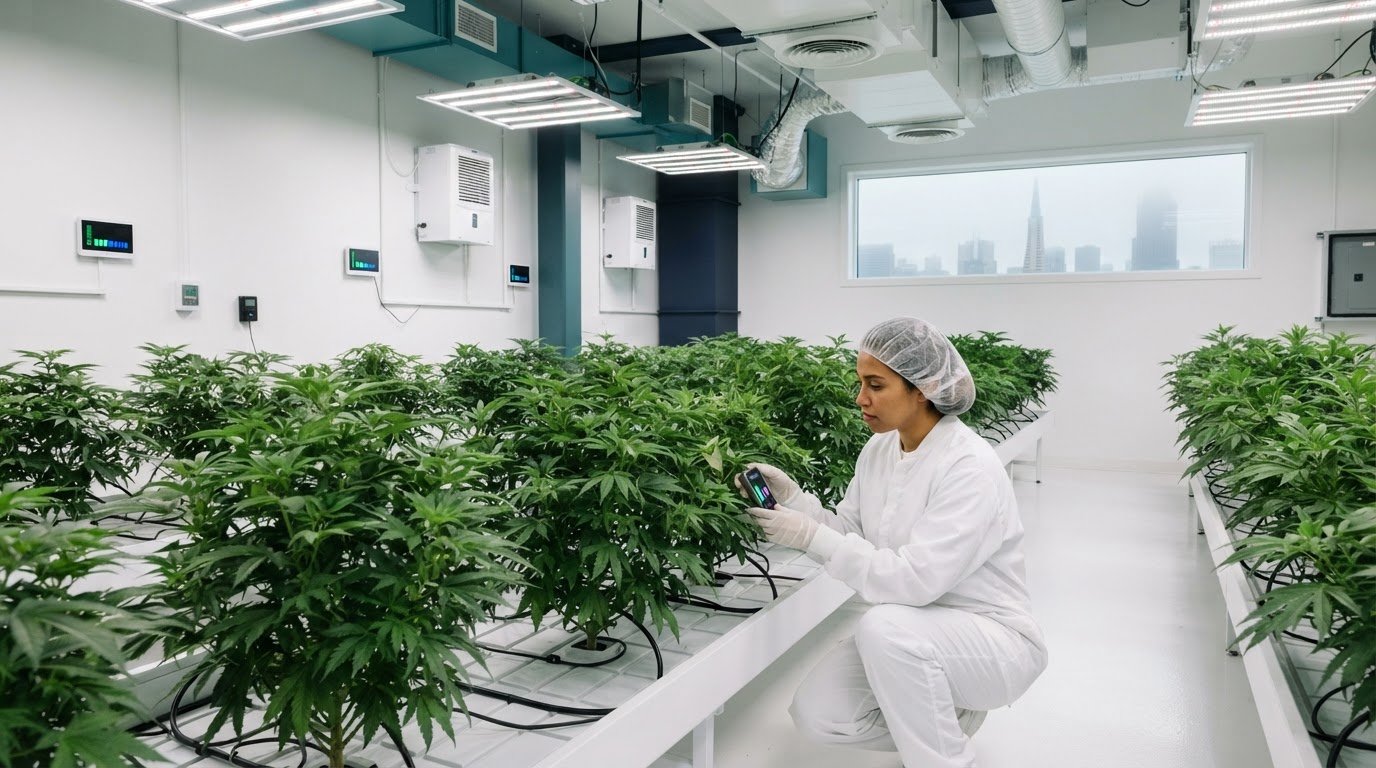
What if the most important mold-prevention work in a San Francisco grow room happens between cleanings, not just after harvest? Regular sanitation matters, but it cannot correct persistent moisture, uneven airflow, or building conditions that keep mold risk alive. Preventing mold in cannabis grow rooms sf means treating prevention as a monitored routine, not a reset between crops.
Use a repeatable process to check room conditions, document changes, and follow up on moisture concerns. San Francisco’s coastal climate is useful context, but it does not tell you what is happening inside a particular facility. This guide explains where to inspect, how to make monitoring records useful, what different prevention controls can and cannot address, and when persistent concerns call for professional mold inspection, testing, or remediation.
Key Takeaways
- Preventing mold in cannabis grow rooms sf depends on monitoring room conditions and addressing moisture early, not relying on cleaning alone.
- Measure conditions inside the facility rather than assuming San Francisco’s coastal climate affects every grow room in the same way.
- Compare monitoring, cleaning, airflow management, and specialist assessment by what each can address and where its limits lie.
- Use a repeatable cycle of inspecting, measuring, logging, correcting, and reassessing, with tasks scheduled for daily checks and between-cycle cleaning.
- Recurring growth, musty odors, or persistent moisture can signal a need for professional inspection or testing, which serve different purposes.
Why preventing mold in cannabis grow rooms starts with the room environment
Plant symptoms are only one part of the picture. Mold can also grow on room surfaces, stored materials, or building components when moisture persists. Mold spores may be present indoors and outdoors, but their presence alone does not establish active growth. Moisture, a suitable surface, and enough time are the conditions to watch. That is why preventing mold in cannabis grow rooms sf starts with understanding the whole space, not relying on a spotless appearance or waiting for plants to show a problem.
Grow-room mold prevention is the ongoing practice of limiting conditions that support mold growth and identifying moisture problems early, without assuming any facility can be guaranteed mold-free. A room-first approach helps distinguish a possible crop-health concern from a building-related one and gives staff specific areas to monitor.
How moisture, temperature, and organic material interact
Mold needs moisture and a surface or material it can use to grow. Plant debris, dust, and other organic residues can provide nutrients, while wet surfaces and recurring condensation can keep materials damp. Warmth can support growth, but no single temperature or relative-humidity reading guarantees safety across every room, surface, and crop stage. A sensor only describes conditions where it is placed. It may not reflect a damp corner or a wall behind equipment.
Look for patterns, not just isolated readings. Water remaining on the floor after cleaning, damp plant matter, or condensation that repeatedly forms on a cool surface deserves attention. Air movement can reduce stagnant pockets, but it will not solve a moisture source by itself. General information on cannabis cultivation and mold prevention also highlights why managing growing conditions matters. Apply checks to your facility’s layout and the conditions you actually observe.
Why a clean-looking grow room can still need monitoring
A room can look orderly while moisture remains hidden. Areas behind racks, around pipes, beneath equipment, or near wall and ceiling junctions can be easy to miss during routine cleaning. Corners with limited air movement may also have different conditions from the center of the room. Include these less visible spots in inspections, especially if surfaces feel damp, condensation recurs, or materials appear to be deteriorating.
A musty odor, persistent dampness, discoloration, or visible spotting is a reason to investigate, not proof of a specific mold type or source. Plant changes may indicate a crop-health issue, while growth on a wall or other building material is a separate facility concern. Do not treat appearance alone as a confirmed identification. Record where and when signs occur, inspect nearby surfaces, and note moisture conditions. If the concern returns or routine monitoring leaves questions unresolved, professional mold inspection and testing can help assess the indoor environment.
How San Francisco grow-room conditions affect mold prevention
San Francisco’s coastal setting can bring foggy, damp outdoor air, but it does not tell you what is happening inside a particular grow room. Building design, ventilation, equipment, room use, and how air enters the facility all influence indoor moisture. Two cultivation spaces in the same neighborhood can have different environmental patterns. Indoor measurements matter more than regional assumptions because mold risk depends on conditions at a specific location, not a citywide climate description.
For preventing mold in cannabis grow rooms sf, use local weather as context, not as a substitute for measurement. Readings near plants may differ from readings near an intake, an exterior-facing wall, or an area with limited air movement. The University of Georgia’s general mold prevention strategies also emphasize managing indoor moisture and ventilation. Apply those principles by tracking conditions in your room and watching how they change.
Track humidity, temperature, and condensation across the room
Take readings consistently at representative locations, including the plant canopy and areas where condensation or stagnant air may occur. Use a regular schedule that captures changes during the cultivation cycle rather than relying on a single spot check. Record the time, location, temperature, humidity, and any visible condensation. Consistent records help staff compare observations and identify recurring patterns.
No universal reading guarantees that every surface in every facility is safe. Treat a persistent change from your room’s usual pattern as a prompt to investigate, not as a diagnosis. Note whether changes coincide with room use, equipment operation, or crop stage. A log helps distinguish a brief fluctuation from a condition that repeatedly affects the same area.
Check airflow, HVAC, and moisture entry points
Air may circulate well through an open aisle while moving poorly behind racks or in corners. Check whether equipment or stored materials obstruct circulation and whether airflow reaches the areas you monitor. During routine inspections, look for visible moisture around HVAC surfaces, intake areas, plumbing, and exterior-facing walls. These observations can help connect a reading to a specific location that needs attention.
If moisture repeatedly appears near a building system or entry point, record its location and timing. Do not assume that adjusting room settings will fix an underlying building-system problem. The cause may require a focused assessment of indoor environmental and building conditions. A mold inspection can help evaluate persistent concerns, while system faults should be addressed according to their source.
Make monitoring useful by comparing like with like. Check the same locations at consistent points in the operating cycle, and note when visible condensation appears or clears. Review the log for patterns, such as one corner staying damp or readings changing after equipment runs. This gives staff a clearer basis for deciding what to inspect next, rather than reacting to an isolated number or a citywide humidity assumption.
When recurring moisture or suspected growth remains unexplained, a specialist assessment can examine the room and its building conditions alongside visible plant symptoms. My Pure Environment SF provides mold and cannabis assessment for facilities with persistent concerns.
Compare mold-prevention controls before choosing a grow-room approach
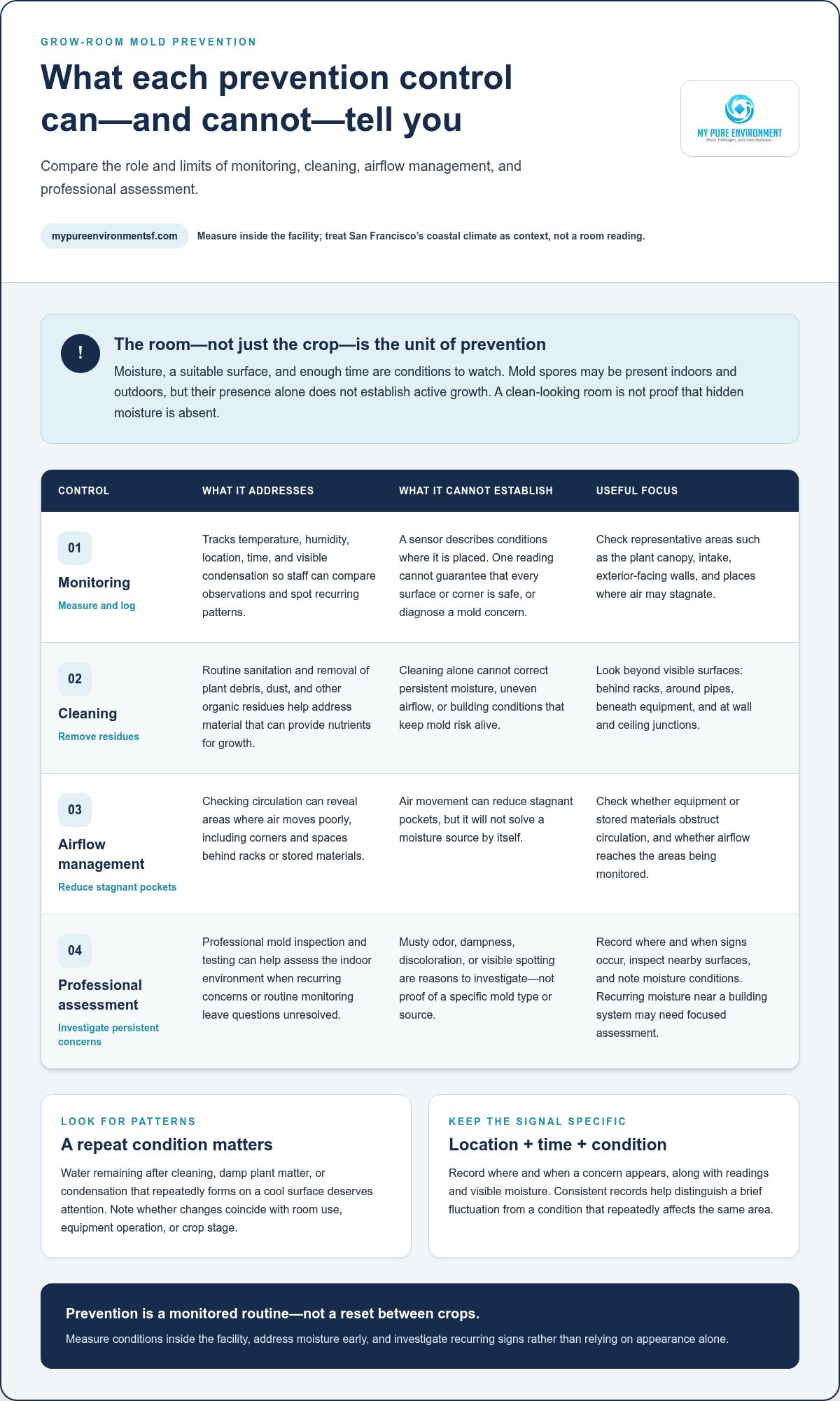
No single control covers every part of mold prevention. Environmental monitoring helps staff spot changes, cleaning removes residues, and airflow management supports more even air movement. Specialist assessment can help investigate concerns that persist. For preventing mold in cannabis grow rooms sf, compare controls by the problem each can address and what it cannot resolve alone. Combining approaches provides a more complete picture than relying on one cleaning method or technology.
| Control | What it addresses | Practical limitation |
|---|---|---|
| Environmental monitoring | Changes in humidity, temperature, and room conditions over time | Readings show conditions at measured locations, not mold species or every hidden area |
| Routine cleaning | Plant debris, dust, and residues on accessible surfaces | Does not correct ongoing moisture or reach concealed materials by itself |
| Airflow management | Stagnant areas and uneven air distribution | Cannot resolve every moisture source or building-system concern |
| Specialist assessment | Recurring concerns that need closer evaluation of indoor or building conditions | Findings depend on the conditions and areas assessed; it complements routine controls |
Sanitation supports prevention, but it cannot replace environmental control. A room may be thoroughly cleaned and still have a recurring damp area, condensation, or airflow imbalance. Dry fog or another single treatment method should not be treated as a universal solution. Suitability depends on the concern and setting, and a treatment does not replace identifying why moisture is present.
Routine cleaning versus environmental control
Cleaning removes accumulated material and supports consistent housekeeping. Prioritize plant debris, dust, and damp or frequently touched surfaces, following procedures suited to the facility. Environmental control has a different role: it addresses conditions that may recur, such as persistent moisture or uneven air movement. Surface cleaning alone cannot establish whether concealed or building-related mold is present, or correct the conditions supporting it.
Connect the two controls. If staff repeatedly clean the same damp location, record the pattern and investigate why it stays wet instead of treating each cleanup as a complete fix. This turns routine sanitation into useful information about where environmental attention may be needed.
In-house monitoring versus specialist mold assessment
In-house monitoring helps teams compare readings and observations over time, but it does not identify mold species. A persistent musty odor, visible growth that returns, or recurring moisture despite routine controls can warrant professional evaluation. Inspection and testing can help assess environmental concerns, though testing does not always identify the moisture source by itself. Consider findings alongside the room’s history and conditions.
When growth is confirmed or suspected, prevention and response are related but distinct decisions. A focused assessment can clarify what needs further attention. The key is to choose controls based on the concern, rather than expecting cleaning, airflow changes, or one treatment technology to solve every mold-related issue.
Build a repeatable mold-prevention routine for each cultivation cycle
A routine works best when observations lead to action and follow-up. Use the same sequence throughout each cultivation cycle: inspect, measure, log, correct, and reassess. Assign responsibility for recording findings so that changes do not depend on memory or shift handoffs. For preventing mold in cannabis grow rooms sf, a consistent process helps staff spot patterns and investigate conditions early.
Adapt this checklist to your facility’s procedures and monitoring locations:
- Inspect: Look for leaks, standing moisture, condensation, blocked airflow, plant debris, and unusual musty odors.
- Measure: Take humidity and temperature readings at selected monitoring locations, including plant-level areas and known problem spots.
- Log: Record readings, visible moisture, observations, and relevant equipment or maintenance notes.
- Correct: Follow facility procedures to address housekeeping concerns or refer persistent moisture and equipment issues for appropriate assessment.
- Reassess: Check the affected area again and document whether the condition changed or returned.
A useful log captures the date and time, location, readings, condensation or odor observations, cleaning completed, equipment concerns, corrective actions, and follow-up findings. Keep entries factual. For example, write “condensation observed near intake” rather than assuming its cause. Reviewing entries together can show whether an observation was isolated or repeatedly associated with a location or operating condition.
Daily and scheduled checks during cultivation
During daily observations, check accessible surfaces and the room for leaks, standing water, condensation, obstructed airflow, and unusual odors. Take readings consistently at selected locations. If a monitor is moved, record its new position so readings remain useful for comparison. Schedule equipment checks according to facility procedures, and note maintenance or operating changes that could help explain a shift in readings.
Review the log regularly. If readings or moisture observations repeatedly differ from the room’s usual pattern, document what was checked and what action followed. Clear records help the next staff member continue the investigation instead of starting from memory.
Between-cycle cleaning and corrective follow-up
Between cultivation cycles, remove plant debris and clean appropriate surfaces according to facility safety procedures. Use this opportunity to inspect areas that are difficult to access during active cultivation, including behind equipment and around components where moisture has been observed. Cleaning is not complete simply because surfaces look clean. Confirm that recurring moisture or airflow concerns have been addressed or referred for further assessment, then record the follow-up.
If monitoring identifies persistent moisture, recurring growth, or unresolved indoor environmental concerns, professional mold inspection and testing can support a closer assessment. Arrange a mold and cannabis assessment to evaluate concerns within the facility.
When San Francisco cannabis facilities should seek mold testing or remediation
Routine monitoring is useful, but recurring warning signs deserve a closer look. Consider professional assessment if visible growth returns after cleaning, a musty odor remains unexplained, or moisture keeps appearing despite corrective steps. The goal is to understand what is happening and whether indoor or building conditions need further attention, not to assume the worst. This matters when preventing mold in cannabis grow rooms sf measures have not resolved a persistent concern.
Record where the issue appears, when it occurs, and what staff have observed or addressed. That history can help focus an assessment on more than visible plant symptoms, including nearby surfaces and environmental conditions.
What a mold inspection or test can clarify
An inspection evaluates observed conditions and may consider areas where moisture could contribute to a concern. Testing can help answer a defined question when selected appropriately, but it does not automatically identify the source of moisture or explain why growth keeps returning. Inspection and testing serve different purposes. The right approach depends on what the facility has observed and which questions remain.
For example, recurring growth in one area may call for attention to the surrounding surface and moisture conditions, while an unexplained odor may prompt a broader look at the environment. A test result is one part of the picture. Consider it alongside facility records, visible conditions, and inspection findings. A San Francisco mold testing guide can provide additional context on what testing may help determine and its role in an assessment.
How professional remediation fits a prevention plan
Remediation addresses identified mold concerns; prevention focuses on reducing conditions that may allow them to return. Treating one without considering the other can leave important questions unanswered. After remediation, continue tracking the area and the conditions associated with the original concern. If moisture or poor air movement persists, cleaning or remediation alone may not address the factors behind recurrence.
My Pure Environment SF provides mold inspection, testing, and remediation, including specialized mold and cannabis services for cultivation facilities. A focused assessment can evaluate concerns in the room and its indoor environment without relying on assumptions based only on a crop’s appearance. Findings can inform next steps, though no single test or method resolves every facility concern.
If signs persist, a professional assessment can help clarify the concern and guide a measured response. Explore professional mold remediation in San Francisco when remediation is appropriate for your facility.
Make your next step a clearer one
A prevention plan is most useful when it helps your team decide what to do next, not just what to monitor. If an issue keeps returning, use your observations to define the question: Is moisture recurring in one area? Are indoor conditions changing in a way your routine has not resolved? Clear questions help turn concern into informed action.
For preventing mold in cannabis grow rooms sf, the goal is not to promise a perfect environment. It is to make thoughtful decisions as conditions change and seek a closer assessment when routine checks leave important questions unanswered. My Pure Environment SF provides San Francisco-based mold and cannabis services, including professional mold inspection, testing, remediation, and indoor air quality support.
Explore professional mold services for cannabis facilities when your team needs support assessing a persistent concern. A measured plan and focused guidance can help you move forward with greater clarity.
Frequently Asked Questions
Can mold be completely prevented in a cannabis grow room?
No routine can guarantee a completely mold-free grow room. Mold spores occur in many environments, so the practical goal is to reduce conditions that support growth and respond promptly when something changes. Preventing mold in cannabis grow rooms sf means keeping moisture management, suitable cleaning, and routine observations working together. Treat prevention as part of ongoing facility operations, not a one-time treatment or equipment purchase.
What humidity should a cannabis grow room maintain to prevent mold?
There is no single humidity reading that guarantees mold prevention in every room or cultivation stage. Use targets appropriate to the crop and facility, and interpret readings alongside signs such as condensation or damp materials. Place monitors where readings represent the conditions you need to understand, not directly beside a heat source or misting equipment. If moisture persists even when readings seem acceptable, investigate the affected area rather than relying on the number alone.
Does airflow prevent mold in a cannabis grow room?
Good airflow can help reduce stagnant pockets, but it cannot prevent every mold problem by itself. For example, increasing fan speed may move air through an open aisle while leaving a blocked area behind equipment largely unchanged. Check whether vents are obstructed and whether equipment appears to distribute air unevenly. If dampness continues or airflow changes unexpectedly, investigate the underlying condition instead of assuming stronger fans will resolve it.
How often should a cannabis grow room be checked for mold?
Build checks into routine operations throughout cultivation, not just at harvest changeover. A practical starting point is a daily visual observation for moisture, condensation, unusual odors, and blocked airflow, paired with environmental readings at consistent locations. Schedule equipment reviews according to facility procedures, and consider an additional check after maintenance or a change in room operation. Adapt the timing to the facility’s conditions, and record findings so handoffs do not rely on memory.
Can a clean grow room still have a mold problem?
Yes. A clean appearance does not show whether concealed surfaces are dry or conditions remain stable over time. Moisture can collect around equipment, or a recently cleaned area may remain damp after visible residue is gone. Combine housekeeping with environmental observations and pay attention to concerns that return in the same location. Repeating a surface-cleaning pass without investigating the pattern may leave the underlying issue unresolved.
When should a San Francisco cannabis grower get professional mold testing?
Consider professional evaluation if visible growth repeatedly returns, a musty odor persists, moisture remains unresolved, or the source of a concern is unclear. Inspection can assess observed conditions and possible moisture sources; testing may help answer a specific question when selected appropriately. Neither guarantees that every source will be identified. My Pure Environment SF provides mold testing and inspection, including specialized support for cannabis facilities in San Francisco.
