
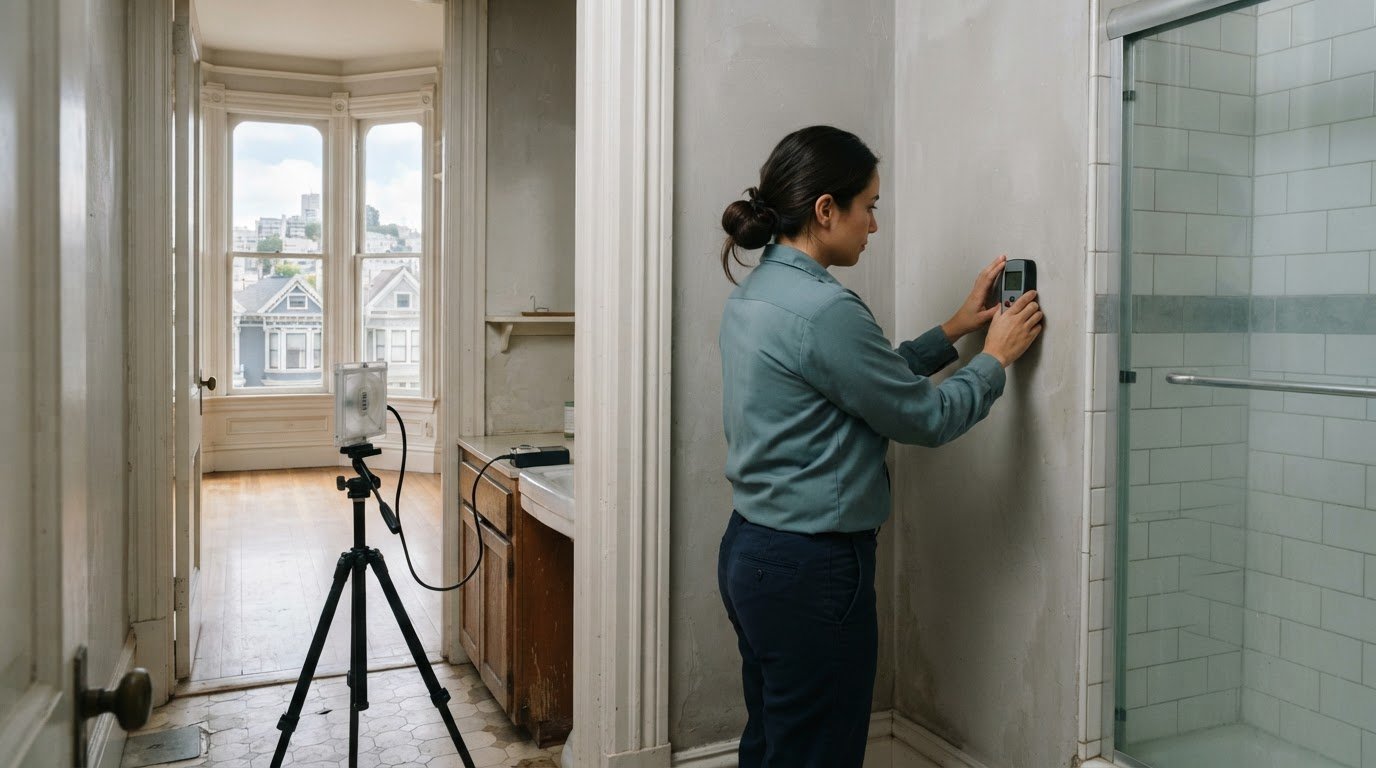
Mold can grow behind drywall when moisture reaches the materials beneath the surface, so a clean-looking wall doesn’t always rule out a problem. The mold inspection cost in San Francisco depends on the home’s size, the areas that need assessment, and whether sampling is appropriate.
The Complete Mold Inspection includes an onsite consultation, a visual home inspection, laboratory testing, reports on each sample, and treatment recommendations. The inspection gives you a structured assessment of the concern, rather than just a sample result.
Signs of moisture help guide the inspection. Before booking, note where you’ve seen discoloration or dampness, whether a musty odor persists, and any history of leaks. This information helps focus the assessment on the areas that matter in your San Francisco home.
Key Takeaways
- Inspection scope can vary with the suspected moisture source, visible conditions, and whether sampling is needed.
- Home size and square footage help shape the inspection estimate, but the areas assessed also matter.
- Review an inspector’s relevant training and experience to understand the perspective they bring to the assessment.
- Cost-per-square-foot figures don’t tell the whole story; the affected area and work required influence the overall scope.
- When inspection findings point to mold, understand the next steps for testing, remediation, or improving indoor air quality.
What does a mold inspection include in San Francisco?
A mold inspection assesses visible conditions, signs of moisture, and areas where concealed growth may be suspected. Testing adds evidence when appropriate, and the right scope depends on the concern and the property.
Inspection Versus Home Test Kits
Choose a professional inspection when you see recurring discoloration, smell a persistent musty odor, or suspect moisture behind a wall. An inspector can assess building conditions and determine whether mold testing or sampling would help answer your specific question. A home kit may collect a sample, but it won’t assess the moisture source or map affected areas.
When should I get a mold inspection instead of using a home mold test kit? Arrange an inspection when signs persist, return after cleaning, or appear alongside a leak or damp material. A kit can’t replace an assessment of the property and its moisture conditions.
Property Size and Sample Counts
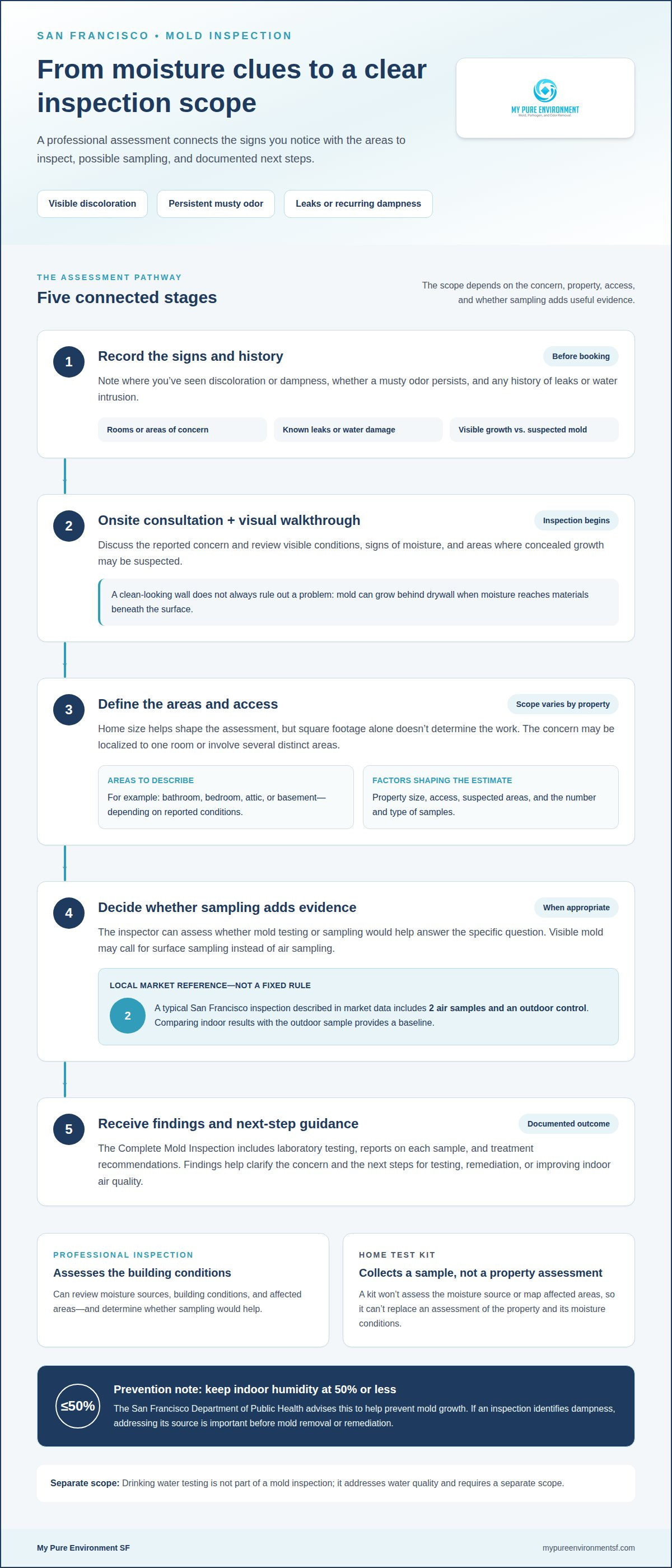
Property size affects how much space an inspector needs to assess, while sample counts affect the testing scope. A typical San Francisco inspection described in market data includes 2 air samples and an outdoor control. Comparing indoor results with an outdoor sample provides a baseline; visible mold may call for surface sampling instead.
What factors affect mold inspection prices, such as property size and number of samples? The estimate depends on property size, access, suspected areas, and the number and type of samples. Inspection pricing is determined by the case and provided after a quote request.
The inspection begins with an onsite consultation and visual walkthrough, including discussion of water intrusion, past leaks, or recurring dampness. The inspector can note visible growth, staining, odors, and moisture conditions, then assess whether testing would add useful information. The inspection includes reports on each sample and treatment recommendations.
Is drinking water testing part of a mold inspection? No. A mold inspection evaluates building conditions and possible mold; drinking water testing addresses water quality and requires a separate scope. If your concern involves both a damp area and tap water, describe them as separate issues when arranging an assessment.
Are mold inspection and mold remediation required to be done by separate companies in California? Inspection findings alone don’t establish that separate companies are required. Inspection and remediation are distinct tasks, and a report documents conditions without determining legal responsibility.
What California laws or San Francisco rules apply to mold inspections and landlord responsibilities? An inspection report can document observed conditions, but it doesn’t decide whether a landlord has met a legal responsibility. Keep dated photos, records of leaks, and written communications about the issue.
Prevention also matters. The San Francisco Department of Public Health advises keeping indoor humidity at 50% or less to help prevent mold growth. If an inspection identifies dampness, addressing its source is important before mold removal or remediation, since treating visible growth alone may leave the underlying condition unresolved.
San Francisco inspection prices by home size
Home size helps shape an inspection’s scope, but square footage alone doesn’t determine the work involved. For budgeting, the mold inspection cost in San Francisco depends on the areas assessed, access, and whether sampling is appropriate. A 1,500-2,500-square-foot home is a typical local reference point, but estimates also reflect the specific concern and property layout. The price depends on the case and is provided after a quote request.
A smaller property may need attention in one room, while a larger home could involve several distinct areas. An inspector might assess a bathroom, bedroom, attic, or basement, depending on reported conditions. The useful distinction is whether the concern appears localized or may involve multiple areas. Two homes with similar floor space can require different scopes if one has a single reported stain and the other has concerns in several rooms.
To compare estimates, describe the inspection areas before reviewing the total. List rooms with visible staining, recurring odors, or known moisture concerns. Then compare whether each estimate covers the same locations and sampling needs. The mold inspection cost in San Francisco is easier to understand when the scope states what the inspection will assess, rather than offering a total without context.
Mold may also affect a property’s financial picture. Market estimates suggest an infestation can decrease a San Francisco home’s value by 20% to 37%. That range isn’t a prediction for a particular house. The potential impact can depend on the extent of the problem, documented conditions, and whether moisture sources and affected materials have been addressed. A written inspection report can help document observed conditions for future discussions.
Before scheduling, organize details that help define the inspection:
- List each room or area where you noticed a concern.
- Describe known leaks, water damage, or recurring dampness.
- Identify spaces that may need special access, such as an attic.
- Distinguish visible growth from areas where mold is only suspected.
These notes help clarify whether the assessment should focus on one location or cover more of the home. They also make it easier to compare inspection scopes by property size without assuming that square footage tells the whole story. For a San Francisco home, connect the estimate to the areas and conditions being assessed. If you’re arranging an assessment, mold testing and inspection can help clarify the scope of a suspected issue.
Inspector experience and qualifications
A mold inspector’s background matters because moisture can travel beyond visible damage. Look for experience assessing buildings, identifying water intrusion, and explaining how observations connect to possible mold growth. For example, a ceiling stain beneath a bathroom may point to a different inspection path than a damp exterior wall. A careful assessment separates visible evidence from assumptions about concealed conditions.
Experience profiles in the Bay Area illustrate the range of relevant backgrounds. One San Francisco inspector reports completing two years of biology in science. A featured inspector has over 10 years of experience in residential, commercial, and environmental inspections. Another has over 20 years of water restoration experience in the Bay Area. These examples describe experience, not a universal credential requirement.
Ask what the inspector’s training covers and how it applies to your property. A background in building construction can help with understanding assemblies and likely moisture pathways. Biology or environmental inspection experience can inform how an inspector approaches sampling and findings. No single background answers every question, so focus on whether the person can explain the inspection’s purpose and limits clearly.
What to look for in an inspection report
A useful report should identify inspected areas, observed moisture indicators, and any samples collected. It should distinguish test results from visual observations and explain what each finding means for the living space. For example, a surface sample from visible growth answers a different question than an air sample collected in a room without visible mold.
The word “certified” can sound decisive, but the label alone doesn’t explain a person’s experience or inspection process. Ask which organization issued a credential, what it covers, and whether the inspector can describe the methods used. Don’t treat a certificate as proof that every hidden area was assessed. The report’s scope and supporting observations matter too.
Before scheduling, prepare a concise record of the problem. Include when you first noticed an odor or stain, where water damage appeared, and whether the area changed after cleaning. Share relevant details, such as a recent bathroom update or a recurring roof leak. This helps focus the inspection on possible moisture pathways rather than treating every room as equally suspect.
Inspection and removal are different tasks. A written assessment should make clear whether it documents conditions, includes testing, or discusses next steps. If the findings describe very damp materials or growth near a living area, use the report to understand which locations need attention. Clear explanations help you compare documented conditions with proposed work, without confusing inspection findings with remediation.
Cost per square foot
A per-square-foot figure can describe mold removal work, but it doesn’t automatically calculate an inspection fee. Inspection pricing reflects the assessment’s scope, while remediation pricing relates to treating affected materials. Keep those services distinct when reviewing an estimate. Otherwise, a removal rate may look like an inspection price, even though it describes different work.
For budgeting, first identify what the estimate measures. Does it cover inspection, sampling, removal, or several services? Then check which rooms and materials are included. A quote focused on one affected wall has a different scope from work involving several areas. The total depends on the case and is provided after a quote request; factors include the affected area, access, materials, and work required.
Square footage still helps describe a suspected mold problem. Measure or estimate the affected surface, not just the home’s total floor area. A stain confined to part of a ceiling is not equivalent to growth across multiple rooms. Record each location separately, then note whether the surface feels damp, shows discoloration, or is near a known moisture source.
Use these steps to make a per-area estimate easier to interpret:
- Separate the area inspected from the area potentially treated.
- Ask which surfaces and rooms the quoted scope includes.
- Note whether testing or samples are included as separate work.
- Compare estimates only when their stated tasks and coverage match.
Sampling can affect the scope independently of square footage. A larger property doesn’t necessarily need samples from every room; sample locations should relate to the specific concern. A report should identify where samples came from and explain the findings. Compare the sample locations with the rooms you reported to see how results relate to the suspected growth.
Also consider access and building materials. A clear, reachable wall differs from a concealed space behind finished surfaces. If access is limited, the assessment may need to focus on available evidence and the reported moisture pattern. Describe construction details, prior repairs, and any recurring leak before the visit. Those facts help define what can be inspected and what the estimate covers.
Finally, don’t use removal rates as a shortcut for estimating inspection expenses. A square-foot figure may help frame treatment discussions, but the inspection assesses conditions and documents findings. Ask for an estimate that separates inspection tasks, testing, and any proposed follow-up. That itemized scope makes it easier to understand what each charge covers and compare like with like.
Mold inspection services in the San Francisco Bay Area
A San Francisco property inspection should start with the building's specific concern, not a standard checklist applied blindly. An apartment with a bathroom stain, a hillside home with a damp lower level, and a house with attic discoloration present different questions. Operating locally out of San Francisco, the inspector assesses reported areas, visible conditions, and possible moisture pathways, then explains what testing could clarify.
Homeowners can make the visit more useful by preparing a short record. Note where and when you noticed staining or an odor, any leak history, and whether the condition changed after cleaning. Include photos that show the surface and its surroundings. A ceiling mark beside a vent gives different context from discoloration near a window or plumbing fixture.
Inspection scope should connect each concern to a clear assessment step. The inspector may examine affected surfaces, check accessible areas for moisture indicators, and determine whether sampling fits the question. Testing is most useful when it addresses a defined uncertainty, such as whether an area without visible growth needs further investigation. A report should identify locations assessed, methods used, and findings, rather than simply state a conclusion.
Before booking, organize information that helps define the visit:
- List rooms with visible growth, staining, or recurring odors.
- Record known leaks, past repairs, and when symptoms appeared.
- Identify access concerns, such as stored items blocking an attic hatch.
- Separate confirmed damage from areas where mold is only suspected.
These details can clarify whether an inspection should focus on one surface or several parts of the property. They also help homeowners understand what the report covers and where its observations apply. If testing is included, connect each sample to a location and a specific concern. This makes the results easier to interpret alongside the inspection findings.
Inspection and mold remediation address different needs. An inspection documents conditions and helps determine whether testing or further action is appropriate. Remediation addresses mold and affected materials. If a report identifies a concern, use its findings to understand the affected locations and moisture issues that may need attention. Addressing the source matters because surface cleaning alone may not resolve recurring growth.
San Francisco properties differ in age, layout, and access, so a useful inspection plan reflects the building rather than assuming every home is alike. Ask for a clearly described scope that names the areas to assess, the role of any samples, and the expected report. To discuss an inspection for a property in San Francisco, schedule a mold inspection with My Pure Environment SF.
My Pure Environment SF: Mold Remediation
My Pure Environment SF provides mold testing and inspection to clarify suspected growth, as well as mold remediation for identified concerns. If an inspection finds mold, its findings can guide decisions about next steps. The Complete Mold Inspection includes laboratory testing, reports on each sample, and treatment recommendations. The company also provides bathroom mold removal and indoor air quality improvement.
Consider testing and inspection when you need to understand what’s present, or remediation when mold has been identified and needs attention. The services address different stages of a mold concern, from assessment through treatment. Contact My Pure Environment SF to discuss your mold concerns and possible next steps.
Take the Next Step Toward a Healthier Home
A suspected mold issue can feel difficult to manage when you’re unsure what deserves attention first. Use your inspection findings to focus on practical next steps: document the affected area, note any moisture concerns, and decide whether further assessment or remediation fits the situation. That keeps the focus on your home’s actual conditions rather than assumptions about mold inspection cost in San Francisco.
My Pure Environment SF can help you move from concern to a clearer plan. Share what you’ve observed and which areas are involved, so the conversation can start with your specific needs. The Complete Mold Inspection includes an onsite consultation, visual inspection, laboratory testing, reports on each sample, and treatment recommendations.
Contact My Pure Environment SF to discuss your concerns and consider the next step for your home.
Frequently Asked Questions
How fast can I get results from a mold inspection?
Results follow the inspection and completion of any laboratory analysis. The Complete Mold Inspection includes reports on each sample and treatment recommendations. While waiting, keep a record of new leaks, odors, or changes to affected surfaces. If the suspected area changes, share that update so the findings reflect current conditions.
How is a mold test done?
A mold test may use air or surface samples selected to address a specific concern. The inspector identifies sample locations, collects material for analysis, and interprets the results in context. My Pure Environment SF’s Complete Mold Inspection includes an onsite consultation, visual home inspection, laboratory testing, reports on each sample, and treatment recommendations. Testing helps assess a concern, but it doesn’t replace attention to moisture sources.
What is the average cost of a mold inspection in San Francisco?
There isn’t one inspection price that fits every San Francisco property. The estimate depends on the area being assessed, access, the inspection scope, and whether sampling is included. A focused assessment of one room differs from an inspection covering several locations. The price depends on the case and is provided after a quote request, based on the property and requested scope.
How much does a mold inspection cost for a house versus an apartment in San Francisco?
The building type alone doesn’t determine the inspection scope. A house may involve several rooms or less accessible spaces, while an apartment assessment may focus on a particular unit or reported area. The relevant factors are the locations to assess, access, and testing needs. Describe the affected rooms and any known moisture history when arranging an inspection.
What is included in a standard mold inspection and written report?
The Complete Mold Inspection includes an onsite consultation, visual home inspection, laboratory testing, reports on each sample, and treatment recommendations. Review whether the report identifies sample locations, describes observed conditions, and connects recommendations to findings. Keep the report with dated photos and notes about leaks so you can track how the documented concern changes.
How much do mold air tests and surface samples cost in San Francisco?
Air and surface sampling costs depend on the number and type of samples, their locations, and the wider inspection scope. A surface sample can address visible material, while air sampling assesses airborne particles in the sampled location. Ask for an estimate that separates sampling from other inspection tasks. That distinction helps you understand what each part covers without comparing unrelated scopes.
How can I find a licensed or certified mold inspector in San Francisco?
Review documented training, relevant inspection experience, and the methods used for your specific concern. A “certified” label alone doesn’t explain what training it represents or what the inspection covers. Look for a clear scope, identified sample locations, and an understandable report. My Pure Environment SF provides Mold Testing & Inspection, including laboratory reports for samples collected through its Complete Mold Inspection.
How much does a mold inspection cost after a leak, flood, or visible mold?
The inspection estimate depends on the affected locations, access, and whether sampling is needed; the event alone doesn’t set the scope. After a leak or flood, note where water reached and which materials remain damp. For visible mold, record its location and extent. Share those details when requesting a quote so the assessment can address the actual conditions rather than an assumed scope.
