
Health Symptoms of Mold Exposure in San Francisco: Signs, Limits, and Next Steps

Could a stuffy nose or persistent cough point to mold, or might something else be causing it? If you’re searching for health symptoms of mold exposure sf, it’s understandable to want a clear answer, especially when a child, older adult, or someone with asthma is affected. Allergy-like symptoms and irritation can occur around damp or moldy spaces, but they can also have other causes.
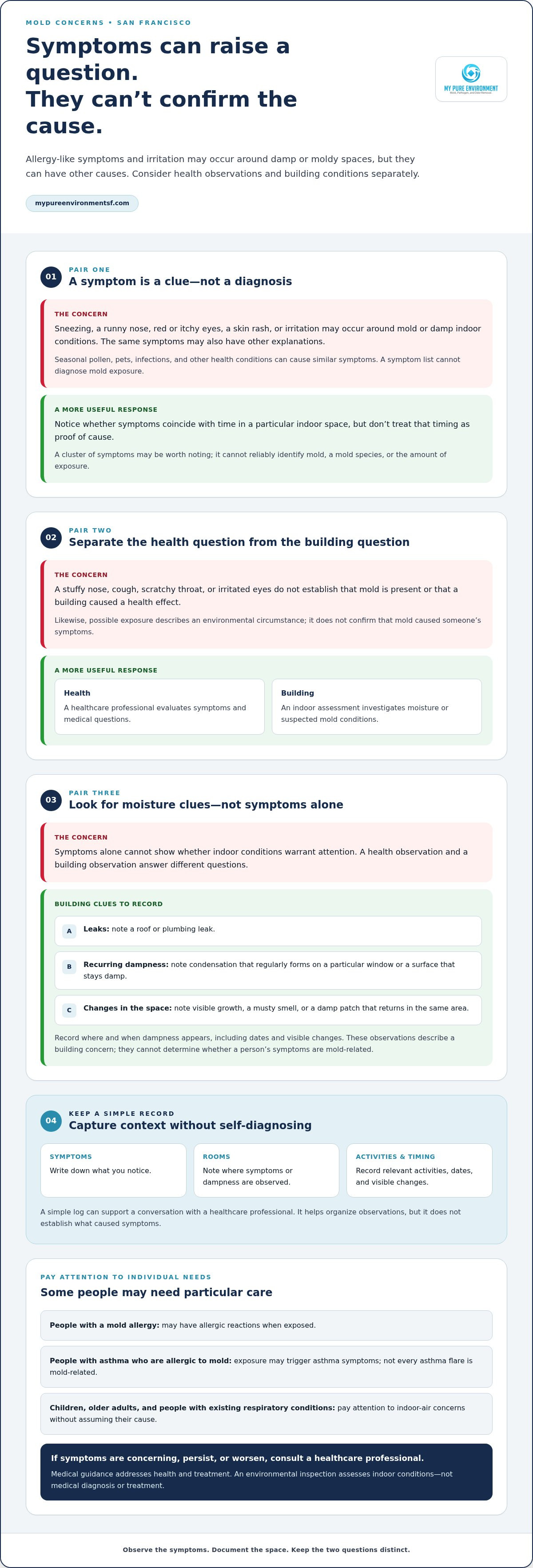
Symptoms alone can’t confirm mold exposure or show that a building is responsible. Building clues, such as a leak, persistent dampness, or visible growth, can help determine whether indoor conditions warrant attention. Looking at symptoms and building conditions separately can help you respond without jumping to conclusions.
This guide covers commonly reported symptoms, why they aren’t a diagnosis, and when to seek medical advice. It also offers practical next steps for San Francisco residents, including documenting moisture concerns and considering a professional mold inspection or testing when the property warrants investigation. My Pure Environment SF provides mold inspection, testing, remediation, and indoor air quality improvement to address indoor conditions, not medical diagnosis or treatment.
Key Takeaways
- Allergy-like symptoms may occur around mold, but they can have other causes and vary from person to person.
- Learn what symptom patterns may suggest, and why they can’t identify mold or prove it caused a health effect.
- Compare health observations with building clues. Each can provide information, but they answer different questions.
- Use a simple log of symptoms, rooms, and activities to support a conversation with a healthcare professional without self-diagnosing.
- For health symptoms of mold exposure sf, a San Francisco mold inspection can help assess indoor conditions, separately from medical evaluation.
What health symptoms of mold exposure may look like
Symptoms can have many causes, and no symptom list can diagnose mold exposure. Sneezing or irritated eyes might occur in a damp indoor space, but they can also be linked to seasonal pollen, pets, infections, or other health conditions. Recognize possible symptom types without treating them as proof of a particular cause.
The health symptoms of mold exposure sf residents may be concerned about are often allergy-like or irritation symptoms. Their presence alone can’t identify a mold species, measure exposure, or establish that mold caused them. Consider the wider context, including whether symptoms coincide with time in a particular indoor space, while keeping medical questions separate from building observations.
Allergy-like symptoms that may occur with mold exposure
People sensitive to mold may experience sneezing, a runny nose, red or itchy eyes, or a skin rash. These reactions can resemble responses to other allergens, so the same symptoms may have different explanations. A cluster of symptoms may be worth noting, but it can’t reliably identify mold or determine the amount of exposure.
The U.S. Environmental Protection Agency describes possible allergic responses to mold as sneezing, a runny nose, red eyes, and skin rash. This summary can help with recognition, not diagnosis. For a broader overview of health issues associated with mold exposure, readers can review how reported effects and possible mechanisms vary.
Irritation and asthma-related concerns
Mold or damp indoor conditions may irritate the eyes, skin, nose, throat, or lungs. Irritation varies from person to person and can overlap with allergies or other respiratory concerns. A scratchy throat or irritated eyes, for example, don’t establish that mold is present. They are symptoms to consider alongside other information.
For people with asthma who are allergic to mold, exposure may trigger asthma symptoms. That possibility deserves attention, but it doesn’t mean everyone with asthma will react or that every flare is mold-related. Children, older adults, and people with existing respiratory conditions may have particular concerns about indoor air, so pay attention to symptoms without assuming their cause.
If symptoms are concerning, persist, or worsen, consult a healthcare professional. Seek medical guidance about symptoms and treatment rather than relying on an environmental inspection to explain a health condition. If you suspect a building issue as well, keep the questions distinct: a clinician evaluates health, while an indoor assessment investigates moisture or suspected mold conditions. This helps you respond carefully without overlooking either concern.
How mold-related symptoms may develop, and who may be more sensitive
Mold-related health effects depend on more than whether mold is present. Molds can produce allergens and irritants, and some types can produce potentially toxic substances. However, finding mold or suspecting exposure doesn’t by itself show that a person has experienced a health effect. People can respond differently, and the same indoor condition won’t necessarily affect everyone in the same way.
“Possible mold exposure describes an environmental circumstance; it doesn’t confirm that mold caused a person’s symptoms.” For readers researching health symptoms of mold exposure sf, this distinction separates two questions: what may be happening in a building, and what may explain someone’s health concerns. The first can be investigated environmentally; the second calls for medical guidance.
Why damp indoor conditions matter
Mold can grow when spores settle on damp materials and conditions allow growth. A roof or plumbing leak, recurring condensation on a window, or a surface that stays damp can create an opportunity for growth if moisture persists. The practical building clue is a moisture condition that may support mold, not a symptom alone.
In San Francisco, note where and when dampness appears rather than assuming a cause. For example, record whether condensation regularly forms on a particular window, or whether a musty smell or damp patch returns in the same area. Include dates and visible changes. These observations help describe a building concern, but they can’t determine whether a specific person’s symptoms are mold-related.
People who may need particular care
People with a mold allergy may have allergic reactions when exposed, while mold exposure can trigger asthma symptoms in people who are allergic to it. This doesn’t mean every person with asthma will react or that everyone exposed will become ill. Individual history, symptoms, and other possible causes all matter.
For children, older adults, or anyone with an existing respiratory concern, don’t assume either that symptoms are harmless or that mold is responsible. If symptoms are new, concerning, or worsening, consult a healthcare professional for advice tailored to the person. A clinician can assess health concerns; an inspection investigates indoor conditions.
Keep environmental and medical observations distinct. A room that feels damp is useful information about the space, not proof of a health cause. Likewise, noticing symptoms after spending time in one area may be worth recording, but it doesn’t establish why they occurred. The EPA resources on mold and indoor air quality offer information about mold, potential health effects, and prevention. If moisture or suspected mold warrants a closer look, My Pure Environment SF provides mold inspection and testing in San Francisco as an environmental step, not a medical diagnosis. Learn more about San Francisco mold inspection and testing.
Can symptoms prove mold exposure? What the evidence can and cannot tell you
No. Sneezing, congestion, eye irritation, coughing, or other symptoms can’t identify mold or prove that it caused a health problem. These experiences may have several explanations, and symptom timing alone isn’t enough to establish a connection. “Mold-related symptoms” describes a possibility, not a diagnosis.
To make sense of what you’re noticing, separate health observations from building observations. Each can offer useful information, but they answer different questions. The health symptoms of mold exposure sf readers search for may prompt concern, yet symptoms can’t confirm what is happening inside a home or explain a person’s condition.
Symptoms are clues, not a diagnosis
Allergy-like or respiratory symptoms can relate to many factors, including other allergens or health conditions. Keep track of what you’re experiencing, when it occurs, and relevant health history, then discuss those details with a medical professional. Avoid labeling nonspecific symptoms as “mold toxicity” or attributing them to mycotoxins without an appropriate medical basis.
What a building observation can establish
Visible growth, a musty odor, water staining, or persistent dampness can be reasons to investigate indoor conditions. They may point to moisture or a possible mold concern, but they don’t diagnose a health condition or show that a building feature caused someone’s symptoms. A professional environmental assessment can investigate the space, but it can’t determine an individual’s medical explanation.
Home test results shouldn’t be treated as a medical answer either. A sample or test may provide information about the environment, depending on what was examined, but it can’t independently establish why a person feels unwell. Environmental evidence can guide attention to a building, while a healthcare professional evaluates symptoms.
| Observation | What it may help establish | What it cannot establish |
|---|---|---|
| Symptoms, such as congestion or irritated eyes | What a person is experiencing and when it occurs | That mold is present or caused the symptoms |
| Visible growth or a musty odor | A reason to look into a possible indoor mold or moisture concern | A medical diagnosis or exposure-related illness |
| Water staining or persistent dampness | A building condition that may warrant further investigation | Which health effects, if any, a person experienced |
| Environmental inspection or testing | Information about indoor conditions within the assessment’s scope | The cause of a person’s symptoms |
For a closer explanation of what environmental testing can and cannot show, see the San Francisco mold testing guide. Keeping the health question and the building question distinct helps you choose next steps without drawing conclusions that the evidence doesn’t support.
What to do if you suspect indoor mold
If health concerns and a damp area seem to coincide, take measured steps rather than trying to diagnose the cause from the pattern. Discuss the medical question with a healthcare professional and document indoor conditions separately. A clear record can help you explain what you’ve noticed and decide whether the property warrants an environmental assessment.
Practical next steps
- Seek medical guidance. Contact a healthcare professional about symptoms that persist, worsen, or concern you. If someone has severe difficulty breathing, seek urgent medical care. A clinician can assess health concerns; a building inspection cannot diagnose or treat them.
- Note timing and context. Record when symptoms occur, which room or building the person was in, and what they were doing. Include relevant changes, such as a recent move or a room being used more often. Look for patterns to share with a clinician, not proof that mold caused symptoms.
- Observe moisture conditions. Note room-specific signs such as a leak, water staining, recurring window condensation, or a surface that remains damp. In San Francisco, record where and when these conditions appear instead of assuming symptoms have a citywide cause.
- Consider an environmental assessment. If you see signs of moisture or suspect mold in a particular area, a professional inspection or testing may help investigate indoor conditions. It won’t establish a medical cause, but it can help clarify the building concern.
How to keep useful notes
Make entries factual and brief: date and time, location, symptoms noticed, activities, and visible moisture indicators. For instance, note that condensation appeared on a bedroom window in the morning, or that a stain was visible below a ceiling. If symptoms occur in more than one place, record that too. A log helps organize observations without turning them into a self-diagnosis.
Don’t disturb suspected mold to investigate it yourself. Avoid scraping, brushing, or otherwise agitating the material; record what you can observe from a safe distance. If the concern is at work, note the relevant area and timing so you can describe the setting accurately. Keep health records and building notes distinct, and bring health questions to a medical professional.
These steps offer a calm starting point for people researching health symptoms of mold exposure sf. For broader context on how indoor conditions affect air quality, the San Francisco indoor air quality guide provides additional information. If moisture or suspected mold warrants investigation, schedule a San Francisco mold inspection with My Pure Environment SF. The assessment focuses on indoor conditions, not medical diagnosis.
When a San Francisco mold inspection may help clarify indoor conditions
A professional mold inspection may help when there are persistent moisture clues, visible growth, or a suspected indoor mold concern that needs investigation. It focuses on the building, not a person’s symptoms. Even if a concern in a particular room coincides with health symptoms of mold exposure sf residents are noticing, an environmental assessment can’t determine what caused those symptoms.
What an environmental assessment can, and cannot, answer
An assessment can investigate suspected mold or moisture conditions in a property and provide information about indoor conditions. Testing may be part of that environmental investigation, depending on the concern. Findings can help inform building-related next steps, but they don’t establish that a specific person was exposed or that mold explains a health effect.
For personal health questions, consult a qualified healthcare professional. A clinician can evaluate symptoms and medical history; an inspection addresses the indoor environment. Keeping these roles clear helps prevent environmental findings from being mistaken for a diagnosis or a promise about how someone’s health will change.
A measured next step for San Francisco property owners
Consider an environmental assessment if suspected growth returns, dampness persists, or moisture clues such as water staining or recurring condensation raise concern about a specific area. Note what you’ve observed and where it occurs. These details can help focus an investigation without treating symptoms as proof of a building problem.
My Pure Environment SF provides mold inspection and testing, mold remediation, and indoor air quality improvement in San Francisco. This work addresses indoor conditions. Testing can inform an understanding of the environment, and remediation can address mold conditions, but neither is medical care or a guarantee of symptom improvement.
You don’t need to decide in advance that mold is responsible. Seek medical guidance for health concerns while separately investigating signs of moisture or suspected growth. If the building evidence warrants a closer look, a professional assessment can help clarify environmental conditions and inform appropriate next steps for the property.
For a San Francisco property concern, explore mold services in San Francisco to learn about professional assessment, testing, remediation, and indoor air quality services.
Move forward with clear, separate next steps
Uncertainty can make it tempting to connect every symptom to the place where you live or work. Instead, let each kind of evidence guide the next step: discuss health concerns with a healthcare professional, and use observable moisture or suspected growth to decide whether the property needs attention. This measured approach keeps the search for answers focused without treating a symptom pattern as a diagnosis.
If you’re weighing the health symptoms of mold exposure sf against what you’ve observed indoors, you don’t have to resolve both questions at once. Start with the concern that needs attention now, then address the other with appropriate professional support. Clear information about the building can help you make practical environmental decisions without promising a particular health outcome.
For a property concern in San Francisco, explore mold inspection and remediation services in San Francisco. A thoughtful next step can bring greater clarity to the indoor environment while you continue to seek appropriate guidance for your health.
Frequently Asked Questions
What are the most common symptoms of mold exposure?
Commonly reported reactions include sneezing, a runny nose, red eyes, and a skin rash. Mold may also irritate the eyes, skin, nose, throat, or lungs, and it can trigger asthma symptoms in people allergic to mold. People searching for health symptoms of mold exposure sf should treat these signs as a starting point for questions, not a diagnostic checklist. Similar symptoms can have other causes, so note concerns and seek medical guidance as needed.
Can mold exposure cause a cough or breathing problems?
Mold may irritate the respiratory system, and it can trigger asthma symptoms in people allergic to it. A cough or breathing difficulty isn’t specific to mold and may have other explanations. If symptoms arise during an activity such as cleaning or spending time in a particular room, record that context for a healthcare professional. Seek medical care for severe, worsening, or concerning breathing symptoms rather than relying on a building inspection.
Do mold symptoms get worse in certain rooms or buildings?
Some people may notice symptoms in a particular indoor setting, but the pattern doesn’t prove that mold is responsible. Record the room, time of day, activities, and any changes in the space, such as a recently noticed leak or new furnishings. Compare observations across settings without deliberately returning to a place that seems to worsen symptoms. If symptoms persist, share your notes with a healthcare professional and discuss the indoor concern separately.
How long do symptoms from mold exposure last?
There’s no single duration that applies to everyone, and symptom length alone can’t confirm mold as the cause. Write down when symptoms begin, whether they change over time, and whether they interfere with sleep, work, school, or routine activities. If they persist, worsen, or disrupt daily life, seek advice from a healthcare professional. If you’ve also noticed a moisture issue, document it separately so the property concern can be assessed on its own terms.
Can a mold test tell whether mold caused my symptoms?
No. Environmental testing may provide information about mold or indoor conditions in a building, but it can’t diagnose a person or prove what caused specific symptoms. A result needs to be understood in the context of the assessment and the property concern; it isn’t a medical test. For health questions, discuss your symptoms and medical history with a healthcare professional. If you’ve seen suspected growth or moisture in your San Francisco home, consider an environmental assessment separately.
Should I leave my San Francisco home if I suspect mold exposure?
Suspecting mold doesn’t automatically mean you need to leave your home. The right response depends on the building conditions and individual health circumstances, so seek medical advice for concerning symptoms, especially breathing difficulty. If you can do so without disturbing the area, note visible growth, dampness, or water staining and where it appears. A professional mold inspection can investigate the property; it can’t decide whether staying is medically appropriate or replace advice from a healthcare professional.
