
Cannabis Compliance Mold Testing: The 2026 Facility Checklist

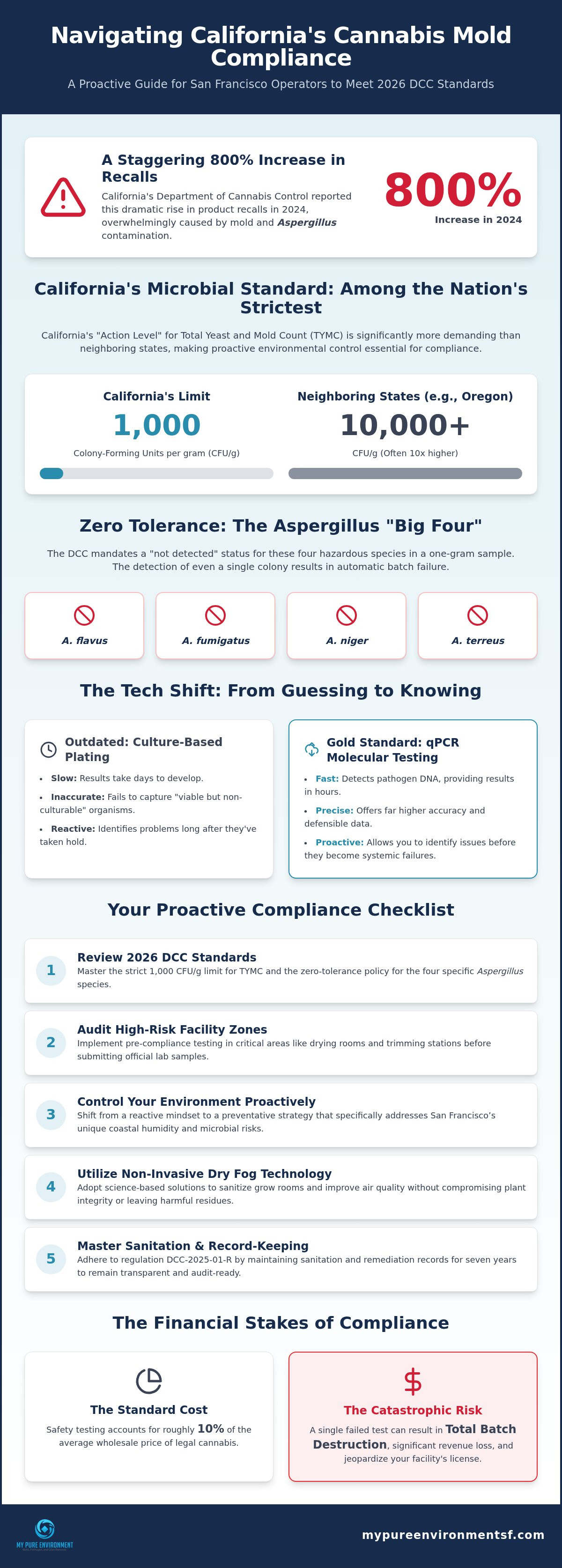
The California Department of Cannabis Control reported an 800 percent increase in product recalls in 2024, with the vast majority of these failures triggered by mold and Aspergillus contamination. For operators in San Francisco, the city's persistent coastal humidity adds a layer of environmental risk that can make meeting the strict 1,000 CFU/g limit feel like an uphill battle. We understand that a failed lab batch isn't just a regulatory hurdle; it's a significant financial blow that threatens your facility's reputation and systemic health. Mastering cannabis compliance mold testing requires shifting from a reactive mindset to a proactive, science-based strategy that prioritizes detection and prevention before the final sample ever reaches the lab.
You deserve the peace of mind that comes from knowing your harvest is protected by a clinical standard of cleanliness. This article provides a comprehensive roadmap for navigating the complexities of DCC regulations, specifically the mandatory sanitation standards that took effect on July 1, 2026. We'll explore the critical thresholds for inhalable products and provide a professional checklist for environmental control and pre-compliance testing. By following this structured approach, you can optimize your grow room air quality, ensure a 100 percent compliance pass rate, and maintain a safe, high-purity environment for your products.
Key Takeaways
- Review the 2026 DCC microbial standards, focusing on the strict 1,000 CFU/g limit for Total Yeast and Mold Count and the zero-tolerance policy for specific Aspergillus species.
- Implement a professional cannabis compliance mold testing checklist to audit high-risk facility zones, such as drying rooms and trimming stations, before submitting official samples to the lab.
- Discover how non-invasive dry fog technology provides a science-based solution for sanitizing grow rooms and improving indoor air quality without compromising plant integrity.
- Shift from reactive batch testing to a proactive environmental control strategy that specifically addresses San Francisco’s unique coastal humidity and microbial risks.
- Master the mandatory sanitation and record-keeping requirements under regulation DCC-2025-01-R to ensure your facility remains transparent and audit-ready at all times.
The Stakes of Cannabis Mold Compliance in 2026
In the current regulatory environment, the margin for error in microbial safety has effectively vanished. For California operators, a single failed laboratory test represents much more than a temporary delay; it's a direct hit to the bottom line that often results in total batch destruction. According to a UC Davis study, safety testing accounts for roughly 10 percent of the average wholesale price of legal cannabis, yet the true financial risk lies in the loss of unsalable inventory. Beyond the immediate revenue loss, the presence of contaminants like Salmonella and Shiga toxin-producing E. coli introduces significant product liability risks that can jeopardize a facility's license and long-term viability.
Relying on traditional visual inspections is no longer a viable strategy for cannabis compliance mold testing. Mold spores are often microscopic and can colonize the interior of dense flower long before visible hyphae appear on the surface. These hidden pathogens produce mycotoxins, which are heat-stable toxic compounds that remain dangerous even after the cannabis is processed or heated. Ensuring consumer safety requires a rigorous, clinical approach to Cannabis product testing that identifies these systemic threats before they reach the supply chain.
Microbial Contaminants: The "Big Four" Aspergillus Species
The California Department of Cannabis Control (DCC) maintains a zero-tolerance policy for four specific species: Aspergillus flavus, A. fumigatus, A. niger, and A. terreus. These fungi are particularly hazardous because they're opportunistic pathogens; when inhaled, they can cause aspergillosis, a serious respiratory infection, especially in immunocompromised patients. Unlike general mold counts, the detection of even a single colony-forming unit of these species results in an automatic batch failure. In 2026, the microbial compliance threshold for all inhalable cannabis products remains a strict "not detected" status for these four Aspergillus species in a one-gram sample.
The Shift from Visual to Molecular Testing
The industry has moved away from traditional culture-based plating methods, which can take days to yield results and often fail to capture "viable but non-culturable" organisms. Quantitative Polymerase Chain Reaction (qPCR) has emerged as the gold standard for modern facilities. This molecular approach detects the DNA of specific pathogens, providing results in hours rather than days with far higher precision. Using qPCR ensures that your data is defensible during regulatory audits and provides the scientific accuracy needed to maintain a 100 percent compliance pass rate. It's a shift from guessing to knowing, allowing managers to identify environmental issues before they become systemic failures.
California Regulatory Framework: Microbial Testing Standards
The California Regulatory Framework establishes a high bar for product safety, requiring every batch of inhalable cannabis to undergo rigorous microbial screening. Central to these standards is the Total Yeast and Mold Count (TYMC) limit, which California sets at a strict 1,000 colony-forming units per gram (CFU/g). This threshold is significantly more demanding than neighboring states like Oregon, where limits are often ten times higher. For operators, staying within these "Action Levels" is the difference between a successful market launch and the forced destruction of a harvest.
DCC Requirements for 2026 Compliance
As of July 1, 2026, the Department of Cannabis Control (DCC) has implemented regulation DCC-2025-01-R, which mandates minimum sanitation standards for all licensees. This update moves beyond simple potency checks to focus heavily on safety screening for flower, pre-rolls, and concentrates. While federal hemp laws have shifted toward a "Total THC" standard as of late 2025, California's cannabis market remains focused on microbial purity. Licensees must now maintain sanitation and remediation records for seven years, ensuring that every step of the production process is transparent and available for inspection. Using an ISO/IEC 17025 accredited laboratory is a non-negotiable part of this process, as it guarantees that your cannabis compliance mold testing results are scientifically valid and legally defensible.
Representative Sampling and Batch Sizes
Compliance begins long before the sample reaches the lab. Representative sampling is critical; if a sample isn't truly indicative of the entire batch, you risk false positives or missed contaminants. For large harvests, calculating the correct sample size based on total weight is a technical requirement that leaves no room for error. Many facilities find that partnering with experts for professional mold testing and inspection helps eliminate common pitfalls in sample collection, such as:
- Contamination from non-sterile sampling tools or storage containers.
- Inconsistent moisture levels within a single batch causing localized mold growth.
- Failure to pull samples from the core of dense storage bins where humidity stays trapped.
When a batch enters a "failed test state" due to exceeding microbial limits, the DCC allows for remediation in specific categories, but the process is tightly controlled. Remediated batches must undergo retesting by an independent lab before they can return to the supply chain. This level of regulatory scrutiny ensures that cannabis compliance mold testing remains a robust shield for consumer health, even as the market grows more competitive.
The Pre-Compliance Mold Testing Checklist
Waiting for a Certificate of Analysis (CoA) to discover a microbial failure is a high-risk strategy that can lead to catastrophic financial loss. A proactive facility audit allows you to identify and resolve contamination sources before the official sample is pulled. This internal cannabis compliance mold testing protocol focuses on high-risk zones where moisture and stagnant air create the perfect breeding ground for Aspergillus and other pathogens. It's about building a defensive perimeter around your harvest.
Phase 1: Environmental & Air Quality Audit
The atmosphere within your facility is the primary driver of microbial growth. High-humidity environments, particularly those with water activity levels above 0.65 aW, are at the greatest risk of failing the strict 1,000 CFU/g limit. Use this checklist to secure your air quality:
- Monitor Humidity: Ensure curing rooms maintain a consistent relative humidity below 55 percent. Fluctuations during the night cycle can lead to localized condensation on flower surfaces, which invites fungal colonization.
- Inspect HVAC Systems: Examine filters and ductwork for any visible accumulation of dust or spores. HVAC systems often act as a distribution network for contaminants if they aren't maintained with clinical precision.
- Baseline Air Sampling: Conduct regular air spore trap testing in cultivation and processing zones. For a detailed look at establishing these benchmarks, consult our San Francisco Mold Testing Guide for property owners.
Phase 2: Surface & Equipment Sanitization
Biofilms can develop on stainless steel surfaces and trimming equipment, serving as a persistent source of cross-contamination. Even if your air is clean, contact with unsterilized tools can trigger a batch failure. Follow these steps to maintain surface integrity:
- Audit Cleaning Logs: Verify that every piece of equipment, from trimming shears to curing jars, is sanitized between batches. Documentation isn't just a best practice; it's a requirement for meeting the 2026 DCC sanitation standards.
- Validate Sterilization Cycles: If your facility uses UV-C or ozone sterilization, verify their efficacy through regular testing. These systems must be calibrated to ensure they're actually neutralizing pathogens rather than providing a false sense of security.
- Swab-Test High-Touch Areas: Use ATP swabs or microbial surface testing on door handles, light switches, and workstations. These areas often harbor a high microbial bioburden that staff can inadvertently transfer to the product during handling.
By treating cannabis compliance mold testing as an ongoing operational habit rather than a final hurdle, you protect your harvest and your reputation. This methodical approach reduces the stress of regulatory audits and ensures your facility remains a safe, clinical environment for high-quality production. Don't leave your compliance to chance when scientific detection is available.
Environmental Mitigation: Beyond Post-Harvest Decontamination
Focusing solely on post-harvest decontamination is a reactive approach that ignores the root cause of contamination. While some industry players promote irradiation as a final solution, this method only addresses the symptoms of a compromised environment. True systemic health requires professional remediation, which removes the microbial threat from the cultivation space entirely rather than just "killing" it on the finished flower. In San Francisco, the coastal climate introduces persistent humidity and cool air, creating a high-risk environment for mold growth. Managing this "San Francisco Fog" effect is essential for ensuring a 100 percent pass rate in cannabis compliance mold testing.
Dry Fog Technology in Cannabis Facilities
Dry fog technology offers a clinical, non-invasive solution for sanitizing grow rooms and processing areas. By producing sub-micron droplets, dry fog mold remediation allows antimicrobial agents to reach spores hidden in deep crevices and complex HVAC components that traditional wipes or sprays miss. This process leaves no moisture residue and prevents terpene degradation, which is a common concern with other high-heat or radiation-based sterilization methods. Dry fog is the preferred method for commercial greenhouses because it provides a comprehensive microbial kill rate without damaging the delicate physiology of the plants. For a deeper dive into these specialized strategies, refer to our Mold Remediation for Cannabis Facilities guide.
HVAC and Air Filtration Strategies
Your facility's air handling system can either be a protective shield or a primary source of contamination. Cultivators often overlook early signs of mold spores in HVAC systems, such as inconsistent pressure readings or minor spikes in microbial counts during seasonal shifts. Integrating HEPA filtration and UV-C light into your air handlers is essential for maintaining the purity of the air circulating over your crops. Additionally, maintaining positive pressure in your flower rooms prevents the ingress of external spores from loading docks or common hallways. If you're concerned about your facility's air quality, our team offers specialized mold and cannabis services to help you maintain a compliant, clinical environment that protects your revenue and your reputation.
Professional Cannabis Mold Services in San Francisco
Success in the San Francisco market requires more than just following a checklist; it demands a deep understanding of how our local microclimate interacts with your facility's indoor environment. While national labs might offer testing, they often lack the physical presence and specialized expertise required to diagnose environmental failures on-site. At My Pure Environment SF, we act as a protective guide for cultivators. We bridge the gap between raw lab data and actionable environmental solutions, ensuring that your cannabis compliance mold testing results remain consistently within passing thresholds.
Our approach is clinical and science-based. We don't just identify the presence of spores; we analyze the systemic health of your facility to identify why they are there. This methodical progression from detection to resolution reduces the immense stress associated with DCC audits and potential crop loss. By positioning ourselves as your technical partner, we help you maintain a safe, high-purity workspace that prioritizes both consumer health and your facility's long-term viability.
Specialized Mold and Cannabis Consulting
Every facility has unique vulnerabilities, whether you're managing a boutique indoor grow in the Dogpatch or a large-scale commercial operation near the Port. Our specialized mold and cannabis services provide tailored environmental audits that integrate seamlessly with your ISO-certified lab results. This 360-degree view of compliance allows you to identify risks before they manifest in a failed CoA. Furthermore, achieving a high standard of environmental purity can serve as a powerful brand differentiator. Positioning your product as "cultivated in a certified clean environment" appeals to health-conscious consumers and premium retailers who demand the highest safety standards.
Getting Started with a Facility Audit
A professional cannabis mold inspection is a transparent, educational process designed to empower your team. When we enter a facility, our goal is to provide a steady hand in what can often feel like a crisis. We use non-invasive detection methods and dry fog technology to ensure that we solve microbial issues without stopping your production or damaging your valuable plants. You can expect a thorough review of your air quality, surface bioburden, and HVAC integrity, followed by a clear, factual roadmap for any necessary remediation. Don't wait for a regulatory failure to address your facility's health. Schedule your cannabis facility mold audit today to secure your harvest and ensure your cannabis compliance mold testing is a success.
Securing Your Harvest in a Competitive Regulatory Climate
Achieving a 100 percent pass rate for cannabis compliance mold testing is no longer just about the final lab result; it's about the systemic health of your entire facility. By shifting from a reactive mindset to a proactive environmental strategy, you protect your revenue from the high costs of failed batches and product recalls. We've explored how maintaining strict humidity controls and implementing non-invasive remediation can create a defensible roadmap for long-term success.
As specialized cannabis environmental consultants, we bring San Francisco local expertise to help you navigate the unique challenges of our coastal climate. Our use of non-invasive dry fog technology ensures that your facility remains a clinical, pathogen-free environment without disrupting your production cycle. You don't have to face the complexities of DCC regulations alone. We're here to act as a steady hand, providing the scientific detection and restoration services your business needs to thrive.
Ensure Your Cannabis Facility is 2026 Compliant—Book a Mold Audit
Take the first step toward a more secure, compliant future today. Your peace of mind and your product's purity are our highest priorities.
Frequently Asked Questions
What are the specific mold testing requirements for cannabis in California for 2026?
California requires a Total Yeast and Mold Count (TYMC) of less than 1,000 colony-forming units per gram (CFU/g). Additionally, all inhalable products must show zero detection of four specific species: Aspergillus flavus, fumigatus, niger, and terreus. These standards are a core part of cannabis compliance mold testing managed by the DCC. As of July 2026, licensees must also comply with mandatory sanitation standards under regulation DCC-2025-01-R.
Can I remediate a cannabis batch that has already failed a microbial lab test?
Yes, California permits microbial remediation for certain product categories following a failed test. However, the process is strictly regulated and requires a formal remediation plan submitted to the DCC. Once treated, the batch must undergo retesting by an independent, accredited laboratory to ensure it meets safety thresholds. Our specialized mold and cannabis services help you determine if remediation is a viable path for your specific batch without compromising quality.
How does dry fog remediation affect the terpene profile of my cannabis plants?
Dry fog remediation is designed to be non-invasive, utilizing sub-micron droplets that neutralize mold spores without saturating the plant material. Because the process doesn't rely on high heat or ionizing radiation, it preserves the delicate terpene profiles and cannabinoid content of your harvest. This clinical approach allows cultivators to maintain the aromatic integrity and potency of their flower while ensuring the facility environment meets the highest standards of cleanliness and systemic health.
How often should a commercial cannabis facility conduct internal mold testing?
We recommend conducting internal environmental audits before every major harvest cycle or batch submission. Regular baseline air quality checks and surface swab testing help identify microbial bioburden before it leads to a lab failure. In San Francisco's humid climate, monthly inspections are often necessary to ensure HVAC systems and drying rooms haven't become reservoirs for spores. This proactive strategy is essential for maintaining a high cannabis compliance mold testing pass rate.
What is the difference between a lab test and an environmental mold inspection?
A lab test is a reactive analysis of a specific product sample to generate a Certificate of Analysis (CoA) for the DCC. In contrast, an environmental mold inspection is a proactive, facility-wide audit. It focuses on identifying the source of contamination within your air handling units, irrigation systems, or curing rooms. While the lab tells you if a batch is contaminated, our professional inspection tells you why it happened and how to resolve the issue.
Does California require testing for mycotoxins in all cannabis products?
California mandates mycotoxin testing for all inhalable cannabis products and specific concentrates. Mycotoxins are toxic compounds produced by certain fungi, such as Aspergillus, and they remain dangerous even if the living mold is neutralized. Testing ensures that levels of Aflatoxins (B1, B2, G1, G2) and Ochratoxin A do not exceed 20 micrograms per kilogram. This safety measure protects consumers from serious health risks associated with inhaling or consuming contaminated cannabis products.
What happens if my facility fails a mandatory DCC microbial audit?
Failing a mandatory DCC audit can lead to product recalls, batch destruction, and increased regulatory scrutiny. Under 2026 rules, you must maintain all sanitation and remediation records for seven years, and these are subject to inspection at any time. A failure often triggers a requirement for a corrective action plan. We help facilities respond to these crises with science-based remediation and air quality improvements that satisfy regulatory requirements and restore operational safety.
How can I reduce the humidity in my San Francisco grow facility to prevent mold?
Managing the "San Francisco Fog" effect requires a robust HVAC strategy that prioritizes dehumidification and high-efficiency air filtration. We advise maintaining a relative humidity below 55 percent in curing and drying rooms to prevent moisture from trapping spores on the plant surface. Integrating HEPA filtration and maintaining positive pressure in flower rooms prevents external coastal humidity from introducing contaminants. Regular maintenance of your air handling units is critical for managing these local risks.
